Tuesday, June 23, 2009

Elinor Lipman author of The Family Man: Loaded Questions Interview


The Family Man marks Elinor Lipman's tenth novel. Lipman has made a career out of writing lightly comedic novels full of characters that are engaging, heartfelt and yet entirely human. Lipman's latest novel focuses on Henry Archer, a single openly gay attorney who's a stand up guy. The fun of The Family Man begins when Henry's life is entered, once again, by his shallow and hard to handle ex-wife, Denise. Henry's former wife finds herself on hard times and does precisely what she frequently did during their marriage -- attempt to get Henry to solve her problems. The heart of the novel, however, has to do with the relationship between Henry and Thalia, Denise's grown daughter whom Henry had contact with when she was a child. Henry attempts to make up for lost time as he and Thalia forge an amusing relationship that allows our protagonist to fully cope with the past and look towards the future.

Kelly Hewitt
: Your novel Then She Found Me was turned into a feature film in 2007 starring and directed by Helen Hunt. I have also read that both The Ladies' Man and The Pursuit of Alice Thrift are also in pre-production. I always wonder how authors feel after seeing their literary works translated onto the big screen. How did you feel about the adaptation of Then She Found Me? To what extent, if any, are you involved in the production aspect of your two latest novels turned motion pictures?

Elinor Lipman: Actually, the latter two are not in pre-production; by now barely in development. Screenplay rewrites are in the works and directors are attached, but I am never sanguine about movie prospects because everything is nothing until it's something (a Jack Nicholson quote.) Then She Found Me took 19 years from option to screen, which explains my Hollywood pessimism. I did love my movie, though, and did not mind the changes from the book. I hear from loyalists all the time who think that the novel should have been, essentially, the screenplay. I direct the crybabies to something I wrote for Huffington Post when the movie came out. (Click here to read the article.)

KH: A fan of your novels wrote in a review that the best part of your writing is that you develop your supporting characters just as fully as your primary characters. This is something that I noticed too, it certainly makes The Family Man and your other novels more compelling and complete. Is that something you focus on or that comes naturally, the dedication to providing the reader with fully fleshed out supporting and primary characters?

EL: It's not something I focus on. My goal is always good storytelling and verbal economy. I'd like to think that if a supporting character feels fully developed it's not because I described his childhood or the wind in the trees outside his bedroom window, but because I found the right combination of telling details.

KH: In a review of your novel The Inn at Lake Devine the Chicago Tribune wrote of your work “Think Jane Austin in the Catskills!” In reviewing your latest novel, The Family Man, the Washington post dubbed the novel a “screwball comedy from 'an Austen-like stylist'”. You have been dubbed a modern Jane Austin on more than one occasion. How does that sit with you?

EL: Hmmm. How would one feel about being compared to a beloved and timeless author? Maybe: It is a truth universally acknowledged that any novelist in possession of her right mind would be thrilled.

KH: After writing nine novels you've probably been compared to all sorts of literary figures. Can you think of one that was crazy or totally off base?

EL: Actually, not all sorts of literary figures. Well, once a British critic wrote, "Imagine, if you can, a cross between Philip Roth and Melissa Bank." The L.A. Times said I was Larry David without the whining. I don't see that, but I loved it anyway.

KH: I am struck, after having read several interviews and features on you over the last couple of years, by the fact that everyone says the same thing. You're nice, cheerful, positive, upbeat and comfortably so despite the occasional ribbing of your son and husband. Why do you think that, in interviews and features on you and your career, there is such a focus, maybe even a hint of disbelief, on your good nature?

EL: I noticed early on that the bar is set pretty low in publishing. I called my agent's office once and said politely to a temp, "This is Elinor Lipman calling for X. Is she there?" The temp reported back to my agent, "Who is Elinor Lipman? She's the nicest person I talked to all day." See? Low expectations.

KH: Have you ever had the urge to play against type by writing that is unlike the traditional Lipman novel?

EL: Every time I think I've done that, woven death or anti-semitism or racism or villainy into the work, people still think it's funny. I'm told it's the voice. I do want to be seen as a good observer with a wry eye, but I'm always surprised at lines people laugh at when I'm doing readings in public. And believe me, I've been a judge for the National Book Awards, for the National Endowment for the Arts, for PEN this and that, so that I come away from the piles of submissions with no desire to go earnest.

KH: The Family Man marks your tenth published work since Into Love and Out Again in 1988. Looking back at twenty plus years of writing, has the process gotten any easier?

EL: No, not easier. On many days I think harder. One thing that experience has taught me is to know that having doubts about the material all the way through, and feeling lost and out of ideas is part of the process. It happens with every book. It helps to think--and to have my friends remind me--"Ha! That's exactly what you said about (fill in any past work)." Their mocking of the same old familiar doubts helps me put my hands back on the keyboard.

KH: I have not come across it used to describe any of your recent work but I wonder, how do you feel about the term “chick lit”?

EL: Hate it. I don't like it when reviewers use it and I especially don't like it when publishers market books that way.

KH: Your readers have expressed a great deal of admiration for the protagonist of The Family Man, the openly gay, stand up guy Henry Archer. As an author what draws you to a character like Henry?

EL: I can't really say I'm drawn to a character when I'm doing the actual drawing. I did know I wanted Henry to be sweetly paternal, a gentleman, old-fashioned and well-adjusted in a somewhat nervous fashion. I don't try to make political statements, but I did want readers to come away thinking, "What a decent man. Why can't all fathers be gay?"

KH: The Family Man has only been in bookstores a month or so but I am sure that some of your faithful readers are already wondering what's next for Elinor Lipman. Have you already begun work on your next project?

EL: Yes. I'm about 100 pages into the next one. That sounds like I'm a fast writer, but I finished The Family Man more than a year ago. This new one is also set in New York, and all I'll say is that the recession is nibbling at the edges of the story.

Sunday, June 21, 2009

Upcoming Author Interviews: Colum McCann, Emily Listfield, Tess Callahan and more


The Best Intentions by Emily Listfield
Published by Atria - May 5, 2009
352 pages

After tossing and turning all night, thirty-nine-year-old Lisa Barkley wakes up well before her alarm sounds. With two daughters about to start another year at their elite Upper East Side private school and her own career hitting a wall, the effort of trying to stay afloat in that privileged world of six-story town houses and European jaunts has become increasingly difficult, especially as Manhattan descends into an economic freefall.

As Lisa looks over at her sleeping husband, Sam, she can't help but feel that their fifteen-year marriage is in a funk that she isn't able to place. She tries to shake it off and tells herself that the strain must be due to their mounting financial pressures. But later that morning, as her family eats breakfast in the next room, Lisa finds herself checking Sam's voicemail and hears a whispered phone call from a woman he is to meet that night. Is he having an affair?

When Lisa shares her suspicions with her best friend, Deirdre, at their weekly breakfast, Deirdre claims it can't be true. But how can Lisa fully trust her opinion when Deirdre is still single and mired in an obsessive affair with a glamorous photographer even as it hovers on the edge of danger?

When Deirdre's former college flame, Jack, comes to town and the two couples meet to celebrate his fortieth birthday, the stage is set for an explosive series of discoveries with devastating consequences.Filled with suspense and provocative questions about the relationships we value most, Best Intentions is a tightly woven drama of love, friendship and betrayal.

Let the Great World Spin by Colum McCann
Published by Random House - June 23, 2009
368 pages

In the dawning light of a late-summer morning, the people of lower Manhattan stand hushed, staring up in disbelief at the Twin Towers. It is August 1974, and a mysterious tightrope walker is running, dancing, leaping between the towers, suspended a quarter mile above the ground. In the streets below, a slew of ordinary lives become extraordinary in bestselling novelist Colum McCann’s stunningly intricate portrait of a city and its people.

Let the Great World Spin is the critically acclaimed author’s most ambitious novel yet: a dazzlingly rich vision of the pain, loveliness, mystery, and promise of New York City in the 1970s.

Corrigan, a radical young Irish monk, struggles with his own demons as he lives among the prostitutes in the middle of the burning Bronx. A group of mothers gather in a Park Avenue apartment to mourn their sons who died in Vietnam, only to discover just how much divides them even in grief. A young artist finds herself at the scene of a hit-and-run that sends her own life careening sideways. Tillie, a thirty-eight-year-old grandmother, turns tricks alongside her teenage daughter, determined not only to take care of her family but to prove her own worth.

Elegantly weaving together these and other seemingly disparate lives, McCann’s powerful allegory comes alive in the unforgettable voices of the city’s people, unexpectedly drawn together by hope, beauty, and the “artistic crime of the century.” A sweeping and radical social novel, Let the Great World Spin captures the spirit of America in a time of transition, extraordinary promise, and, in hindsight, heartbreaking innocence. Hailed as a “fiercely original talent” (San Francisco Chronicle), award-winning novelist McCann has delivered a triumphantly American masterpiece that awakens in us a sense of what the novel can achieve, confront, and even heal.


April & Oliver by Tess Callahan
Grand Central Publishing - June 3, 2009
336 pages

Best friends since childhood, the sexual tension between April and Oliver has always been palpable. Years after being completely inseparable, they become strangers, but the wildly different paths of their lives cross once again with the sudden death of April's brother. Oliver, the responsible, newly engaged law student finds himself drawn more than ever to the reckless, mystifying April - and cracks begin to appear in his carefully constructed life. Even as Oliver attempts to "save" his childhood friend from her grief, her menacing boyfriend and herself, it soon becomes apparent that Oliver has some secrets of his own--secrets he hasn't shared with anyone, even his fiancé. But April knows, and her reappearance in his life derails him. Is it really April's life that is unraveling, or is it his own? The answer awaits at the end of a downward spiral...towards salvation.

Lake Overturn by Vestal McIntyre
Published by Harper - April 21, 2009
448 pages

Lina and Connie are single mothers, neighbors in Eula's trailer park. Lina, the daughter of migrant Mexican farm workers, is trying to cope with her angry teenage son Jesús, newly returned after living with wealthy white foster parents. Connie, long abandoned, struggles with her literal reading of Old Testament laws against remarriage, especially when a handsome missionary visits her congregation. The women's younger sons, Enrique and Gene, are misfits whose mutual love of science offers stability and respite from schoolyard cruelties.

Determined to win the statewide science fair, Enrique and Gene devise an experiment involving "lake overturn," a real scientific phenomenon in which deadly gases collect and eventually erupt from a lake's depths. In their quest to discover if Eula could suffer from such an event, the boys come into contact with an odd assortment of locals, including the frail-hearted school principal with grand ambitions, a rich but lonely lawyer who finds love outside his marriage just as his wife is succumbing to cancer, and a woman tortured by a past of abuse and addiction who decides to turn things around by offering herself as a surrogate mother.

Sunnyside by Glen David Gold
Published by Knopf - May 5, 2009
576 pages

Glen David Gold, author of the best seller Carter Beats the Devil, now gives us a grand entertainment with the brilliantly realized figure of Charlie Chaplin at its center: a novel at once cinematic and intimate, heartrending and darkly comic, that captures the moment when American capitalism, a world at war, and the emerging mecca of Hollywood intersect to spawn an enduring culture of celebrity.

Sunnyside opens on a winter day in 1916 during which Charlie Chaplin is spotted in more than eight hundred places simultaneously, an extraordinary delusion that forever binds the overlapping fortunes of three men: Leland Wheeler, son of the world’s last (and worst) Wild West star, as he finds unexpected love on the battlefields of France; Hugo Black, drafted to fight under the towering General Edmund Ironside in America’s doomed expedition against the Bolsheviks; and Chaplin himself, as he faces a tightening vise of complications—studio moguls, questions about his patriotism, his unchecked heart, and, most menacing of all, his mother.

The narrative is as rich and expansive as the ground it covers, and it is cast with a dazzling roster of both real and fictional characters: Mary Pickford, Douglas Fairbanks, Adolph Zukor, Chaplin’s (first) child bride, a thieving Girl Scout, the secretary of the treasury, a lovesick film theorist, three Russian princesses (gracious, nervous, and nihilist), a crew of fly-by-the-seat-of-their-pants movie makers, legions of starstruck fans, and Rin Tin Tin.


An Honnorable German by Charles McCain
Grand Central Publishing - May 18, 2009
384 pages

When World War II begins, Max Brekendorf, a proud young German naval officer, fights for his country with honor and courage. With the unstoppable German war machine overrunning Europe, Max looks ahead to a bright future with his fiancée, Mareth.
But as the war progresses, their future together becomes less and less certain. German victories begin to fade. In the North Atlantic, Max must face the increasing strength of the Allies on ever more harrowing missions. Berlin itself is savaged by bombing, making life for Mareth increasingly dangerous and desperate. And as the Third Reich steadily crumbles, Nazi loyalists begin to infiltrate Max's crew and turn their terror on Germany's own armed forces.

Recognizing what his nation has become, Max is forced to make a choice between his own sense of morality, and his duty to the Reich. With its stirring, rarely seen glimpse of the German home front during WWII, vivid characters, and evocation of the drama and terror of war at sea, An Honorable German is a suspense-filled story of adventure, of love and loss, and of honor and redemption.


Saturday, June 20, 2009

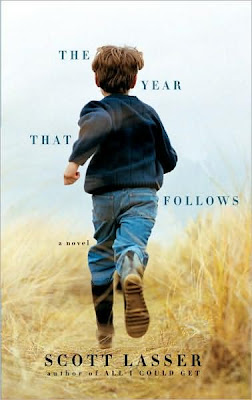
Scott Laser author of "The Year that Follows": Loaded Questions Interview


The Year That Follows by Scott Lasser is a novel that delves into the lives of two related and yet entirely different individuals. On one hand there's the struggling yet intelligent, fiercely independent Cat who is a single mother living in Detroit. Then there's Sam, a man who knows his life is coming to a close as well as the fact that he's not done all that good of a job at many things especially where is daughter Cat is concerned. The lives of both Cat and Sam are changed forever when Wall Street broker Kyle -- Cat's brother and Sam's son, is killed in the attack on the World Trade Center buildings on September 11th, 2001.

In this third novel author Scott Lasser deals delicatly and yet honestly with both the tragedy of 9/11 and the equally unsettling tragedy occurs when families grow apart. The Year that Follows focuses on the paths of Cat and her father Sam, both flawed individuals, with a frank honesty as their lives draw them back together. Front and center is the theme of lost children, Kyle's death, Cat's withdrawn relationship with her father and in what is perhaps the most compelling of the novel's storylines Cat's search for the infant child her brother had just learned was his days before his death. Lasser does a very admirable job of telling the story of real people with real flaws attempting a real reconciliation.

Kelly Hewitt: I read on your blog (Scott Lasser's Blog) that you have been working to publicize the release of The Year That Follows and are doing a book tour. In a different post you wrote: “writing is not performance, not really, but writers are sometimes called upon to perform, live, in person. I’m glad of it. Sure, it’s what’s on the page that matters, but a writer’s physical presence can bring added attention to the words.” I am curious, how have your book tour visits been
going? Do you still feel the same about the necessity of an author to perform from time to time?


Scott Lasser: How’s the tour going? My view is this: anytime you can find a bookstore that wants to have you visit it’s going well. I’ve enjoyed the events so far, about half of those scheduled. I don’t know that there is a necessity for writers to perform, but I do think that every little bit of promotion helps, and readings and talks are part of that.

Television still seems the most effective marketing machine ever invented, but writers hardly show up there anymore. (We’re talking lack of invitations more than lack of willingness. Even Cormac McCarthy went on Oprah, one of the last venues.) In fact, it seems likely that the publishing houses will start producing webcast interviews and the like, a relatively cheap way to reach readers. In fact, Kelly, you might consider this. One thing seems fairly clear to me: people buy stuff off screens.

KH: The events that make The Year That Follows such a great novel are centered around the death of Kyle during the 9/11 attacks. I have to admit that while reading the beginning chapters, I was very nervous about how you would deal with such a sensitive subject. My fears were unnecessary as you dealt with the events of 9/11 very respectfully and subtly by providing the reader with scenes before and after but not during. Did you ever consider writing the scenes in which Kyle died in the 9/11 attacks?

SL: No. Journalists did a great job of that, and had I added such a scene, with the inevitable cell phone call and the like, it would have felt gratuitous, which is to say not essential to this particular story.

KH: I thought it was great that Bryan Cranston (television's Breaking Bad and Malcolm in the Middle) recently plugged your book in Time magazine. Have there been other surprising endorsements of your novels?

SL: Well, it does seem that I owe Bryan Cranston a favor. And yes, I’ve had some surprising endorsements, mostly from other writers whom I respect greatly and who also blurbed my books: Christopher Tilghman, Richard Russo, Anita Shreve, and Wally Lamb, none of whom I’ve met, with the exception of Russo, five years after the fact. I’m grateful to each.

KH: Your website (click here to visit) notes that you have worked a wide variety of jobs: including ski instructor, English instructor, waiter, steel worker, government bond trader, and financial advisor and now author. Do any of your crazy work stories from so many professions find their way into your writing?

SL: Of course. I published a whole novel about Wall Street. A couple years ago I published a ski-instructor story. I’m currently working on a novel that will make some use of my time in the steel plant. I’m troubled by novels whose characters have no visible means of support. I don’t know about you, but I seem to spend a large amount of my time trying to make a living.

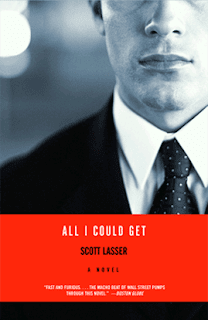
KH: Your first novel Battle Creek centers around a minor-league baseball team and America's relationship with its favorite sport. All I Could Get, your second novel, focuses on business and the world of bond trading. Each of these novels has a theme but also deal with issues of family and relationships. The Year that Follows seems less like your first two novels because it focuses much more on family not the world of baseball or the world of bond trading. Do you think that's a fair assessment? What would you tell your readers is the theme of The Year that Follows.

SL: Battle Creek and All I Could Get grew out of my experiences in very male milieus, whereas The Year That Follows did not; in fact, it has a heroine. I suppose that might explain the difference you feel. As for the theme, well, that’s always a tough one for the writer. I prefer that the reader makes that call. I guess I could say it’s a book about bloodlines and the meaning of family. Man, that sounds trite.

KH: In an interview I did with Wally Lamb not all that long ago he expressed a worry about how many stories he has left in him and noted that each novel seems to take him longerand longer. Now that you've written your third novel, have you ever had a similar feeling?

SL: Oh boy, there’s as question. Yes and no. I’m usually cutting things from novels. I suppose I figure if I can’t make it go away it will come back in the next book. As for length of time to write, well, I’d like to be faster. I’m actually working on that.

KH:There's one question I always have to ask. I realize that The Year That Follows has just been released but what can fans of you and your novels expect to see next from you? Have you already begun work on another project?

SL: I’m working on a new novel set in my hometown of Detroit. My goal is to have a first draft done by the end of this year, with something I could show my agent by the end of the following year, if not before that. I am certainly feeling more urgency now. Still, The Year That Follows came out about a year after it was accepted at Knopf, just to give you an idea of the lead time on these things.


Willig Contest Winners


You may have noticed that we initially were giving away just two copies of Lauren Willig's new book The Temptation of the Night Jasmine. However, the response from readers was so great that I decided to toss in my personal copy (brand new) to the giveaway. Thanks to everyone who entered and to Lauren Willig and publisher Dutton for donating the books for the giveaway.

Notice that things have been quiet here lately? That's because we have a ton of new interviews, reviews and giveaways coming up very soon. Stay tuned.

Wednesday, May 27, 2009

Hillary Jordan - Author Update

I often chat with authors as their books are about to be released or have just hit stores. It is not often that I am able to check in with an author to see what life after the arrival of a best-selling book hits the charts is like. Book tours, interviews and the of course there's always the writing of the next book.

In a new series Loaded Questions will be featuring Author Update in which past Loaded Questions authors are asked to write about what's been going on since the last time we chatted.

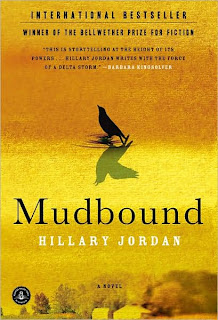
We begin with Hillary Jordan author of Mudbound her first novel and winner of the 2006 Bellwether Prize. Mudbound takes place in Mississippi Delta, 1946 and focuses on Laura McCallan, a college-educated Memphis schoolteacher who struggles to adapt to her new life on a farm she rightly names Mudbound. Living without modern comforts is a challenge for Laura added to caring for her daughters and striving to live up to her loving husbands expectations. Mudbound, told from the point of view of a number of characters, is a great novel and has been doing very well on Amazon, landing on several bestselling lists and continuing to do so in paperback.

Jordan and I last chatted in July of 2008. We discussed the fact that her mother and her life on a farm in Arkansas was an inspiration for the novel, the research and texts that Jorden read in order to research the period and a quote in which Jordan said she knew "more than should be legally allowable about mules, boll weevils, fertilizer, and the like!"

Click here to read my entire interview with Hillary Jordan for the release of Mudbound.

I wrote to Hillary and simply asked her to write about what life has been like since Mudbound's release and what she's currently working on ...

Hillary wrote:

The fifteen months since Mudbound was published have been a whirlwind. Thanks to Algonquin, which has championed the book in a way that most first novelists never get to experience, I’ve spent a tremendous amount of time on book tour, doing readings, signings and festivals all over the country. It has been exhilarating, exhausting, fascinating, gratifying and occasionally humiliating (like the Memphis talk show I was on where I was clearly second fiddle to a guy eating a 7-lb. hamburger). I’ve gotten to meet so many wonderful book-loving people: fans, booksellers, and other authors. In between, I’ve been going to artists colonies — in Switzerland, Saratoga Springs, the Santa Cruz mountains, and this autumn, Scotland — to work on my second novel. It’s called Red, and it’s set thirty years in the future in a right-wing dystopia (not to be confused with the last eight years). I hope to finish it by the end of the year.

Being published is an amazing thing, and Mudbound has succeeded beyond my wildest fantasies. It was the NAIBA Fiction Book of the Year and won an Alex Award from the American Library Assoc. It was a Barnes & Noble Discover Great New Writers pick and one of IndieNext’s top ten reading group suggestions. Recently, the trade paperback spent a thrilling six weeks on the NY Times extended list (my highest rank was #29). Mudbound has done very well in the UK also, thanks to the “Richard & Judy Show” (their Oprah), which picked it as a book of the month. It has been translated into Serbian and will be published in French and Italian in 2010. There are over 200,000 copies in print worldwide, a number I can hardly believe. Life is good!

-- Hillary Jordan

Thanks Hillary for participating! Interested in learning more about this fantastic new author? Here is a link to her website. Support Loaded Questions by purchasing a copy of Mudbound from Amazon.com (currently under $11.00) by clicking here!

Monday, May 25, 2009

Random Notes: Author Leads and Catherine Delors


I have gotten a lot of emails from folks with some really great suggestions for authors to interview. Some of these leads are currently being investigated.

Penny wrote "Have you interviewed the delightful, intelligent, first time author, historical novelist Catherine Delors? She does not write those irritating bodice rippers but real historical fiction? She is very knowledgeable in this field and so everything is in its place."

The answer is yes! Here is a link to my interview with the wonderful Catherine Delors when we chatted before the release of her debut novel Mistress of the Revolution.

Stay tuned for more info about upcoming interviews that will be announced soon!

Sunday, May 17, 2009

Upcoming Author Interviews


Elinor Lipman

Author of the new book The Family Man as well as Then She Found Me, The Inn at Lake Devine, My Last Grievance, The Dearly Departed and more.

Carolyn See of The Washington Post wrote of The Family Man: "Just because something is "light" doesn't mean it's not masterful. Lipman's use of dialogue, for instance, is exquisite…Though I read this book twice, I see that I stopped taking notes both times halfway through. Lipman mesmerized me. She hypnotized me. I admit it freely: I fell victim to the Elinor Lipman Effect."

Scott Lasser

Author of the upcoming The Year That Follows as well as Battle Creek and All I Could Get.

Lasser's upcoming novel, due out in June, follows Cat, a single mother living in Detroit when her brother is killed in New York. Cat sets off in search of her brother's child. Her search is still under way when she gets a call from her eighty year old father who is carrying the weight of a secret he has kept from her all her life. He asks Cat to visit him in California, intending to make his peace. . .

Christopher R. Beha

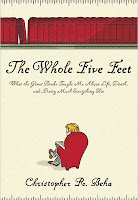
Author of The Whole Five Feet: What the Great Books Taught Me About Life, Death, and Pretty Much Everything Else, his first book released in early May.

In The Whole Five Feet, Christopher Beha turns to the great books for answers after undergoing a series of personal and family crises and learning that his grandmother had used the Harvard Classics to educate herself during the Great Depression. Inspired by her example, Beha vows to read the entire Five-Foot Shelf, one volume a week, over the course of the next year.


Saturday, May 16, 2009

Who Would You Like to See Us Interview?


I have said before that when I first started doing Loaded Questions (for a different site) I simply went to my library of books and started sending emails to anyone I could get in touch with. A couple of years later I have had a chance to chat with some of the authors that really changed my view of what it means to be an author and a reader. There are, of course, a good many authors who I still look forward to chatting with. (Anchee Min, where are you?) We have a great line up of new authors and old favorites whose books will be launching this summer already scheduled for interviews. However, I wanted to ask you readers:

Who would you like to see us interview?

I know what dedicated readers you all are. What new authors do you think others would like to hear from? These suggestions can be current bestselling authors, authors with upcoming releases, favorite legends of fiction - you pick. I am hoping that with the help of some publicist and publisher friends that we can seek out your suggestions.

Friday, May 15, 2009

Book Giveaway: The Temptation of the Nigth Jasmine by Lauren Willig


As I recently alluded to Lauren Willig was nice enough to send along two free copies of her latest novel, The Temptation of the Night Jasmine after our chat.

Contest Details: Let's do this nice and easy. To be entered into the contest simply hit comment. Leave a few words along with an email where you can be reached should you win and you'll be entered!

Good luck and thank you for reading Loaded Questions!

The deadline for this contest will be May 30th.

Lauren Willig Author Interview

After a number of scheduling issues on both our parts Lauren Willig and I were finally able to sit down to talk about her latest Pink Carnation novel The Temptation of the Night Jasmine. As I think you'll see below Lauren is a serial workaholic. With a background in English history Willig has managed to write a series of historical novels that never get old.

Kelly Hewitt: The last time we chatted you were balancing Harvard Law School and the writing of your popular Pink Carnation books series - two perfectly successful careers at once. I read now that you've finished school and are working at a law firm. Do you think you'll always be a two career kind of person?

Lauren Willig: Life moves very quickly—either that, or we haven’t chatted in way too long! Since our last confab, I’ve left the practice of law. After a year and a half juggling briefs and book deadlines, I decided that enough was enough. The two career model did wonders for my writing, since I had no choice but to write like a maniac whenever the opportunity presented itself, but little for my temper or my social life. I am sad to say that since becoming a full time writer, I have lapsed back into all my old bad habits.

All that being said, I do think I am a two career person, in that I find it much easier to do anything while I’m dodging doing something else. One of the wonderful things about life as a professional writer is that it does often feel like two careers for the price of one. One of these two careers consists of my writing life, which boils down to me, my computer, the characters who inhabit my head, and the coffee with which I fuel them. The other is my author life, in which I get to dash around to conferences, give talks, and answer questions for websites such as yours.

Kelly: Aside from being jealous of your dual ability I have often wondered how it is that you found time to write a book a year with the rigorous law school. A lot of the authors I have chatted with who only write for a living have expressed the difficulty and pressure that comes along with writing a book a year. Is it fair to assume that you are a very scheduled and disciplined writer?

Lauren: Ha. Ha ha ha. Insert hollow laughter here. I’m about as disciplined as the Blob. (No offense to the Blob, who, for all I know, might have a rigorous scholarly work ethic when not spreading himself out over large quantities of terrain and engulfing screaming teenagers). I tend to write in fits and starts. I’ll have stretches of a week or two when I’ll write like the wind, followed by a week of scowling at a blank screen. This may be because I wrote my first four books while scheduling my writing time around other things, or simply a facet of my character. I suspect the latter. Fundamentally, I’m an adrenaline worker. When left to myself, I tend to procrastinate and overthink until panic takes hold, at which point everything suddenly gets done very, very quickly. In the context of a book length project, this divides itself up into lots of little cycles of procrastination and panic.

Kelly: How has the transition from law school to law firm affected your ability to write?

Lauren: The most jarring aspect of moving from an academic calendar to a bona fide job was my inability to schedule. School and novel writing go together like peanut butter and chocolate, largely because one knows exactly what all the major stress points are going to be before they happen. My editor had been very nice about letting me schedule book deadlines around exams, papers, and the other milestones of the academic year. In an office, on the other hand, one can never predict when a crisis will arise, consuming nights and weekends—or when a crisis will suddenly subside into calm. It made planning out writing time rather tricky and taught me valuable lessons about seizing any free moment to write, with no nonsense about muses or writer’s block.

Kelly: We have chatted a few times about our mutual interest in Renaissance European history and the fact that we both have pursued masters degrees in English history (I, sadly, was not so smart as to jump to law school instead of finishing). (Correction: Lauren finished her MA and went on for her doctorate.) When history grad students get into a room the first thing that happens is that everyone gives a rundown of what they think they'll write their looming thesis on. I know you inevitably chose a different path but what did you think you were going to write about?

Lauren: After getting my MA, I spent several years working on my PhD before I jumped ship, including a year in England on fellowship trudging back and forth between the British Library and the Public Records Office. My plan was to finish the dissertation while in law school, so that I could walk off with the PhD and JD at the same time. But by a strange fluke, I signed my first book contract my first month of law school. There went all my dissertation-writing time!

My partially written dissertation was grandiosely titled “Give Caesar his Due: Royalist Conspiracies in the English Civil War, 1646-1649”. It followed the movement of royalist groups in England and abroad between the King’s capture in 1646 and his execution in 1649. One of these days I really do want to dig out my three foot high pile of research notes and just finish the blasted thing, since it really was a great topic, replete with deeds of derring-do and lots of slapstick. My favorite episode was Charles I getting stuck in a window as he tried to escape his Parliamentarian captors. But for the width of the royal shoulders, the trajectory of English history might have been entirely different….

Kelly: I, of course, love that you use a history graduate student to frame your novels. You have also written about another bastion of graduate school life, teaching entry level classes. Do you have any graduate teaching horror stories? (I will have to share mine later.)

Lauren: Oh, heavens. How many of them do you want? Some of my personal favorites involved grading exams (advise to TA’s: open a bottle of wine before approaching those blue books) and finding gems like, “In the Middle Ages, there were no windows. That was why they called it the dark ages. Then in the Renaissance they discovered glass and everything became light.” The post-exam wrangling about grade is also always fun. I had one guy storm into my office and inform me that my giving him a “B” was unconscionable since he was an “A” student. He had brought his transcript to prove it to me. I pointed out that he might be an A student, but it still wasn’t an A paper. He didn’t agree with this. Fortunately, the professor did.

I have a whole bunch of other stories, but they’re not going into print.

Kelly: Your readers have commended the latest novel in your series, The Temptation of the Night Jasmine, for your ability to keep storylines new and exciting, avoiding any of the staleness or repetition that are sometimes synonymous with multiple installments of a series. Is that something that you consider when writing?

Lauren: Repetition is something that any multi-published author has to worry about, and the equation becomes even more delicate when one is dealing with a series. Part of the lure of a series is a certain promise of familiarity. The reader wants to re-enter a familiar world. At the same time, no one wants to feel like they’re reading—or writing!—the same book over and over again. Trying to maintain continuity while keeping the series fresh is a constant challenge for me. In my next book, The Betrayal of the Blood Lily, I moved the action to India to provide a fresh perspective on the series and the time period.

Kelly: Sometimes authors who write a series of novels will map things out in order to have a long term idea of where they are going. Is that something you've done for the Pink Carnation series?

Lauren: I do have long-term plans for the series, but they are always subject to change. For example, my image of the how the series is ultimately going to end hasn’t changed, but a lot of the stuff that goes on in the middle—the intermediate books in the series—has, as my characters grow and develop throughout a multi-book arc. I’ve learned to be more flexible in my plotting because clinging to one image or one idea often stymies the organic development of the series.


Kelly: How many books do you envision the series having?

Lauren: At this point? Um…. Let’s just say it’s entirely open-ended. At some point, I should probably sit down and make important decisions about how I plan to get to my eventual end goal, but at this point I’m still having way too much fun with the series to start plotting the wrap-up. I also love the freedom I have within the series to play with different tropes, character types, and historical events. The Napoleonic Wars cover a broad span of time, countries, and characters and I’m taking full advantage of that. For a more practical answer to your question, I can say that currently there are plans for three more Pink books underway (which would bring us to nine).

Kelly: So, the next book in the series will take place in India. Can you give Loaded Questions readers any exclusive info about the next book?

Lauren: Pink VI recently acquired a title! It is now officially The Betrayal of the Blood Lily.

Blood Lily follows Lady Frederick Staines (nee Miss Penelope Deveraux) to India after her indiscreet behavior found her hustled into a hasty marriage. Penelope and her new husband are sent off to India to give time for the scandal to die down. What Penelope doesn’t realize is that far more dangerous challenges await them in India, where her husband has been appointed Special Envoy to the Court of Hyderabad. Penelope plunges into the treacherous waters of the court of the Nizam of Hyderabad, where no one is quite what they seem—even her own husband.

In a strange country where elaborate court dress masks even more elaborate intrigues and a spy called the Marigold leaves cobras as his calling card, there is only one person Penelope can trust: Captain Alex Reid, the man detailed to escort them to Hyderabad. But Alex has secrets of his own….

The first chapter of Blood Lily is available on my website here and I’ll be posting other updates and excerpts throughout the summer.

Kelly: Thank you so much Lauren for doing the interview and thank you for being so kind as to send along books for our "The Temptation of the Night Jasmine Book Giveaway!"

Lauren: Thanks so much for having me here, Kelly! It’s always so much fun to hang out with you at Loaded Questions.

Saturday, April 11, 2009

Lauren Willig Interview and Giveaway


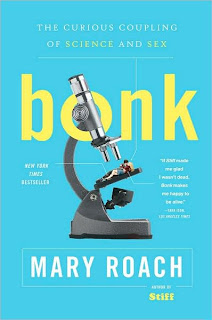
Mary Roach: Author of Bonk


Few things make me as giddy as the release of a new book by Mary Roach. Mary's latest book Bonk: The Curious Coupling of Science and Sex has just been released in paper book. Roach, one of my very favorite authors, and I had a few seconds to chat recently the night before she left on the book tour for the paper back release of the book. (Read my first interview with Roach from 2005.) In her latest work Roach looks at the history of sex and the role that science has played in helping humankind figure out just how our body parts work. Roach is at her very best in Bonk - traveling in person to view a penile surgery, visit a sex toy manufacturer and even participating in a ultrasound study of intercourse. (Don't worry there's more about this below.) Roach approaches her subjects with a simple dedication that is endearing. It also helps that her observations about the subject and the individuals she comes across are hilarious. Coming from another author a book like Bonk might be creepy or awkward by Mary's humor and observation make Bonk and her other titles pure joy to read.

Roach's past titles include the immensely popular Stiff: The Curious Lives of Human Cadavers (once featured prominently in a plot on Six Feet Under) and Spook: Science Tackles the Afterlife. With Stiff, Mary took an unprecedented look into the sometimes stomach-churning uses for human bodies after death. It is fascinating, horrifying, incredibly informative and oddest of all, funny. With Spook, Roach looked at the history of clairvoyants and psychics and the human preoccupation with forging contact with the beyond. Roach is a detective who will stop at nothing to make the right connections in order to get unbelievable access to the subject at hand.

Already a Roach fan? Mary drops a hint about her next book below...


Kelly Hewitt: One of my questions has to do with something that you allude to but never fully reveal. I am trying to think of an appropriate way of wording this ... In Bonk you write about your interest in a particular study taking place that you are only able to visit and learn more about if you serve as a test subject. In perhaps your most outrageous and hilarious attempt to get access to the subject of your book you sign you and your husband up to be part of a study taking place in England in which researchers are taking ultrasound 4-D images via MRI of couples engaged in the act of intercourse while inside the actual MRI machine (There's a question here I promise.) You explain your husband's involvement by saying that you lured him with the free trip to Europe by offering him details about an exciting new study.

Did he really find out about your scheme only after arriving and was his initial reaction to the idea?

Mary Roach: It was worse than an MRI. It was ultrasound, which means the operator is standing right next to you, holding the wand to your skin. Actually my skin. Before Ed knew any details, he was all enthusiastic. As in, "Hey, sex research! Sign me up!" Then he entered the denial stage, choosing to focus on the free trip to England. And finally, as Dr. Deng walked down the hallway toward us, he entered the final stage: glumness and despair and horror. I did let him know what he was in for before we left, though I don't think he really thought it through. People ask us how we could do it. It was less like sex and more like some awkward medical procedure that you just have to get through.

Kelly: I imagine that being the husband of Mary Roach entails a great many adventures in the name of research. What other kind of crazy things have you had him do?

Mary: I dragged him to a Mars/Venus John Gray couples seminar, poor thing. Nothing else crazy that I can think of.

Kelly: In the chapter "Re-Member Me" you write about another research trip in which you head to Taipei to witness male genital extensions and surgeries. Having seen the actual surgeries and knowing what you know now would you ever encourage your husband to have a similar procedure?

Mary: I didn't witness any enlargement or enhancement, just surgical treatments for ED. And those are surgeries of last resort, for men whose ED doesn't respond to Viagra or its cousins. So, no, I surely would not. Maybe when he's 90...
Italic
Kelly: I know that I meant to ask this question the last time that we chatted. Were you told that your book Stiff would be a major plot point in the final season of Six Feet Under or was that a surprise?

Mary: I knew that they'd asked permission to show the book (like Norton would ever have said no!), but did not know what they had planned. I assumed it would just be a prop -- a book on Nate's nightstand or some such. The way they used it was utterly a surprise.

Kelly: In Bonk you offer the reader a very interesting rundown of the history of what you call the pioneers of human sexual response. For readers who haven't had a chance to read the book which of the pioneers (who all have equally delightful and unsettling stories) did you find to be most compelling?

Mary: Robert Latou Dickinson. He's the dude who got Kinsey to drop wasp research and get into sex research. Gynecologist in the early 1900s. Way ahead of his time. SUNY Downstate in NYC has a huge collection of his plaster castingss of vulvas. I also like the behaviorist John B. Watson -- the first to study humans having sex in a lab (him and his mistresss).

Kelly: As funny as it is Bonk, like your other two books, packs in a good deal of detailed information. I walked away from this book knowing a great deal about all sorts of anatomical anomalies. I haven't had a chance yet to use a story about Marie Bonaparte, the great-grand niece of Napoleon Bonaparte, who literally had some of her sexual necessities moved like one my uproot a tree but I am sure that the opportunity is just around the corner.

Have you heard of any instances in which one of your books has been used to teach a class (presumably collegiate)?

Mary: Bonk is part of the curriculum in at UT Austin (sexuality class) and one other school. Both Spook and Stiff have been used as a freshman reading "common book" at universities. Stiff gets used in anatomy classes and in high school writing classes.

Kelly: I know it is very soon to be asking but, you've written about the science of corpses, ghost/spirits and now sex. Where do you plan on going next?

Mary Roach: Next one has to do with the fabulous insanity of space travel.

Saturday, February 14, 2009

Oscar Movies Based on Books


A spin on the feature Movies Based on Books, this week we bring you a very special installment. The Oscars are only a week away and after browsing the list of best picture nominees I noticed that a great number of the nominated films this year are based on books. Here's a rundown of some of the novels the inspired the celebrated movies that will compete for awards next Sunday. The book is always better than the movie, right?

The Curious Case of Benjamin Button
Author: F. Scott Fitzgerald

A 1921 short story by F. Scott Fitzgerald, first published in Colliers Magazine, and subsequently anthologized in his book Tales of the Jazz Age (occasionally published as The Curious Case of Benjamin Button and Other Jazz Age Stories). Developed for years by the late Hollywood mogul Ray Stark, the rights and story development were purchased from the Ray Stark Estate and adapted for a 2008 film of the same name directed by David Fincher.

Starring: Brad Pitt, Cate Blanchet, Taraji P. Henson

The film was released on December 25, 2008 and received 13 Academy Award nominations, including Best Picture, Best Director, Best Actor, Best Supporting Actress.


The Reader
Author: Bernhard Schlink
Translated by: Carol Brown Janeway

An award-winning novel by German law professor and judge Bernhard Schlink. It was published in Germany in 1995 and in the United States in 1997. It deals with the difficulties of subsequent generations to comprehend the Holocaust; specifically, whether a sense of its origins and magnitude can be adequately conveyed solely through written and oral media. The first German novel to top the New York Times bestseller list, and US television presenter Oprah Winfrey made it a selection of her book club. It has been translated into 37 languages and been included in the curricula of college-level courses in Holocaust literature.

Starring: Kate Winslet, Ralph Fiennes, David Kross

The British drama opened in limited release on 10 December 2008 and has been nominated for 5 Academy Awards including Best Picture, Best Actress and Best Director.

Q & A (Slumdog Millionaire)
Author: Vikas Swarup

A novel by Vikas Swarup, an Indian diplomat. Published in 2005, it was the author's first novel. Set in India, it tells the story of Ram Mohammad Thomas, a poor young waiter who becomes the biggest quiz-show winner in history, only to be sent to jail on accusations (but with no evidence or proof) that he cheated. The basis for the award winning movie Slumdog Millionaire.

Starring: Dev Patel, Freida Pinto, Anil Kapoor, Irrfan Khan

The film was released in 2008. The British drama was directed by Danny Boyle, co-directed by Loveleen Tandan, and written by Simon Beaufoy. Nominated for a total of ten Academy Awards including Best Picture and Best Director.


Revolutionary Road
Author: Richard Yates

The first novel of author Richard Yates, was a finalist for the National Book Award in 1962. When it was published by Atlantic-Little, Brown in 1961, it received critical acclaim, and the New York Times reviewed it as "beautifully crafted... a remarkable and deeply troubling book." In 2005 the novel was chosen by Time as one of the 100 best English-language novels from 1923 to the present.

Starring: Leonardo DiCaprio, Kate Winslet, Kathy Bates, Michael Shannon

The film opened on December 26, 2008 in selected theaters and opened everywhere throughout the U.S. on January 23, 2009. Revolutionary Road was the source of a good deal of controversy after DiCaprio was nominated for a Golden Globe and Winslet won the award for Best Actress for the film but neither were nominated for an Academy Award for their work in the film. Winslet, instead, was nominted for Best Actress for her Golden Globe Best Supporing Actress winning role in The Reader. The film also failed to be nominte for an Oscar for best picture. The film is, however, nominated for three Academy Awards for Best Art Direction, Best Costume Design and Best Supporting Actor for the relatively unknown Michael Shannon.

Doubt
Author: John Patrick Shanley

Not a book but a play initially titled Doubt: A Parable (but still a very well written drama that makes for very good reading) was originally staged off-Broadway at the Manhattan Theatre Club on November 23, 2004. The production transferred to the Walter Kerr Theatre on Broadway in March 2005 and closed on July 2, 2006 after 525 performances and 25 previews.

Starring: Meryl Streep, Philip Seymour Hoffman, Amy Adams
Viola Davis

The film, written and directed by the original play's author, John Patrick Shanley, premiered on October 30, 2008 at the AFI Fest before being distributed by Miramax Films in limited release on December 12, 2008 and in wide release on December 25, 2008. The film and play are set in 1964 at a Catholic church in turmoil located in the Bronx, New York. Nominated for five Academy Awards including Best Actor, Best Actress (for previous Oscar winners Seymour Hoffman and Streep), two Best Supporting Actress Nominations and Best Adapted Screenplay for Shanley. Ironically, recieving the most acting nominations of any 2008 movie, Doubt was not nominated for Best Picture.

Frost/Nixon: The Book & Frost/Nixon: The Play
Author: Sir David Frost with Bob Zelnick

Frost/Nixon, inspired by David Frost's now iconic interviews with the disgraced ex president was first told as a play written by British dramatist Peter Morgan, author of The Queen. The play premiered at the Donmar Warehouse theatre in London in August 2006. Directed by Michael Grandage, and starring Michael Sheen as the talk-show host and Frank Langella as the former president, Frost/Nixon received enthusiastic reviews in the British press.
The play won three Tony Awards including Langella's win for Best Performance By a Leading Actor.

In 2007 Frost released a book by the same title, Frost/Nixon, which is a first hand account and tells the extraordinary story of how Sir David Frost pursued and landed the biggest fish of his career--and how the series drew larger audiences than any news interview ever had in the United States, before being shown all over the world.

Starring: Frank Langella, Michael Sheen, Kevin Bacon, Oliver Platt

The film It was released in the United Kingdom and expanded into wide status in the United States on January 23, 2009 and landed on a number of top ten films of the year list. Frost/Nixon is nominated for five Academy Awards including Best Picture, Best Director (for Ron Howard), Best Actor and Best Screenplay for the play's initial author Morgan. Both Michael Sheen and Frank Langella reprised their roles in the film version. Interestingly, Langella stands a chance to win both a Tony and an Oscar for the same role.

Waltz with Bashir
Author: Ari Folman and David Polonsky

Not intially a book a graphic novel of the animated and celebrated film will be released February 17th. Asked why the authors decided to release the story in graphic novel form co-author Folman said. "It gave us total freedom to do whatever we liked. We could go from one dimension to another, from real events to the subconscious to dreams to hallucinations. It gave us the liberty to play with vastly different elements in one fluid story line, with no boundaries, and also to make something visually familiar and tired--war scenes--look entirely new." A reviewer has said of the graphic novel: "probing inquiry into the unreliable quality of memory, and a powerful denunciation of the senselessness of all wars."

Starring: Ari Folman

The film was one of the first Israeli animated feature-length films released in movie theaters (along with the film $9.99). Waltz with Bashir premiered at the 2008 Cannes Film Festival where it entered the competition for the Palme d'Or, and since then won and was nominated for many additional important awards while receiving wide acclaim from critics. It won a Golden Globe Award for Best Foreign Language Film, a NSFC Award for Best Film, an IDA Award for Feature Documentary and is currently nominated for an Academy Award for Best Foreign Language Film. The film has been nominated for Best Foreign Film a category for which it won the Golden Globe.

The Class (Entre les murs )
Author: François Bégaudeau

The book, published in 2006 with the title Entre les murs (in English: Between the Walls), is a work of contemporary fiction by French writer François Bégaudeau. It is a semi-autobiographical account of Bégaudeau's experiences as a literature teacher in an inner city middle school in Paris. Published in the United States with the title The Class, the same name as the film.

Starring: François Bégaudeau

The film's star is also the author of the book revealing the multifaceted nature of Bégaudeau who was also a member of the 1990's punk group Zabriskie Pont. (The guy is apparently very busy!) The film received the Palme d'Or (the highest award) at the 2008 Cannes Film Festival, making it the first French film in 21 years to do so. The movie has mainly received positive reviews, achieving a 97% rating at Rotten Tomatoes. The Class has been nominated for an Academy Award for Best Foreign Film.


Related Posts with Thumbnails