Showing posts with label author interview. Show all posts

Monday, August 2, 2010

Packing For Mars Book Trailer


Space Hygiene and the People Who Stopped Bathing for Science -- Funny but True


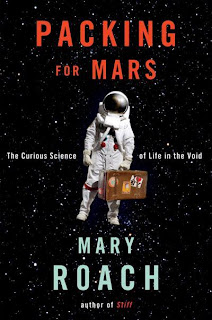
Today is the official release of Mary Roach's fourth book, Packing for Mars: The Curious Science of Life in the Void. In order to celebrate we here at Loaded Questions wanted to share this great video produced by WW Norton and available at author Mary Roach's website. Roach's new book, as the title indicates, looks at some of the absurdity and downright hilariousness that went into preparation to send humans in to space. The video, being billed as a trailer of the new book is titled: "Space Hygiene and the People Who Stopped Bathing for Science" and is a comedic reenactment of an actual study Roach describes in the book,  a study in which individuals were paid to forgo hygiene and clothing. Yes, the video is funny and well put together but the best part of all is that the study that is being "spoofed" actually took place and that the words spoken by the astronauts and overhead voice that narrate the video are actual quotes from a real study. Gotta love it.

Here's the video:


On a related note we're very excited to announce that we'll be conducting our interview with Mary Roach next week in Portland, OR as she continues her book tour for Packing for Mars. Have a question that you'd like us to ask her? Something you would like us to discuss? Click comment and let us know!

Sunday, August 1, 2010

LQ Book Review: Karen Essex's "Dracula in Love"


We are very pleased to share the following book review with you, written by bestselling author C.W. Gortner, a friend of the site. Along with this interview comes the announcement that I will be doing an interview with the author of the below reviewed book, Dracula in Love, Karen Essex. Karen has had a rich career, adapting screen plays by authors such as Anne Rice, has written bestselling historical fiction novels (Stealing Athena, Leonardo's Swans) as well as influential biographies of important historical figures (Kleopatra, Pharaoh) If you have questions or suggestions for topics that you'd like me to touch on when interviewing Karen please feel free to click comment and share them or email me directly if you'd rather do it privately.

I am also happy to announce today that in addition to the upcoming interview with Karen Essex I will also be conducting my second interview with C.W. Gortner, the friend and skilled historical fiction author who has held nothing back about how much he enjoys Dracula in Love. Gortner and I last spoke around the release of his novel of the mad Spanish Queen, Juana la Loca. This time we'll discuss his latest novel, The Confessions of Catherine de Medici


Dracula Gets Sexy 
by C.W. Gortner
He’s the enigmatic stranger in the black cape, a shape-shifting outcast who has given rise to some of literature’s - and Hollywood’s - most iconic imagery.  When it was published in 1897, Bram Stoker’s Dracula was a critically acclaimed horror story; it did not send the shockwaves it should have through Victorian morality, excavating the repressed sexuality and decay of a fading empire while exalting the era's misogynistic flair. However, in subsequent years, as it garnered international bestselling status, Dracula began to reveal itself as a cautionary tale of unbridled desire.
Now, 113 years later, bestselling author Karen Essex, known for her lush prose and portraits of powerful women in Leonardo’s SwansStealing Athena, and a double-volume look at the quintessential femme fatale, Kleopatra and Pharaoh, takes on the Count in Dracula in Love. It’s a bold move. While Dracula has been revisited several times and in various incarnations, not all have been successful; and many of us have firm ideas of who he is, and, more importantly, who he is not. Nevertheless, Ms Essex serves up a sensual, unabashedly romantic approach to the fanged one, telling the tale through the voice of Mina herself, whose love affair with Dracula has become a byword for eternal obsession.
A first edition copy of Stoker's Dracula, initially published in 1897.
Building on framework established by Stoker, Essex vividly presents the true Victorian world inhabited by these characters—a world where a fledgling emancipation movement collides with the barbaric treatment of those deemed sexually neurotic; where marriage is still the ultimate goal for a woman; and virtue is prized more than fulfillment. While most of Stoker’s cast is present, they’ve been reshaped, with Lucy paying a terrifying price for her extra-betrothal liaison and Van Helsing as a righteous physician engaged in lethal experimentation. The Count takes his time before he appears, seen only in tantalizing glimpses; by then, Mina’s engaging, increasingly paranoid voice has captured our imagination, as she struggles to survive both her own recurring nightmares and a budding awareness that just beyond her tightly corseted existence lurks a tangled labyrinth of feral secrets.
Dracula in Love is not a standard vampire tale and purists may take issue with Ms Essex’s mythology-inspired take on the legend; however, for those who yearn for something more than adolescents pining over immortal boyfriends, this is the antidote—a luscious paean to forbidden longing.
- C.W. Gortner is the author of The Confessions of Catherine de Medici and The Last Queen. Visit him at www.cwgortner.com

Keywords: Karen Essex, Stealing Athena, Leonardo's Swans, Kleopatra, Pharoah, historical fiction, Victorian England, C.W. Gortner, The Last Queen, Juana la Loca, Tudor history, English historical fiction,  Confessions of Catherine de Medici, The Secret Lion, Van Helsing

Tuesday, June 23, 2009

Elinor Lipman author of The Family Man: Loaded Questions Interview


The Family Man marks Elinor Lipman's tenth novel. Lipman has made a career out of writing lightly comedic novels full of characters that are engaging, heartfelt and yet entirely human. Lipman's latest novel focuses on Henry Archer, a single openly gay attorney who's a stand up guy. The fun of The Family Man begins when Henry's life is entered, once again, by his shallow and hard to handle ex-wife, Denise. Henry's former wife finds herself on hard times and does precisely what she frequently did during their marriage -- attempt to get Henry to solve her problems. The heart of the novel, however, has to do with the relationship between Henry and Thalia, Denise's grown daughter whom Henry had contact with when she was a child. Henry attempts to make up for lost time as he and Thalia forge an amusing relationship that allows our protagonist to fully cope with the past and look towards the future.

Kelly Hewitt
: Your novel Then She Found Me was turned into a feature film in 2007 starring and directed by Helen Hunt. I have also read that both The Ladies' Man and The Pursuit of Alice Thrift are also in pre-production. I always wonder how authors feel after seeing their literary works translated onto the big screen. How did you feel about the adaptation of Then She Found Me? To what extent, if any, are you involved in the production aspect of your two latest novels turned motion pictures?

Elinor Lipman: Actually, the latter two are not in pre-production; by now barely in development. Screenplay rewrites are in the works and directors are attached, but I am never sanguine about movie prospects because everything is nothing until it's something (a Jack Nicholson quote.) Then She Found Me took 19 years from option to screen, which explains my Hollywood pessimism. I did love my movie, though, and did not mind the changes from the book. I hear from loyalists all the time who think that the novel should have been, essentially, the screenplay. I direct the crybabies to something I wrote for Huffington Post when the movie came out. (Click here to read the article.)

KH: A fan of your novels wrote in a review that the best part of your writing is that you develop your supporting characters just as fully as your primary characters. This is something that I noticed too, it certainly makes The Family Man and your other novels more compelling and complete. Is that something you focus on or that comes naturally, the dedication to providing the reader with fully fleshed out supporting and primary characters?

EL: It's not something I focus on. My goal is always good storytelling and verbal economy. I'd like to think that if a supporting character feels fully developed it's not because I described his childhood or the wind in the trees outside his bedroom window, but because I found the right combination of telling details.

KH: In a review of your novel The Inn at Lake Devine the Chicago Tribune wrote of your work “Think Jane Austin in the Catskills!” In reviewing your latest novel, The Family Man, the Washington post dubbed the novel a “screwball comedy from 'an Austen-like stylist'”. You have been dubbed a modern Jane Austin on more than one occasion. How does that sit with you?

EL: Hmmm. How would one feel about being compared to a beloved and timeless author? Maybe: It is a truth universally acknowledged that any novelist in possession of her right mind would be thrilled.

KH: After writing nine novels you've probably been compared to all sorts of literary figures. Can you think of one that was crazy or totally off base?

EL: Actually, not all sorts of literary figures. Well, once a British critic wrote, "Imagine, if you can, a cross between Philip Roth and Melissa Bank." The L.A. Times said I was Larry David without the whining. I don't see that, but I loved it anyway.

KH: I am struck, after having read several interviews and features on you over the last couple of years, by the fact that everyone says the same thing. You're nice, cheerful, positive, upbeat and comfortably so despite the occasional ribbing of your son and husband. Why do you think that, in interviews and features on you and your career, there is such a focus, maybe even a hint of disbelief, on your good nature?

EL: I noticed early on that the bar is set pretty low in publishing. I called my agent's office once and said politely to a temp, "This is Elinor Lipman calling for X. Is she there?" The temp reported back to my agent, "Who is Elinor Lipman? She's the nicest person I talked to all day." See? Low expectations.

KH: Have you ever had the urge to play against type by writing that is unlike the traditional Lipman novel?

EL: Every time I think I've done that, woven death or anti-semitism or racism or villainy into the work, people still think it's funny. I'm told it's the voice. I do want to be seen as a good observer with a wry eye, but I'm always surprised at lines people laugh at when I'm doing readings in public. And believe me, I've been a judge for the National Book Awards, for the National Endowment for the Arts, for PEN this and that, so that I come away from the piles of submissions with no desire to go earnest.

KH: The Family Man marks your tenth published work since Into Love and Out Again in 1988. Looking back at twenty plus years of writing, has the process gotten any easier?

EL: No, not easier. On many days I think harder. One thing that experience has taught me is to know that having doubts about the material all the way through, and feeling lost and out of ideas is part of the process. It happens with every book. It helps to think--and to have my friends remind me--"Ha! That's exactly what you said about (fill in any past work)." Their mocking of the same old familiar doubts helps me put my hands back on the keyboard.

KH: I have not come across it used to describe any of your recent work but I wonder, how do you feel about the term “chick lit”?

EL: Hate it. I don't like it when reviewers use it and I especially don't like it when publishers market books that way.

KH: Your readers have expressed a great deal of admiration for the protagonist of The Family Man, the openly gay, stand up guy Henry Archer. As an author what draws you to a character like Henry?

EL: I can't really say I'm drawn to a character when I'm doing the actual drawing. I did know I wanted Henry to be sweetly paternal, a gentleman, old-fashioned and well-adjusted in a somewhat nervous fashion. I don't try to make political statements, but I did want readers to come away thinking, "What a decent man. Why can't all fathers be gay?"

KH: The Family Man has only been in bookstores a month or so but I am sure that some of your faithful readers are already wondering what's next for Elinor Lipman. Have you already begun work on your next project?

EL: Yes. I'm about 100 pages into the next one. That sounds like I'm a fast writer, but I finished The Family Man more than a year ago. This new one is also set in New York, and all I'll say is that the recession is nibbling at the edges of the story.

Thursday, December 11, 2008

Kate Furnivall: Loaded Questions with the Author of The Russian Concubine and The Red Scarf


We first interviewed Kate Furnivall last year and since then not only has her first novel The Russian Concubine become a bestselling hit, her interview here at Loaded Questions has become one of the most read of all the interview's we've conducted. Furnivall's first novel, The Russian Concubine, is an enthralling tale that is both entertaining and educational. Fans of her first book will find a great deal of joy in her second novel, The Red Scarf. Furnivall returns to Russia to explore the lives of two very different women who find themselves united in their unfortunate situation, prisoners in labor camp in Siberia . . .

Read my first interview with Kate Furnivall in September of 2007, here.


Kelly Hewitt: The two main characters in The Red Scarf first meet in 1933 while being held at the Davinsky Labor Camp in Siberia. I have been looking around the net for any information about this particular labor camp but have not been able to find anything. Is there a real life Davinsky Labor Camp in Siberia?

Secondly, what kind of resources did you study in order to prepare yourself to write about such a harsh, stark environment?

Kate Furnivall: Davinsky Labor Camp in Siberia is a fictitious name but the camp itself is typical of many of these brutal places where prisoners worked in terrible conditions during the Stalinist years. To learn about these camps I read numerous accounts recorded by those who survived, the most famous of which was Alexander Solzhenitsyn's heartbreaking Gulag Archipelago. This provided a real insight into the way the prisoners were treated and the effect it had on them, both physically and mentally. The main difference is that most of these accounts were written by men, but my Davinsky Camp was a women's prison. So I created more of an emotional support network among the women prisoners because I believe it is important to women to function more on that level. Sofia and Anna's friendship is what keeps them alive.

Kelly: Sophia and Anna, the central characters of this book may have both landed in the same labor camp but it is clear that you have written two characters that come from distinctly different backgrounds. One is the daughter of a Russian Orthodox preist who witnesses her father's death by whipping brought upon by his beliefs. The other is the daughter of a doctor and part of a family that was prosperous and amoung the elite of Leningrad before the Revolution began. The reader finds out through the course of the novel that these two young women are also very similar. While reading The Red Scarf I couldn't help but wonder whether or not you think that, beyond being opposites, Sophia and Anna serve as archetypes, each represent the fate of a great many young Russian women during the Russian Revolution. What do you think?

Kate: Though Sofia and Anna are two young women with very different characters, they are similar in the way they both possess a core of inner strength which enables them to survive. Anna comes from a petted and pampered background and many of these elite young women died because they were unable to cope with the terrible conditions they faced after the Revolution. One of the reasons Anna survived was because of Vasily - not only did her love for him give her strength but also he had prepared her mentally. He had turned her into a fighter. Sofia, on the other hand, was raised in a village and was accustomed to a harsher life. Seeing her father whipped to death put steel in her soul and she was determined not to see another person she loved die before her eyes. So she set out to save Anna.

I agree with you that they are archetypes in that they represent in their different ways the new soviet woman, one who must rely on herself to get things done. The beginning of the Communist regime was ironically the beginning of female equality.

Kelly: I happened upon your blog the other day (click here to visit) and read an interesting post in which you discuss doing research and finding gems like "discovering about the Krokodil, the Russian Communist propaganda aircraft in the 1930s that was painted to look like a crocodile." You went on to tell your readers that you, of course, worked the Krokodil into your work because you couldn't pass up on the image, which is a great one by the way. It made me wonder what kind of resources (movies, books, etc) you frequently turn to while researching Russia during the 1920's and 30s. A lot of your readers appear to be just as enthralled in this time period as you are, where would you send them to do research if they wanted to know more?

Kate: Fortunately in recent years far greater access has been permitted to information within Russia about the Stalinist regime, and many books have been published which proved extremely helpful to me. I strongly recommend everyone to read Alexander Solzhenitsyn's whole body of work which is very revealing, not only about the facts of the time but of the mindset of its people. Sheila Fitzpatrick also wrote two detailed and invaluable works, Stalin's Peasants and Everyday Stalinism, in which she includes many first-hand personal stories.

It is only by reading accounts like these that we can understand the Russia of today. I also immersed myself in Russian literature by writers such as Dostoevsky and Pushkin, and loved to get my hands on as many old photographs of the period as possible because a picture can tell more than a thousand words. But traveling to rural Russia and seeing the villages which have barely changed since the 1930s also gave me a real sense of what it was like for Sofia in Tivil.

Kelly: It is fascinating that you have only recently become aware of your largely Russian heritage and even more amazing that you have written The Russian Concubine and The Red Scarf as a way of connecting with such a big part of your family's past. How is it that you just recently found out about your Russian roots? What would you consider to be the ultimate experience of your heritage.

Kate: It was about ten years ago that I discovered that my grandmother was a White Russian who fled from the Bolsheviks in 1917 during the Russian Revolution. I knew that my mother had lived in China for many years as a child where she had an English step-father, but she had never revealed that her mother was Russian.

It came about like this. I was going through her boxes of old sepia photographs, writing the names of the people on the back, and when I wrote "Valentina and Lily" on one (Lily was my mother's name), my mother commented, 'I was called Lydia then'. Astonished, I asked for more and out it all came like unplugging a dam. All the secrets kept for so many years. How they had fled across thousands of miles of Siberia, surviving by eating tree bark and worms, travelling by night until they came down into China where they were penniless refugees. The shame of it had kept her silent for so many years.

It was an amazing thing to discover and made me re-think myself and who I am. As I delved into research to discover more, I have been powerfully affected by the inner resilience of my ancestors in the face of brutal hardship and I hope that a small part of it still remains within me. In The Red Scarf I try to convey something of this inner strength in the characters of Sofia and Anna. To walk through the streets of St Petersburg, as I did last year, gazing down at the Moika Canal or up at St Basil's Cathedral, the knowledge that my grandparents did the same so long ago touched me deeply and forged a connection that I cherish.

Kelly: Your readers certainly aren't complaining but do you ever foresee writing a novel about a different region of the world or a different time period?

Kate: Yes, most definitely. I already have something totally different planned out in my head. But first there will be at least one more book set in Russia.

Kelly: I know that your mother played such a large role in inspiring your first novel The Russian Concubine. Are there traces of her life and experiences in The Red Scarf?

Kate: There are no specific references to my mother's life in The Red Scarf, except the hardship of the journey that Sofia undertakes which echoes the hardship of my mother's escape from Russia. But it was very much my mother's interest throughout her life in different philosophies and religions that influenced my decision to use the clash of belief systems - between Communism, Russian Orthodoxy and superstition - as a background against which the story is set.

Kelly: The Red Scarf has been getting stellar reviews, especially from regular readers who were big fans of The Russian Concubine. That's two books in a row that have been met with much deserved acclaim. Do wake up in the morning sometimes and pinch yourself?

Kate: Do I pinch myself? Absolutely yes! Every morning when I pick up my pen. The Russian Concubine and The Red Scarf have become bestsellers in the US and the UK, and also in many other countries. They have so far been translated into 16 languages. Yes, their success has taken me by surprise, but to know that my stories are being read and discussed and argued over by so many people is what every writer dreams of. I regard it as a privilege. To prompt further thought about the situations and issues I describe in my books is important to me, to encourage readers to probe further. I like to think my characters help people to open doors they haven't been through before.

Kelly: I noticed that your new book has two different titles, The Red Scarf in the United States and Under a Blood Red Sky in the UK. Was there strategic decision made in having two different names?

Kate: Titles can be difficult. The decision to use two titles was taken by my publishers. My UK publisher, Little Brown, and my US publisher, Berkley, could not agree on one title, so it was decided to use two quite different ones. I admit this can be confusing. Readers sometimes think they are two separate books, but I do my best on my website to point out that they are the same. Nevertheless I still have horrible visions of readers buying them both on the internet without reading the story descriptions, and ending up with the same book between different covers.

Kelly: The last time we spoke you made a great many of your fans (myself included) very happy by sharing with us the fact that there would be a sequel to The Russian Concubine. I am sure that this is the last thing you want to be asked right after the release of a new book but how is that sequel coming along?

Kate: I am happy to announce that I have just completed the sequel to The Russian Concubine and that it will be published in June 2009. But with conflicting titles again! In the US it will be called The Girl From Junchow and in the UK it will be called The Concubine's Secret. It has been exciting getting involved with Lydia once more and discovering where she would take me this time. To all The Russian Concubine fans out there I want to say, "The emotional journey continues. And yes, Chang An Lo does ..." No, no, my lips are sealed.

Read my first interview with Kate Furnivall in September of 2007, here.

Tuesday, December 2, 2008

Interview with Wally Lamb, bestselling author of The Hour I First Believed, She's Come Undone and I Know This Much Is True

Author Interview: Loaded Questions with bestselling author Wally Lamb


Its 4:00 am the day before Thanksgiving. Everyone else who has gathered to celebrate the holiday the next day has already gone to sleep but I've been sitting up for hours trying to will myself to put Wally Lamb's latest novel, The Hour I First Believed, down. I hadn't intended this, was going to bed at 11 pm when I suddenly remembered that the book had arrived a few days earlier and that I had packed it in my bag. Just to help me fall asleep, I think, cracking the book open.

Four hours later the sun is beginning to rise and I am sitting in the exact same spot on top of the covers, the bedroom light on. I haven't slept and when I say that I don't mean that I have tried to lay down but just haven't been able to sleep, I mean quite literally -- my eyes never closed.

It had become my ritual to check Amazon every few months for any sign of a Wally Lamb release on the horizon. I didn't know that he'd been working on a book since 1999, fresh off of a public sensation that was the result of one of his novels, I Know This Much Is True, being picked as an Oprah Book Club book for the second time in his short career. The fact that it had taken him so long, that he had been years late on his deadline, meant nothing to me when I first saw the new title pop up in the search window. From that moment on I was ready to be swept up by what has become Wally Lamb's style: a painfully true novel that looks at the lives of real people in crisis, coping or not.

The Hour I First Believed
is great novel, worth wait -- maybe even enriched by the wait. The main character, Caelum Quirk, is a middle-aged teacher on his third marriage who moves to Littleton, Colorado, where he gets a job at Columbine, to escape an embrassing situation and so that his wife, Maureen who works at Columbine as a nurse, can be closer to a father she'd never been able to connect with. There may be a certain reaction to finding out that the novel is, partly, based upon the events that took place at Columbine High School in 1999 but prospective readers should know that that horrific occurrence is not dramatized in the novel, not justified, recreated or glorified. Lamb instead considers the violence that took place at Columbine and uses his characters Caelum and Maureen Quirk to look at what happens after such a traumatic event, whether memories of such an event ever fade. The novel consists of a number of characters experiencing crisis and hardship and how each of them responds in their own way. I think you will see from the interview below and in the second part to be published tomorrow that Wally Lamb is an author that has a great deal of emotion and feeling for those involved in school violence and it occurred to me, while talking with him, that it was that emotion and connection that lead Lamb to give The Hour I First Believed the proper time and attention.

Despite my nervousness Wally Lamb was easy to chat with, the interview quickly taking the form of a conversation. He discusses his writing habits, his experiences with the Oprah Book Club and the appearance of Thomas and Dominic Birdsey (two integral characters from Lamb's bestselling I Know This Much Is True) in his new novel.

I look forward to sharing this interview with Loaded Question readers, literature junkies and Wally Lamb fans more than any interview we have done in the past. Please feel free to leave comments about your reaction to this interview, your feelings about the novel, etc.

Amazon is currently featuring The Hour I First Believed for 40% off, click here for more details.


-----------------------------------------------------------------------------


Kelly Hewitt: I know that you have just returned from a book tour for The Hour I First Believed, how has that been going?

Wally Lamb: Yeah, I actually just got back from the first leg of the tour, I go back on the road on Saturday or Sunday. It was really a lot of fun, exhausting of course but I met some great people and had some really nice audiences. When I was in Minneapolis I went and was interviewed at the Fitzgerald Theater which is where they do the Prairie Home Companion so I got to sign the wall there, that kind of thing. The signings have gone well, so yeah, I have had a really good time. My only problem was that my last gig was in Fargo, North Dakota and at that point I was so tired that I fell asleep at the gate and jumped onto the plane at the last minute and left my laptop behind in North Dakota.

Kelly: Oh no!

Wally Lamb: Other than that things have been going well. We did a signing down in New Orleans, a reading and a signing and two of my sons are down there teaching in the inner city and so I had a nice reunion with them and that was great too.

Kelly: Very good. You're a trooper, I sometimes take one trip and sometimes lose things and fall asleep at gates. I can't imagine traveling that long.

Wally: [laughs] After awhile you start to pick up a rhythm and of course the book company hires these media escorts that meet you at the airplane so they drive you around from place to place, wherever you need to be, to the interviews and stuff so that stress is taken away from you. So it's all good.

Kelly: I was interested in preparing to talk to you that you often read classic novels and ancient works to familiarize yourself with the kind of stories that have lasted over time and that people really connect to.

Wally: Yeah mythology. I had very good advice early on. I had a wonderful writing teacher named Gladys Swan who told me, you know, you're never really going to tell an original story because all of the stories that people have needed, sort of like the real humane and human stories that reveal human behavior and human values, they are already out there. So the best you can do is to put your spin on that. I am sure I looked at her kind of doppily and didn't know what she was talking about but she said to go and read some ancient myths, that's what you need to do. Those are the stories that have lasted longer than any of the others. I began to do that and I discovered people like Claude Levi Strauss and Joseph Campbell and those people who have studied how the myths of a lot of different cultures are very similar to one another. So, consequently, for each of three novels I have a myth or, in the case of this novel a couple of myths, that form the spine of the contemporary story that I am telling. Now, as a reader you don't need to know that, those stories are just sort of a guidepost for me.

Kelly: Well that was part of my next question, is there a particular story or myth that you read in preparation for The Hour I First Believed?

Wally: Yeah, the story – you know I started investigating this Columbine stuff, I kind of fell into it accidentally, actually, when I got on the Internet this tidal wave of stuff about Columbine kind of both interested and disturbed me. And so the myth that was sort of used as the backbone was the myth of Theseus who goes into the labyrinth, he's got to confront the monster in the middle which is the Minotaur. That began to really resonate and in a sense both my character Caelum and I kind of took on what I came to see as the two-headed monster of Dylan Kelbold and Eric Harris. It was important for me to deal with the actual rather than to fictionalize a Columbine-like setting.

Kelly: As a reader I am glad that you handled it that way.

Wally: Oh, really?

Kelly: Yeah, it was a real event and this way it forces the reader and you the author to deal with the real world seriousness of the events. It doesn't need to be fiction, right? Because it was such an important event that we shouldn't be allowed to escape from.

Wally: I think we still need to keep examining that, you know? I was a little bit nervous about how people who were actually involved at the high school that day or who lived in Littleton, how they were going to react to it and I guess I will probably know when I go back out on the tour. One of my first stops will be in Colorado. But, I felt kind of validated by the people I have met in other cities who had a Littleton connection or in a couple of cases people who are now in their twenties who were students at the time at Columbine. I felt very reassured that they were saying that they were glad that I have taken up this subject matter because they don't want the people of Columbine to be forgotten. There have been so many subsequent school shootings that, I think we need to keep looking at this thing.

Kelly: The book does deal with some pretty heavy material with the events of Columbine and the effect of tragic events on the people who live through them. I wonder, as a school teacher of twenty-five years were you ever afraid of school violence? Was that something that occurred to you?

Wally: Well, certainly nothing of that scope. I remember one time fairly early on in my teaching career, it was after school. One kid was bullying and chasing after another kid and I stopped them both in the hallway and I said to the kid who was sorta being chased, I said “What's the matter?” and he said “He's got my gun!” and I thought there was some kind of kidding or that he was exagerating but low and behold the other kid handed over his pistol and that's probably the closest I came to it. There was no danger. There was no gun fire. But, you know, it could happen and I reacted to Columbine not just as a teacher who could pretty much emphasize with what it might be like but also as a father too. You have to have great empathy for those parents of those families.

Kelly: Right. I read in another interview that you knew some people or, some people who knew people who had been involved in a school attack first hand and that you had talked to...

Wally: Yeah, one in particular and that was the one in Paducah, Kentucky and that was actually before Columbine and it was my cousin's daughters who were at that high school and they knew the older sister of the shooter and I would think about her and worry about her and wonder, you know, how she was doing. And Klebold and Harris they both have older siblings, each of them had an older brother who maybe a couple years earlier who had gone through Columbine High School and I worry about those kids too. I mean certainly there's the victims and their families but when your siblings became infamous your family name is in the news in this horrible way. What happens to these collaterally damaged people? That was kind of my entry into it.

Kelly: That's interesting, because we often don't here a lot about the siblings and family members.

Wally: Right and I can understand why they would want to go underground. I think I feel just as much empathy towards the Klebold and Harris families as I do the victim's family because, you know, they are victimized too and they will certainly never get over it. Also, I think too that my work with the women at the Connecticut Maximum Security Prison, which started at the same time I started the novel, that certainly fed into my understanding of Post Traumatic Stress Disorder because many of the women I work with suffer from that. (Interviewer's note: It is while working with this prison that Lamb edited two collections of stories written by his inmate students: Couldn't Keep It To Myself and I'll Fly Away) Some of them have done these terrible things and have had pretty traumatic things done to them particularly in their childhood. It kind of makes you connect the dots and look at the bigger picture. PTSD certainly comes into play when a lot of the soldiers come back from Iraq and Afghanistan and also the people who lived through Katrina.

I have two sons who are teaching down in New Orleans and one of them was there teaching school in the 9th Ward when Katrina happened and so he had to evacuate and he taught in Houston for a year and he was working with 6th graders and many of them have suffered from Post Traumatic Stress Syndrome from Katrina.

Kelly: So both of your sons became teachers?

Wally: Yeah, they both entered the Teach America program and our older boy now is a principal, he's only twenty-seven, but he's a principal at one of the charter schools that have sort of blossomed in the wake of Katrina. Our younger son teaches writing down there at a school called The Langston Hughes Academy. [laughs] There are both charter schools. The one benefit that has come out of Katrina is – you know it was such a broken and chaotic school system down there in New Orleans and now it is being replaced to a larger extent by these charters and are really doing great things for the kids now.

Kelly: After your novel She's Come Undone was selected as an Oprah Book Club choice and became very popular there were a lot of readers who registered some surprise that a man had written a female character with such skill ...

Wally: Oh yeah. That's still one of the questions that I get a lot in readings and stuff.

Kelly: Well, it's been sixteen years since the book has been published and I guess maybe you answered my question which was, do you think that things have changed that a novel like She's Come Undone written from a female prospective by a male author would still be such a surprise to readers?

Wally: I don't know, I think it certainly has been more common for female writers to write male characters than the opposite. But, yeah I think people would still stand up and take notice. I tell you, I have never been one to prescribe to this theory that men are from Mars and women are from Venus. I think if you scratch the surface we're more alike than different. Let's face it, we all come from male and female – that's how we're created. So, yeah to some extent I think that it is marketable to sort of focus on how different guys are from women. But I've just never. . . I guess if men are from Mars and women are from Venus I am just an intergalactic traveler. [laughs]

Stay tuned for part two of our exclusive interview with Wally Lamb tomorrow. Tomorrow Wally and I chat talk about where he came up with the name Caelum Quirk, his writing rituals and the occasional appearance of Thomas and Dominic Birdsey, well known characters from I Know This Much Is True, in his new novel.


Related Posts with Thumbnails