Showing posts with label author interviews. Show all posts

Wednesday, July 21, 2010

Loaded Questions is back!


Loaded Questions has been away for far too long! However, we would like to announce that we are back and better than ever with a new staff, exciting upcoming interviews and more literary news! Please feel free to post our return on your sites/blogs. Your support is greatly appreciated!

What's on the horizon?

Our third interview with the talented and hilarious Mary Roach author of previous best-sellers Stiff: The Curious Case of Human Cadavers, Spook: Science Tackles the Afterlife and Bonk: The Curious Coupling of Science and Sex.

The interview comes on the heels of the release of Roach's fourth novel, Packing for Mars: The Curious Science of Life in the Void. The book's product description reads: Space is a world devoid of the things we need to live and thrive: air, gravity, hot showers, fresh produce, privacy, beer. Space exploration is in some ways an exploration of what it means to be human. How much can a person give up? How much weirdness can they take? What happens to you when you can’t walk for a year? have sex? smell flowers? What happens if you vomit in your helmet during a space walk? Is it possible for the human body to survive a bailout at 17,000 miles per hour? To answer these questions, space agencies set up all manner of quizzical and startlingly bizarre space simulations. As Mary Roach discovers, it’s possible to preview space without ever leaving Earth. From the space shuttle training toilet to a crash test of NASA’s new space capsule (cadaver filling in for astronaut), Roach takes us on a surreally entertaining trip into the science of life in space and space on Earth.

I received my copy yesterday and am giddy at the prospect of tearing into it this evening. From the few glimpses I have taken so far I can say without hesitation that Packing for Mars: The Curious Science of Life in the Void represents Roach at her very best. Stay tuned for the interview. In the meantime you can read our first interview with Roach and the second for the release of Bonk. 

We've also lined up an interview with David Nicholls author of the acclaimed novel One Day. The UK's The Guardian wrote that with his latest work Nicholls "has drawn on all his comic and literary gifts to produce a novel that is not only roaringly funny but also memorable, moving and, in its own unassuming, unpretentious way, rather profound." The book garnered author, whose previous books include Starter for Ten: A Novel, A Question of Attraction : A Novel and The Understudy: A Novel, rave reviews from The New York Times to Entertainment Weekly. I spoke to Nicholls recently, he's currently on the set of the movie adaptation of One Day staring Anne Hathaway. We are very much looking forward to sharing this interview with you.

Are you enamored by books? Have an interest in conducting author interviews or writing book reviews? Loaded Questions has already added four new members to its staff but we are still looking for individuals who have an interest in the above activities. Joining our staff is a great way to have contact with your favorite authors and to get your hands on early book releases for you to write about and read. Contact us with you information and interests if you think you'd fit the bill.

Friday, June 26, 2009

Index of Author Interviews


An index of over 50 Loaded Questions interviews with authors from a number of genres and literary backgrounds. Stay tuned for more updates.


Baker, Ellen - Keeping the House
Blixt, David - The Master of Verona
Brooks, Geraldine - People of the Books, Year of Wonders, March
Christopher, Nicholas - The Bestiary, A Trip to the Stars, Veronica
Delaney, Frank - Tipperary, Ireland, Shannon
Delors, Catherine - Mistress of the Revolution
Ebershoff, David - The 19th Wife, Pasadena, The Danish Girl
Emberley, Ed - Drawing Book of Animals, Make a World, Drawing Books of Faces
Epstein, Jennifer Cody - The Painter From Shanghai
Furnivall, Kate (Part One) - The Russian Concubine, The Red Scarf, The Girl From Junchow
Furnivall, Kate (Part Two)
Follett, Ken - World Without End, The Pillars of the Earth, Eye of the Needle
Galchen, Rivka - Atmospheric Disturbances
George, Margaret - Helen of Troy, The Memoirs of Cleopatra, Mary Queen of Scotland
Gortner, C.W. - The Last Queen, The Secret Lion
Groff, Lauren - The Monsters of Templeton, Delicate Edible Birds
Higginbotham, Susan - The Traitor's Wife, Hugh and Bess
Holdefer, Charles - The Contractor, Nice
Jecks, Michael - Dispensation of Death, A Moorland Hanging, No Law in the Land
Jordan, Hillary - Mudbound
Kent, Kathleen - The Heretic's Daughter
Kingman, Peg - Not Yet Drown'd
Kling, Kevin - The Dog Says How, Kevin Kling's Holiday Inn
Krasikov, Sana - One More Year: Stories
Lamb, Wally - The Hour I First Believed, She's Come Undone, I Know This Much Is True
Lasser, Scott - The Year that Follows, Battle Creek, All I Could Get
Leleux, Robert - The Memoirs of a Beautiful Boy
Lewycka, Marina - The Short History of Tractors in Ukrainian, Strawberry Fields
Lipman, Elinor - Then She Found Me, The Family Man, The Pursuit of Alice Thrift
Mailman, Erika - The Witch's Trinity, Women of Ill Fame
Maloy, Kate - Every Last Cuckoo
Maxwell, Robin - Signora Da Vinci, The Queen's Bastard, The Wild Irish
Maltman, Thomas - The Night Birds
Mendelsen, Charlotte - When We Were Bad, Daughters of Jerusalem
Moore, Christopher - A Dirty Job, Lamb, Fool: A Novel
Moran, Michelle - Nefertiti, The Heretic Queen, Cleopatra's Daughter
Murphy, Yannick - Signed, Mata Hari, Here They Come
Niffenegger, Audrey - The Time Traveler's Wife, Her Fearful Symphony
Penman, Sharon Kay (Part One) - Here Be Dragons, Sunne in Splendour
Penman, Sharon Kay (Part Two) - Devil's Brood
Picoult, Jodi - Handle With Care, My Sister's Keeper, The Pact
Robison, John Elder - Look Me in the Eye
Roach, Mary (Part One) Stiff: The Curious Lives of Human Cadavers, Spook
Roach, Mary (Party Two) Bonk: The Curious Coupling of Science and Sex
Russell, Mary Doria - Dreamers of the Day, The Sparrow, Children of God
See, Lisa - Peony in Love, Shanghai Girls
Stoller, Ty - The Monkey Jungle
Tinti, Hannah - The Good Thief
Varlow, Sally - The Lady Penelope
Vantrease, Brenda Rickman - The Illuminator, The Mercy Seller
Willig, Lauren - The Temptation of the Night Jasmine, The Pink Carnation Series
Winfield, Jess - My Name is Will, What Would Shakespeare Do?
Worth, Sandra - The King's Daughter, The Rose of York, Lady of the Roses

Sunday, June 21, 2009

Upcoming Author Interviews: Colum McCann, Emily Listfield, Tess Callahan and more


The Best Intentions by Emily Listfield
Published by Atria - May 5, 2009
352 pages

After tossing and turning all night, thirty-nine-year-old Lisa Barkley wakes up well before her alarm sounds. With two daughters about to start another year at their elite Upper East Side private school and her own career hitting a wall, the effort of trying to stay afloat in that privileged world of six-story town houses and European jaunts has become increasingly difficult, especially as Manhattan descends into an economic freefall.

As Lisa looks over at her sleeping husband, Sam, she can't help but feel that their fifteen-year marriage is in a funk that she isn't able to place. She tries to shake it off and tells herself that the strain must be due to their mounting financial pressures. But later that morning, as her family eats breakfast in the next room, Lisa finds herself checking Sam's voicemail and hears a whispered phone call from a woman he is to meet that night. Is he having an affair?

When Lisa shares her suspicions with her best friend, Deirdre, at their weekly breakfast, Deirdre claims it can't be true. But how can Lisa fully trust her opinion when Deirdre is still single and mired in an obsessive affair with a glamorous photographer even as it hovers on the edge of danger?

When Deirdre's former college flame, Jack, comes to town and the two couples meet to celebrate his fortieth birthday, the stage is set for an explosive series of discoveries with devastating consequences.Filled with suspense and provocative questions about the relationships we value most, Best Intentions is a tightly woven drama of love, friendship and betrayal.

Let the Great World Spin by Colum McCann
Published by Random House - June 23, 2009
368 pages

In the dawning light of a late-summer morning, the people of lower Manhattan stand hushed, staring up in disbelief at the Twin Towers. It is August 1974, and a mysterious tightrope walker is running, dancing, leaping between the towers, suspended a quarter mile above the ground. In the streets below, a slew of ordinary lives become extraordinary in bestselling novelist Colum McCann’s stunningly intricate portrait of a city and its people.

Let the Great World Spin is the critically acclaimed author’s most ambitious novel yet: a dazzlingly rich vision of the pain, loveliness, mystery, and promise of New York City in the 1970s.

Corrigan, a radical young Irish monk, struggles with his own demons as he lives among the prostitutes in the middle of the burning Bronx. A group of mothers gather in a Park Avenue apartment to mourn their sons who died in Vietnam, only to discover just how much divides them even in grief. A young artist finds herself at the scene of a hit-and-run that sends her own life careening sideways. Tillie, a thirty-eight-year-old grandmother, turns tricks alongside her teenage daughter, determined not only to take care of her family but to prove her own worth.

Elegantly weaving together these and other seemingly disparate lives, McCann’s powerful allegory comes alive in the unforgettable voices of the city’s people, unexpectedly drawn together by hope, beauty, and the “artistic crime of the century.” A sweeping and radical social novel, Let the Great World Spin captures the spirit of America in a time of transition, extraordinary promise, and, in hindsight, heartbreaking innocence. Hailed as a “fiercely original talent” (San Francisco Chronicle), award-winning novelist McCann has delivered a triumphantly American masterpiece that awakens in us a sense of what the novel can achieve, confront, and even heal.


April & Oliver by Tess Callahan
Grand Central Publishing - June 3, 2009
336 pages

Best friends since childhood, the sexual tension between April and Oliver has always been palpable. Years after being completely inseparable, they become strangers, but the wildly different paths of their lives cross once again with the sudden death of April's brother. Oliver, the responsible, newly engaged law student finds himself drawn more than ever to the reckless, mystifying April - and cracks begin to appear in his carefully constructed life. Even as Oliver attempts to "save" his childhood friend from her grief, her menacing boyfriend and herself, it soon becomes apparent that Oliver has some secrets of his own--secrets he hasn't shared with anyone, even his fiancé. But April knows, and her reappearance in his life derails him. Is it really April's life that is unraveling, or is it his own? The answer awaits at the end of a downward spiral...towards salvation.

Lake Overturn by Vestal McIntyre
Published by Harper - April 21, 2009
448 pages

Lina and Connie are single mothers, neighbors in Eula's trailer park. Lina, the daughter of migrant Mexican farm workers, is trying to cope with her angry teenage son Jesús, newly returned after living with wealthy white foster parents. Connie, long abandoned, struggles with her literal reading of Old Testament laws against remarriage, especially when a handsome missionary visits her congregation. The women's younger sons, Enrique and Gene, are misfits whose mutual love of science offers stability and respite from schoolyard cruelties.

Determined to win the statewide science fair, Enrique and Gene devise an experiment involving "lake overturn," a real scientific phenomenon in which deadly gases collect and eventually erupt from a lake's depths. In their quest to discover if Eula could suffer from such an event, the boys come into contact with an odd assortment of locals, including the frail-hearted school principal with grand ambitions, a rich but lonely lawyer who finds love outside his marriage just as his wife is succumbing to cancer, and a woman tortured by a past of abuse and addiction who decides to turn things around by offering herself as a surrogate mother.

Sunnyside by Glen David Gold
Published by Knopf - May 5, 2009
576 pages

Glen David Gold, author of the best seller Carter Beats the Devil, now gives us a grand entertainment with the brilliantly realized figure of Charlie Chaplin at its center: a novel at once cinematic and intimate, heartrending and darkly comic, that captures the moment when American capitalism, a world at war, and the emerging mecca of Hollywood intersect to spawn an enduring culture of celebrity.

Sunnyside opens on a winter day in 1916 during which Charlie Chaplin is spotted in more than eight hundred places simultaneously, an extraordinary delusion that forever binds the overlapping fortunes of three men: Leland Wheeler, son of the world’s last (and worst) Wild West star, as he finds unexpected love on the battlefields of France; Hugo Black, drafted to fight under the towering General Edmund Ironside in America’s doomed expedition against the Bolsheviks; and Chaplin himself, as he faces a tightening vise of complications—studio moguls, questions about his patriotism, his unchecked heart, and, most menacing of all, his mother.

The narrative is as rich and expansive as the ground it covers, and it is cast with a dazzling roster of both real and fictional characters: Mary Pickford, Douglas Fairbanks, Adolph Zukor, Chaplin’s (first) child bride, a thieving Girl Scout, the secretary of the treasury, a lovesick film theorist, three Russian princesses (gracious, nervous, and nihilist), a crew of fly-by-the-seat-of-their-pants movie makers, legions of starstruck fans, and Rin Tin Tin.


An Honnorable German by Charles McCain
Grand Central Publishing - May 18, 2009
384 pages

When World War II begins, Max Brekendorf, a proud young German naval officer, fights for his country with honor and courage. With the unstoppable German war machine overrunning Europe, Max looks ahead to a bright future with his fiancée, Mareth.
But as the war progresses, their future together becomes less and less certain. German victories begin to fade. In the North Atlantic, Max must face the increasing strength of the Allies on ever more harrowing missions. Berlin itself is savaged by bombing, making life for Mareth increasingly dangerous and desperate. And as the Third Reich steadily crumbles, Nazi loyalists begin to infiltrate Max's crew and turn their terror on Germany's own armed forces.

Recognizing what his nation has become, Max is forced to make a choice between his own sense of morality, and his duty to the Reich. With its stirring, rarely seen glimpse of the German home front during WWII, vivid characters, and evocation of the drama and terror of war at sea, An Honorable German is a suspense-filled story of adventure, of love and loss, and of honor and redemption.


Saturday, June 20, 2009

Scott Laser author of "The Year that Follows": Loaded Questions Interview


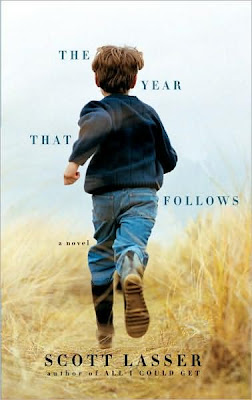
The Year That Follows by Scott Lasser is a novel that delves into the lives of two related and yet entirely different individuals. On one hand there's the struggling yet intelligent, fiercely independent Cat who is a single mother living in Detroit. Then there's Sam, a man who knows his life is coming to a close as well as the fact that he's not done all that good of a job at many things especially where is daughter Cat is concerned. The lives of both Cat and Sam are changed forever when Wall Street broker Kyle -- Cat's brother and Sam's son, is killed in the attack on the World Trade Center buildings on September 11th, 2001.

In this third novel author Scott Lasser deals delicatly and yet honestly with both the tragedy of 9/11 and the equally unsettling tragedy occurs when families grow apart. The Year that Follows focuses on the paths of Cat and her father Sam, both flawed individuals, with a frank honesty as their lives draw them back together. Front and center is the theme of lost children, Kyle's death, Cat's withdrawn relationship with her father and in what is perhaps the most compelling of the novel's storylines Cat's search for the infant child her brother had just learned was his days before his death. Lasser does a very admirable job of telling the story of real people with real flaws attempting a real reconciliation.

Kelly Hewitt: I read on your blog (Scott Lasser's Blog) that you have been working to publicize the release of The Year That Follows and are doing a book tour. In a different post you wrote: “writing is not performance, not really, but writers are sometimes called upon to perform, live, in person. I’m glad of it. Sure, it’s what’s on the page that matters, but a writer’s physical presence can bring added attention to the words.” I am curious, how have your book tour visits been
going? Do you still feel the same about the necessity of an author to perform from time to time?


Scott Lasser: How’s the tour going? My view is this: anytime you can find a bookstore that wants to have you visit it’s going well. I’ve enjoyed the events so far, about half of those scheduled. I don’t know that there is a necessity for writers to perform, but I do think that every little bit of promotion helps, and readings and talks are part of that.

Television still seems the most effective marketing machine ever invented, but writers hardly show up there anymore. (We’re talking lack of invitations more than lack of willingness. Even Cormac McCarthy went on Oprah, one of the last venues.) In fact, it seems likely that the publishing houses will start producing webcast interviews and the like, a relatively cheap way to reach readers. In fact, Kelly, you might consider this. One thing seems fairly clear to me: people buy stuff off screens.

KH: The events that make The Year That Follows such a great novel are centered around the death of Kyle during the 9/11 attacks. I have to admit that while reading the beginning chapters, I was very nervous about how you would deal with such a sensitive subject. My fears were unnecessary as you dealt with the events of 9/11 very respectfully and subtly by providing the reader with scenes before and after but not during. Did you ever consider writing the scenes in which Kyle died in the 9/11 attacks?

SL: No. Journalists did a great job of that, and had I added such a scene, with the inevitable cell phone call and the like, it would have felt gratuitous, which is to say not essential to this particular story.

KH: I thought it was great that Bryan Cranston (television's Breaking Bad and Malcolm in the Middle) recently plugged your book in Time magazine. Have there been other surprising endorsements of your novels?

SL: Well, it does seem that I owe Bryan Cranston a favor. And yes, I’ve had some surprising endorsements, mostly from other writers whom I respect greatly and who also blurbed my books: Christopher Tilghman, Richard Russo, Anita Shreve, and Wally Lamb, none of whom I’ve met, with the exception of Russo, five years after the fact. I’m grateful to each.

KH: Your website (click here to visit) notes that you have worked a wide variety of jobs: including ski instructor, English instructor, waiter, steel worker, government bond trader, and financial advisor and now author. Do any of your crazy work stories from so many professions find their way into your writing?

SL: Of course. I published a whole novel about Wall Street. A couple years ago I published a ski-instructor story. I’m currently working on a novel that will make some use of my time in the steel plant. I’m troubled by novels whose characters have no visible means of support. I don’t know about you, but I seem to spend a large amount of my time trying to make a living.

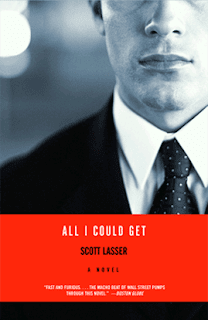
KH: Your first novel Battle Creek centers around a minor-league baseball team and America's relationship with its favorite sport. All I Could Get, your second novel, focuses on business and the world of bond trading. Each of these novels has a theme but also deal with issues of family and relationships. The Year that Follows seems less like your first two novels because it focuses much more on family not the world of baseball or the world of bond trading. Do you think that's a fair assessment? What would you tell your readers is the theme of The Year that Follows.

SL: Battle Creek and All I Could Get grew out of my experiences in very male milieus, whereas The Year That Follows did not; in fact, it has a heroine. I suppose that might explain the difference you feel. As for the theme, well, that’s always a tough one for the writer. I prefer that the reader makes that call. I guess I could say it’s a book about bloodlines and the meaning of family. Man, that sounds trite.

KH: In an interview I did with Wally Lamb not all that long ago he expressed a worry about how many stories he has left in him and noted that each novel seems to take him longerand longer. Now that you've written your third novel, have you ever had a similar feeling?

SL: Oh boy, there’s as question. Yes and no. I’m usually cutting things from novels. I suppose I figure if I can’t make it go away it will come back in the next book. As for length of time to write, well, I’d like to be faster. I’m actually working on that.

KH:There's one question I always have to ask. I realize that The Year That Follows has just been released but what can fans of you and your novels expect to see next from you? Have you already begun work on another project?

SL: I’m working on a new novel set in my hometown of Detroit. My goal is to have a first draft done by the end of this year, with something I could show my agent by the end of the following year, if not before that. I am certainly feeling more urgency now. Still, The Year That Follows came out about a year after it was accepted at Knopf, just to give you an idea of the lead time on these things.


Wednesday, May 27, 2009

Hillary Jordan - Author Update

I often chat with authors as their books are about to be released or have just hit stores. It is not often that I am able to check in with an author to see what life after the arrival of a best-selling book hits the charts is like. Book tours, interviews and the of course there's always the writing of the next book.

In a new series Loaded Questions will be featuring Author Update in which past Loaded Questions authors are asked to write about what's been going on since the last time we chatted.

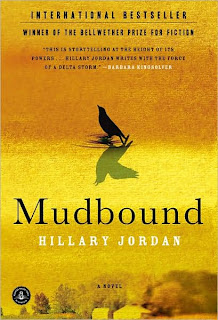
We begin with Hillary Jordan author of Mudbound her first novel and winner of the 2006 Bellwether Prize. Mudbound takes place in Mississippi Delta, 1946 and focuses on Laura McCallan, a college-educated Memphis schoolteacher who struggles to adapt to her new life on a farm she rightly names Mudbound. Living without modern comforts is a challenge for Laura added to caring for her daughters and striving to live up to her loving husbands expectations. Mudbound, told from the point of view of a number of characters, is a great novel and has been doing very well on Amazon, landing on several bestselling lists and continuing to do so in paperback.

Jordan and I last chatted in July of 2008. We discussed the fact that her mother and her life on a farm in Arkansas was an inspiration for the novel, the research and texts that Jorden read in order to research the period and a quote in which Jordan said she knew "more than should be legally allowable about mules, boll weevils, fertilizer, and the like!"

Click here to read my entire interview with Hillary Jordan for the release of Mudbound.

I wrote to Hillary and simply asked her to write about what life has been like since Mudbound's release and what she's currently working on ...

Hillary wrote:

The fifteen months since Mudbound was published have been a whirlwind. Thanks to Algonquin, which has championed the book in a way that most first novelists never get to experience, I’ve spent a tremendous amount of time on book tour, doing readings, signings and festivals all over the country. It has been exhilarating, exhausting, fascinating, gratifying and occasionally humiliating (like the Memphis talk show I was on where I was clearly second fiddle to a guy eating a 7-lb. hamburger). I’ve gotten to meet so many wonderful book-loving people: fans, booksellers, and other authors. In between, I’ve been going to artists colonies — in Switzerland, Saratoga Springs, the Santa Cruz mountains, and this autumn, Scotland — to work on my second novel. It’s called Red, and it’s set thirty years in the future in a right-wing dystopia (not to be confused with the last eight years). I hope to finish it by the end of the year.

Being published is an amazing thing, and Mudbound has succeeded beyond my wildest fantasies. It was the NAIBA Fiction Book of the Year and won an Alex Award from the American Library Assoc. It was a Barnes & Noble Discover Great New Writers pick and one of IndieNext’s top ten reading group suggestions. Recently, the trade paperback spent a thrilling six weeks on the NY Times extended list (my highest rank was #29). Mudbound has done very well in the UK also, thanks to the “Richard & Judy Show” (their Oprah), which picked it as a book of the month. It has been translated into Serbian and will be published in French and Italian in 2010. There are over 200,000 copies in print worldwide, a number I can hardly believe. Life is good!

-- Hillary Jordan

Thanks Hillary for participating! Interested in learning more about this fantastic new author? Here is a link to her website. Support Loaded Questions by purchasing a copy of Mudbound from Amazon.com (currently under $11.00) by clicking here!

Monday, May 25, 2009

Random Notes: Author Leads and Catherine Delors


I have gotten a lot of emails from folks with some really great suggestions for authors to interview. Some of these leads are currently being investigated.

Penny wrote "Have you interviewed the delightful, intelligent, first time author, historical novelist Catherine Delors? She does not write those irritating bodice rippers but real historical fiction? She is very knowledgeable in this field and so everything is in its place."

The answer is yes! Here is a link to my interview with the wonderful Catherine Delors when we chatted before the release of her debut novel Mistress of the Revolution.

Stay tuned for more info about upcoming interviews that will be announced soon!

Sunday, May 17, 2009

Upcoming Author Interviews


Elinor Lipman

Author of the new book The Family Man as well as Then She Found Me, The Inn at Lake Devine, My Last Grievance, The Dearly Departed and more.

Carolyn See of The Washington Post wrote of The Family Man: "Just because something is "light" doesn't mean it's not masterful. Lipman's use of dialogue, for instance, is exquisite…Though I read this book twice, I see that I stopped taking notes both times halfway through. Lipman mesmerized me. She hypnotized me. I admit it freely: I fell victim to the Elinor Lipman Effect."

Scott Lasser

Author of the upcoming The Year That Follows as well as Battle Creek and All I Could Get.

Lasser's upcoming novel, due out in June, follows Cat, a single mother living in Detroit when her brother is killed in New York. Cat sets off in search of her brother's child. Her search is still under way when she gets a call from her eighty year old father who is carrying the weight of a secret he has kept from her all her life. He asks Cat to visit him in California, intending to make his peace. . .

Christopher R. Beha

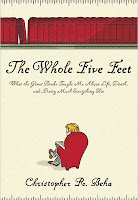
Author of The Whole Five Feet: What the Great Books Taught Me About Life, Death, and Pretty Much Everything Else, his first book released in early May.

In The Whole Five Feet, Christopher Beha turns to the great books for answers after undergoing a series of personal and family crises and learning that his grandmother had used the Harvard Classics to educate herself during the Great Depression. Inspired by her example, Beha vows to read the entire Five-Foot Shelf, one volume a week, over the course of the next year.


Saturday, May 16, 2009

Who Would You Like to See Us Interview?


I have said before that when I first started doing Loaded Questions (for a different site) I simply went to my library of books and started sending emails to anyone I could get in touch with. A couple of years later I have had a chance to chat with some of the authors that really changed my view of what it means to be an author and a reader. There are, of course, a good many authors who I still look forward to chatting with. (Anchee Min, where are you?) We have a great line up of new authors and old favorites whose books will be launching this summer already scheduled for interviews. However, I wanted to ask you readers:

Who would you like to see us interview?

I know what dedicated readers you all are. What new authors do you think others would like to hear from? These suggestions can be current bestselling authors, authors with upcoming releases, favorite legends of fiction - you pick. I am hoping that with the help of some publicist and publisher friends that we can seek out your suggestions.

Tuesday, January 13, 2009

Loaded Questions in Print!


I am happy to announce some very exciting, surprising and flattering news ...

A few months ago I conducted an interview with Robert Leleux for the hardback release of his debut book, the humorous The Memoirs of a Beautiful Boy.

I received an email from Robert a few days ago to announce that my exclusive Loaded Questions interview has been printed by St. Martin's in the brand new paperback version of The Memoirs of a Beautiful Boy as part of some reading group resources at the back of the book!

What a surprise!

Thanks to everyone for reading the interviews and to Robert and St. Martin's for the honor.

Here is a link to my interview with Robert Leleux.

Tuesday, December 30, 2008

Hannah Tinti, Author of The Good Thief -- Loaded Questions Author Interview


The Good Thief is an exciting adventure story in which twelve year-old Ren, a one-handed orphan who has grown up in a Catholic monastery, is rescued by Benjamin Nab, a thief who at first presents himself as the young boy's brother. The story that follows is, as many reviewers and fans of the book have noted, quite Dickensian. Young Ren and Benjamin, along with a cast of frightening friends, encounter graver robbers, silver-tounged salesmen, murderers and outright thieves. Taking place in 19th century New England the novel is part Victorian drama, part Oliver Twist. The end result is a fun and fast paced debut novel that guides Ren, who the reader can't help but root for, through a world of equal parts danger and wonder.

In addition to The Good Thief, Hannah Tinti is the author of a short story collection Animal Crackers.


Kelly Hewitt: I've noticed that several reviewers of The Good Thief have mentioned fantastic elements in the book but are most surprised by the stealing of the teeth of corpses for denture making. When I was reading the book, though, this seemed somewhat plausible especially considering that body snatching for surgical practice certainly was taking place at the time the novel was set in. I wonder, where did you get the inspiration for this particular part of the book? Did you find some historical precedence for stealing teeth from the dead?

Hannah Tinti: I read many books about resurrection men and grave-robbing. Two that were particularly helpful were The Italian Boy by Sarah Wise, a non-fiction account of a trial of two resurrection men in London, and The Knife Man by Wendy Moore, a biography of John Hunter, who was a famous surgeon and resurrectionist. I knew that grave-robbers would often take the teeth as well as the jewelry of the dead and sell them to dentists. Sometimes resurrection men would also separate the teeth and sell them separately, to make more money. There is a great ghost story that I remember reading as a child, about a man who has just buried his young wife, and then hears her that night, calling for him and sees her coming down the road, covered with blood. He locks the door against her, but soon realizes that his wife was actually buried while she was in a deep sleep, and when the grave robbers were pulling out her teeth, it woke her up. So that ghost story, combined with the historical information I found, started the idea, and then Mister Bowers the dentist truly came into being when I came across a photograph of George Washington’s teeth, and I became fascinated by early dentures, and discovered that they were made from all different kinds of materials.

Kelly: In reading many interviews and reviews in preparation for our chat I was perplexed when I ran into, again and again, readers and reviewers who felt a need to designate The Good Thief as either young adult (YA) or adult fiction. You've said that you had neither in mind when writing the novel. Why do you think that there is a tendency to want to fit the story into one category or another?

Hannah: I’m not sure. Perhaps they just want to know where it should be shelved. Personally, I don’t think there should be such hard divisions in literature. Adults should be more open to the fantastic books that are being written for younger audiences, and children should be encouraged to read beyond their level.

Kelly: Ren, poor Ren. This poor kid goes through a lot in the course of The Good Thief. Was there a particular hardship, setback, ordeal or crime that you found particularly hard to put your one-handed orphan through as an author?

Hannah: Ren goes through quite a lot in the book, but I think he is the kind of child that can withstand a great deal. The hardest scenes to write were the more emotional ones—Dolly’s death, and Ren’s separation from Benjamin—because I knew they hit Ren’s most vulnerable spot: his heart.

Kelly: What kind of research goes into writing a novel like The Good Thief? It is fiction and sometimes fantastical fiction but there are some aspects of early New England that you write about that are historically accurate. Are there any particular texts you would point readers to who are interested in this period?

Hannah: I read many books, including those mentioned above, and I also spent time in the library, reading newspapers from the 1800s, which gave me a real feel for the time period. But I mainly drew on my own experience growing up in Salem, Massachusetts. Many houses in Salem are from the 1700s and 1800s. This helped me to imagine the towns, particularly North Umbrage and Granston. Granston is a combination of Salem and Gloucester, Massachusetts—where I lived briefly after graduating from college. North Umbrage is a combination of Salem and Lowell, Massachusetts, known for its factories. If some of your readers are interested in New England history, particularly shipping and trading, I’d suggest visiting the Peabody Essex museum in Salem, Massachusetts, which has a wonderful collection. If they are interested in medical history, a visit to the Mutter museum in Philadelphia is a real eye-opener.

Kelly: I read in an interview a few months ago that you were working on not a sequel but another novel that would feature a minor character and/or the same setting but that you weren't willing to share anything until you reached a hundred pages. I am wondering, as someone who really enjoyed this novel, have you reached a place that you can tell your readers anything more about this prospective novel?

Hannah: I’m sorry—not yet!

Kelly: Prior to The Good Thief you were a short story writer. You even mentioned in one interview that you had not intended for The Good Thief to be a full novel. With the success of The Good Thief, do you find yourself thinking more about writing novels rather than short stories?

Hannah: I think that in the future I will probably do both, going back and forth between the forms. My decision to write The Good Thief as a novel was driven entirely by the material—I saw rather quickly that it was too big to contain in a short story. I work from images or ideas. Often I don’t know exactly what I’m writing about until it is on the page.

Kelly: I know that you are one of the founders of One Story, a magazine that publishes one story per issue. Are you still working with One Story?

Hannah: Yes. I’m still acting as editor-in-chief at One Story. It’s something I’m very passionate about.

Sunday, December 28, 2008

Rivka Galchen, author of Atmospheric Disturbances - Loaded Questions Interview


I first learned of Atmospheric Disturbances by Rivka Galchen from author Lauren Groff (The Monsters of Templeton, the upcoming Delicate Edible Birds) when she reported that she was reading an early release copy of the book. Intrigued, I emailed the publisher of the book to ask about getting a copy for myself.

Atmospheric Disturbances, originally released in June arrived at a very busy time but was still a novel that I very much wanted to read, it made it into my nigh stand table where it languished for a few months. Heading out of town one weekend, I brought along my copy of Rivka Galchen's debut novel and after having read the first three chapters I was unable to put it down.

On the outside this novel, which centers on a Dr. Leo Liebenstein, a successful older therapist living in New York City with his younger and very attractive Argentinian wife Rema, looks as though it is a book heavily rooted in mystery and the science of weather and the atmosphere. However, the further I got into the novel the more I began to realize that Atmospheric Disturbances had much more to say about long term relationships and the way in which we all change over time when Dr. Leo encounters one day, in the apartment he shares with his wife, a young woman who looks and sounds just like his beloved wife Rema but is most certainly not. The novel centers on themes of love and the ways in which, just like the weather, relationships change, shift and enter different stages.

I have recommended this book to a number of people and would very much encourage anyone looking for a fresh new literary voice to give Atmospheric Disturbances and the exciting and entirely interesting voice of Rivka Galchen a look.

Loaded Questions Interview with Rivka Galchen, author of Atmospheric Disturbances


Kelly Hewitt: I have to say, first of all, that I was kind of nervous when writing the questions for this interview, partly because I liked Atmospheric Disturbances so much and partly because all of the other interviews that you have participated in have focused very heavily on science, the interviewer resorting to a scientific battle of wits with you. I know nothing about science and am not all that keen on embarrassing myself. So, I am going to let you be the scientific whiz and I will play the part of the interviewer more interested in you and your novel. Sound like a good deal?

Rivka Galchen: Sure. I’m excited about whiz costume possibilities.

Kelly: The greatest thing about Atmospheric Disturbances is that it does involve a good deal of science and yet, with my previously admitted minimal knowledge, I found the novel to be very good and profound – one of the best I read this year. The novel, for me, was more about relationships and how they change over time, sometimes quickly, almost in the same manner that weather changes, going from good to bad. Is that a fair analysis if not too woo-woo?

Rivka: I’ll go with that. Especially if you’re going to be so sweet about it. In general, I tend to take other people’s reads a bit more seriously than I take my own. I guess I go through life with the nagging suspicion that other people know something about me or my work that I don’t; this despite no past KICK ME sticker traumas. I get that mood of an Errol Morris film, thinking I’m telling one story, thinking I’m running the narrative, while everyone else understands that I’m revealing something totally else. (Which is, well, what my narrator does; I love the sound of self-deception.) I’d like to think I’m a little more in control with the voice of a fictional character than with my own voice, but, I suppose I can’t really know. That said, so far as I can tell, I could think I was writing about the estivation patterns of pond frogs and somehow I’d still somehow be writing about love. I think that’s all I ever write about. Meaning: your read sounds plenty right to me.

Kelly: Some of the reviews of the book have made a big deal about a novel with a scientific component. Do you feel like fiction and science are as odd a pair as some of the reviewers of the book have made them out to be?

Rivka: I like how in Kafka’s Amerika, there’s a bridge—the Brooklyn Bridge actually—that links New York to Boston. I mean, one wouldn’t need such a bridge, but why not? And Boston’s quite a bit farther from Manhattan than Brooklyn is, but what if there was no bridge (or tunnel) to Brooklyn, and you were afraid of water? I guess what I’m not quite saying is that it never struck me that one needed to construct a connection between fiction and science—there’s so many there already—but maybe at the same time there’s a kind of, hopefully useful, confusion on my part about where they are—according to a more generally consensus. Maybe they really are s far apart as Boston and New York. For me, fiction and science are both these wild, childish, rigorous imaginative endeavors. I know that fiction writers are more likely to be seen wearing hooded sweatshirts and scientists are more likely to be wearing—this might be based just on my dad—dowdy button-ups…but they both seem like play, and play that is very sensitive to vocabulary, striving for a very precise way of saying things.

Kelly: You received a MD degree from Mount Sinai School of Medicine with a specialization in psychiatry and then went on to get your MFA at Columbia. I don't have a question here, every interview about your includes this fact and so I felt obliged.

Rivka: Thank you for not asking more about it. Medicine, medicine, medicine, medicine, medicine.

Kelly: I was about a third of the way through the novel when I realized that the name Gal-Chen, the last name of the novel's almost mythical scientific hero, was very familiar. I sat down the book to think about where I had heard it when I glanced at the spine of the novel and realized that aside from the lack of a hyphen, it was your last name. I have since read that Tzvi Gal-Chen is your father, a prominent scientist himself, who passed away some years ago. I wonder at what point Gal-Chen became a part of the novel. Had you developed the character inspired by your father before the characters of Leo and Rema?

Rivka: My dad used to get all these wildly mislabeled junk letters. “Chewy Chen.” “Zivi Galen.” For whatever goofy reason this amused my brother and I to no end. So even when he was alive, my dad’s name had a kind of goofy talismanic quality for me. And then, I’m not quite sure how his name came into the novel, but I think a lot of it had to do with it being a first novel, which is a lonely process in which you’re mostly just trying to keep yourself entertained. And so having his name enter into the novel, having him be mistaken for a kind of heroic and wise figure who may hold the secret to the world and everything—well, that both amused me, and got at that emotional feel of my father to me…it was kind of irresistible to me to have other people—these characters—have totally other reasons than my own for putting a kind of magical excess of faith into, well, kind of my dad, kind of a ghost.

Kelly: From what I have read your mother is a fairly opinionated woman, upset that your real age has been printed in interviews. How did she feel about the inclusion of your father in the novel? Did you share portions of Atmospheric Disturbances with her prior to its publication?

Rivka: My dad’s been the family white elephant in the room ever since we lost him. My family didn’t really comment on his inclusion in the novel. I think it made them happy though. My dad used to clip out articles in which people wrote about their dads—I remember the Calvin Trillin one in particular—and then post them on my wall, sort of as a joke, sort of seriously, the idea being, you should do this! (We were the kind of family who staged tests trying to prove who our dog loved most.)

Kelly: Normally I would not ask an author a question of this nature but, given the connections between characters in the novel and your real life it begs asking. If Tzvi Gal-Chen is based on your father, a character that is all-knowing, a source of guidance and a scientific genius then does one of the other characters in the book represent you? Would you say that you are like Dr. Leo, the lost psychiatrist who is transfixed with Gal-Chen and comes to almost worship him, craving contact or are you like Rema, the woman who has a history of also being very interested in Gal-Chen to the point of impersonating him in order to help Leo with a patient? Both of these individuals have a relationship with Gal-Chen that one could see as parental, akin to a relationship that an adult child might have with a parent they have admired and have missed.

Rivka: Oh dear, yeah, it’s much more clear to me now—during composition, I really did think of putting my dad’s name in the book as just this tiny private joy—that the attention paid to him by the various characters, all the ludicrous hopes and plans centered on him, all of that, it’s kind of my own return of the repressed, the repressed showing up in a silly outfit of course, but making its return nonetheless. I’m definitely always longing for family, and not really to be a parent, but to be a kid again; we were this tight odd little tribe of four, with basically no relatives or close family friends within a thousand mile distance. I miss that. Even though maybe I’m only imagining that I ever really had it. But I don’t think so. Either way though, I think that’s something I share with Leo and Rema both; sometimes I feel like they’re both vying for the position of the one who gets to be tended to, the more difficult one, the child.

Kelly: You're quirky. I hope that doesn't offend, I mean it in a very entertaining and interesting way. You've said some very interesting and funny things in interviews. In an interview at Bookslut you said: "I would be honored if someone disliked me. There was always something mild and bland about me. That would be great. That would be exciting." How is it that you think you were mild and bland and do you still find yourself to be so?

Rivka: I eat a Six Grains pear yogurt and two sugar cookies for breakfast every single day. If I find a coffee shop or restaurant or bookstore or person I like, I jut want to go back again and again and again and never try anyplace new. And I can’t handle disagreeing with anyone in a conversation. So. I am good at origami though. And at making all sorts of tarts. I’m not sure if I dislike being a bit pale and steady of personality though. I’m ambivalent about it. It’s a kind of privacy.

Kelly: And secondly, now that your novel has become a big hit and has landed on many lists of the best books of the year I wonder if you've had the fortune of being "honored" by someone who has disliked you? It seems like if this was something you were aiming for you ought not to have written such a good book.

Rivka: Well maybe that was a bit of stretch, or a fantasy at least, my saying that I like to be disliked. I guess I do and I don’t. There’s undoubtedly something about having a book out in the world that has put me back in touch with my chubby-seventh-grade-leopard-print-pant-wearing-too-embarrassed-to-ask-my-mom-to-buy-me-a-bra self. But weirdly the most judged I’ve ever felt in my life was a few years ago when an old woman in the library started shouting at me and punching and swinging her bags of books at me for no reason that I could tell, except that maybe I was taking up too much space in the hallway. Those sorts of random acts of aggression always have the feel of divine justice to me, like I deserve them. Whereas, somehow, snipey comments here and there, about the book or about me, feel vaguely not personal at all? Maybe I have some crossed wiring in my head.

Kelly: Part of what makes the characters in Atmospheric Disturbances so interesting, entertaining is the fact that you let them make mistakes, think unintelligent thoughts and behave very awkwardly. In another interview you wrote: "I have a lot of friends who are deeply awkward, and I'm kind of seduced by the things that cripple them. But it's also a little bit cruel, even though it's seductive and interesting." Aside from finding this endearing and realizing that I sometimes feel the same way, I wanted to know what else does Rivka Galchen find herself "seduced" by?

Rivka: Ummm…I’m going to steal someone else’ language here. there’s a Gerard Manley Hopkins poem that starts: “Glory be to God for dappled things….all things counter, spare, original, strange.” I think that’s what I love. I have to stop stealing that line of his though. I think just used it in a blurb for a book that I loved. It’s hard, the vocabulary of love! Sometimes it feels all used up.

Kelly: One of the things I will take away from having read Atmospheric Disturbances is the word simulacrum, a word that Leo often uses to describe the facsimile of his wife Rema that is a lot like her and yet not at all her as far as Leo is concerned. You have come up with a number of interesting words that refer to the copy of Rema. My boyfriend, who is now reading the novel, asks me again what it means every time he cracks the book open and when I told him that we'd be doing this interview he asked me to tell you that the word gives him "a great deal of difficulty". Is this a word that you had been carrying around in your vocabulary or one that you discovered when writing the novel?

Rivka: My dad used to say simulacrum to mean Xerox copy, or carbon copy. He had this odd auto-didact foreigner’s English, and a fondness for chunky and cluttered words. He also instilled in me a habit of referring to floors as ‘the ground.’ I really think though, even if English had been his first language, that he would have still had this kind of estranged vocabulary. He liked throwing technical terms into, say, a description of a cookie. I still remember him talking about a cookie ‘cleaving along uncertain planes’—and how that made me think of a cookie and a quartz rock at the same time, and, I dunno, I could kind of ‘hear’ his language in a way that I can’t quite with ‘normal English.’ In normal English I kind of go into auto-pilot. I was thinking about this on a plane recently, about how they’d ever so slightly changed the little safety patter…to that part where they talk about the dropping of oxygen masks in an emergency landing, the stewardess added a little interjection about an emergency landing being – ‘a highly unlikely occurrence’—and somehow, amidst that drone of safety instructions, for the first time since I was little—I suddenly actually felt that I was hearing about something scary, about an emergency, about the plane plummeting to the earth, what to do, all these sorts of images coming to mind…which is to say, I could ‘hear’ what she was saying…then again, I guess pretty much anything makes me scared when it comes to flying.

Whoa, so that was a digression. I guess I’m flying tomorrow for the holidays.

Kelly: When we first began chatting via email I remember telling you that, after having completed the novel, I came to realize that over time a lot of people we have close relationships can seem like they are a simulacrums, different that the person we first met. That, in the end, is the truly beautiful thing about this novel, the realization that we are all always changing and that we aren't the same people today that we were a year ago. Having spent so much time writing a novel about a man who suddenly believes that the love of his life has been replaced by a very similar and yet starkly different stranger, did you come to feel that those close to you were simulacrums?

Rivka: Pretty much several times a day. My mom and I went to a Turkish restaurant together not that long ago, and she didn’t want to order the fried calves’ livers, and she normally talks about them the whole meal. So that made me suspicious. You know, those Sanka moments (to reference a really old commercial, that both dates me, and makes evident my terrible past of watching 9 hours of TV a day.) And little things. Like when my husband is oddly responsible about depositing a check, or getting his mom a birthday present. I doubt him in those moments.

Kelly: And finally, the question I have been waiting to ask you! What's next? Have you already started working on another novel? What can we expect from Rivka Galchen down the road?

Rivka: I think it's a novel, I think it's titled The Nature Theater of Oklahoma, and I think it has visions and ghosts, kind of. So, mostly that!

Related Posts with Thumbnails