Showing posts with label Kelly Hewitt. Show all posts

Tuesday, January 13, 2009

Loaded Questions in Print!


I am happy to announce some very exciting, surprising and flattering news ...

A few months ago I conducted an interview with Robert Leleux for the hardback release of his debut book, the humorous The Memoirs of a Beautiful Boy.

I received an email from Robert a few days ago to announce that my exclusive Loaded Questions interview has been printed by St. Martin's in the brand new paperback version of The Memoirs of a Beautiful Boy as part of some reading group resources at the back of the book!

What a surprise!

Thanks to everyone for reading the interviews and to Robert and St. Martin's for the honor.

Here is a link to my interview with Robert Leleux.

Friday, October 17, 2008

Blast from the Past: Loaded Questions with "Dreamers of the Day" author, Mary Doria Russell - The First Interview

I have written a lot about Mary Doria Russell and have interviewed her a total of three times. The following interview is our very first interaction and I use the word interaction purposefully because if nothing else Mary Doria Russell is both hilarious and interactive. I will probably always remember our first interview because it was the first time that an author completely surprised me (but in a pleasant not creepy way) when she called me honey, shared her inner conversations:

"I've asked myself, "Mary, would it effing KILL you to write a novel about a middle-aged Ohio lady? Why does everything have to be so hard? Why do you always pick out something that takes years of research because you don't know jack about any of it when you start?"

All of this and she cusses! I once wrote about her: "Mary is a kind, boisterous, funny, and an honest woman who once told me that, in order to make sure she wasn't writing a 'feel-good Holocaust novel', she had quite literally flipped a coin to find out which characters would live and which would die. Mary Doria Russel likes to cuss and I like not stopping her." That introduction, we later noticed has been used by several websites when discussing the bestselling author. Mary even informed me in our last interview that my observations had been used to introduce her at the grand opening of the Granville Library.

In short, I jump at a chance to interview Mary Doria Russell. Here you can access my second interview with Mary and my third Mary Doria Russell interview in which she uses twice the amount of profanity as usual. There's more to it than just the brutal honesty and naughty words, Mary has also shared a great deal of her history and shared very personal childhood memories especially when discussing the character Agnes Shanklin, heroine of her latest novel Dreamers of the Day, signs of a truly genuine nature.

Without further chatter, here is my first interview with Mary Doria Russell that has never been shared here at Loaded Questions as with all of the Blast from the Past interviews which originally appeared on another website.


Kelly Hewitt: Is it true that for A Thread of Grace you literally flipped a coin to decide if your characters would live or die?

Mary Doria Russell: Yeah, it's true. Here's the thing of it. I was writing a novel about Italy, the one nation in Nazi-occupied Europe where citizens participated in a vast conspiracy to deny the Germans what they most wanted: Jews. They were stunningly successful, despite 20 months of vicious and vindictive occupation by Italy's jilted ally. More than 85% of the Jews of Italy survived -- not only native Italian Jews but also thousands of foreign refugees.

Now the trouble with this enterprise is, whenever you write about rescuers or survivors, you invite readers to identify with them. You risk indulging fantasies like, "I would have hidden Anne Frank," or "I'd have fallen down and pretended to be dead," or "I would have emigrated at the first sign of trouble." No. You wouldn't have. The overwhelming statistical reality is, if you were Jewish, you'd have died and if you weren't, you'd either keep your mouth shut and join the party to get a job, or you'd gleefully heave a rock through somebody's shop window and take whatever you wanted. Don't kid yourself. People haven't gotten any more moral or decent or prescient in the past 60 years, I promise you.

So the problem was, How do I avoid writing a Feel-Good Holocaust Novel? Because unless you are in Darfur, right now, fighting the Janjuweed, you don't get to feel good about the Holocaust. You don't get to take vicarious credit for the balls-to-the-wall crazy-ass bravery that the Italians showed during the Nazi occupation. Only they and Paul Rusesabagina --whose resourceful courage was dramatized in Hotel Rwanda-- get to feel good about how they behaved. The rest of us should be ashamed.

I needed to do something that would make readers feel the jeopardy, the uncertainty, the complete randomness of who lived and who died. All the survivors and combat veterans I interviewed said the same thing: It was dumb luck, who lived and who died. It didn't matter if you tried to stay safe, or if you took insane chances, it was dumb luck. So my son said, "Okay, let's make a list of the characters and flip a coin. Heads they live, tails they die."

As the author, I got to decided when and how they died, but I only reversed the flip in one case, where it would have been too sentimental to accept the coin toss.

Kelly: Did the process make you nervous? Have you done this for other novels? Would you recommend it to other authors?

Mary: No, none of the other novels seemed to call for this. I started The Sparrow, for example, with a sole survivor, so pretty much that settled things. I loved my characters, and I delayed offing them as long as I could, but they were going down. Would I recommend it to other authors? Hell, I don't know! Unless you're writing to formula, every novel is a new puzzle. What works for one story or writer may not have anything to do with what works for another. That said, it did bring a kind of immediacy to the story. The reader was allowed to identify with a character, to buy into the decisions, and then had to "live" with the consequences.

I wanted it to be the opposite of a Star Trek novel, for example, where you know Spock and Kirk are going to live, and at the end of the story, the franchise will still be intact. That bleeds the tension out of the narrative.

I actually had one reviewer bitch that he didn't think I should have written the novel that way because it wasn't safe for him to identify with characters or fall in love with them, since they might die. Well, duh. Holocaust.

Stupid shit.

Kelly: You have been commended for the detail and intricacy of your knowledge about various military maneuvers in A Thread of Grace which takes place in WW II Italy. Do you feel like your father's background, as a Marine Corps drill sergeant, helped to form your skills in this area?

Mary: My dad certainly helped with the weaponry. He actually knew how to field-strip an Italian sidearm, and gave me the instructions over the phone along with an estimate of how long it would take someone who was good at it vs. just learning how to do it. He was also the ideal dad for a girl. We are polar opposites politically, and have been since I was about 12, but very similar temperamentally. He instilled in me both intellectual confidence and a no-bullshit work ethic that's served me well in Academe and as a novelist. When I start something, I will hammer at it until it's done right. So he was a support both globally and with militariana. I had several others who helped with that aspect of Thread and, of course, the war itself is massively documented. I read a ton of books on the Italian campaign of 1943-45, from German, Allied, civilian
and partisan points of view.

Kelly: The Sparrow and Children of God are both highly acclaimed Science Fiction novels that also deal heavily with religion and morality. That's a lot of ground to cover but you do it with amazing ease.

Mary: Big laughs! Honey, it took me 60 drafts. What looks like "amazing ease" is the result of relentless, ruthless editing. The Sparrow was not just my first novel, it was my first attempt at creative writing of any kind, unless you count grant proposals. Remember, I'm a Ph.D. in biological anthropology. My trade was teaching gross anatomy, with a specialty in craniofacial bio mechanics. The last English course I took was during the Nixon Administration. Sonny and Cher were still married, for crissakes. I had a standard metric shit-load to learn about writing fiction, and it didn't come easily.

Kelly: A quick look at your website shows some great pictures of your pets. I've read about how important your dachshund Annie Fannie is to you. Have you ever thought about writing some children's books and using her as a character?

Mary: SHRIEKS OF LAUGHTER!!!!!!!!!! Actually, she is a character in the novel I'm writing now,which is decidedly not for children. It's called Dreamers of the Day, and it's set against the background of the 1921 Cairo Peace Conference, when T.E. Lawrence, Winston Churchill, and Lady Gertrude Bell invented the modern Middle East.

For the past 12 years, I've asked myself, "Mary, would it effing KILL you to write a novel about a middle-aged Ohio lady? Why does everything have to be so hard? Why do you always pick out something that takes years of research because you don't know jack about any of it when you start?" This time I'm doing a first person narrative for Miss Luisa Middleton, an Ohio maiden lady on holiday in Egypt shortly after her mother dies in the Great Influenza of 1919. Luisa is traveling with her dachshund Annie (names may be changed to protect the innocent). I swear to you, the dog is an important plot device, not an annoying self-indulgence.

Admittedly, this does give an excuse to tour with my own Annie when the book comes out. She's already doing gigs with me, and I can tell you right now: she is cuter than Amy Tan's yorkies, she is better behaved than Amy Tan's yorkies, and she is way longer than Amy Tan's yorkies.

Kelly: I am one of those people who can't help but fill their shelves with books, CD, and movies. What is the one thing that loads down the shelf of Mary Doria Russell?

Mary Doria Russell: I have a nearly complete set of Dorothy Dunnett's novels. Everything I know about writing I learned from her Lymond series, mixed with what I picked up from Robert Ludlum's thrillers!

Wednesday, October 1, 2008

The Return of Loaded Questions


Well, the title says it all. After a hiatus that was both way too long and hard to endure, I am happy to announce that beginning now Loaded Questions will return to a regular schedule, bringing you author interviews, book reviews, literary news and features.

The contents of this site very rarely contain any information about my life (and rightly so, believe me folks it is usually most boring). However, I feel as though I owe a brief explanation to the dedicated readers of Loaded Questions who have sent their well wishes and concerns over the last month and a half. The reasons for my absence had to do with an ongoing illness that I have struggled with over the last year. I am happy to report that while the battle is by no means over I am feeling well enough to return, along with the help of Loaded Questions' valuable contributors and friends, to the business of bringing you interviews with up and coming authors of interest as well as conversations with some of the most established, popular and talented writers alive.

Thank you for your concerns and continued interest in Loaded Questions.

Kelly

Monday, July 21, 2008

Ask Sharon Kay Penman a Questions


Don't adjust your computer screens, you've read right. I have just finished chatting with Sharon Kay Penman who has agreed to do a second exclusive interview for Loaded Questions. I know a number of you are really looking forward to the release of her latest book, The Devil's Brood, to be released in early October and have been Sharon Kay Penman fans for a number of years and so I decided that perhaps I would turn the tables this time and let the devoted readers of Loaded Questions submit questions they would like to have me ask Sharon. That means that YOU get to ask the questions this time around!

Simply click reply and submit the question you have been dying to know about one of the most successful and revered historical fiction writers alive. Here is a link to my first interview with Sharon, maybe it will get the ideas swirling.

I want to have the questions submitted soon before Sharon heads out on tour so don't hesitate and send your questions now.

Loaded Question Author Interview: CW Gortner Author of The Last Queen


Kelly Hewitt: This book, The Last Queen, had been on my Amazon wish list for quite some time, what can you tell us about the process, or perhaps ordeal is a better word, to get this book published?

C.W. Gortner: I wrote The Last Queen over ten years ago; it was conceived in response to the rejections my first novel about Anne Boleyn had received during submissions in New York. I’d had a very close call with that first novel; a wonderful editor at St Martin’s Press loved the book and wanted to acquire it, but historical fiction was going through what my agent at the time referred to as a “drought” and the editor ended up unable to offer on the book. In his letter to me, he mentioned Anne was a very well known character, and while there hadn’t been any recent fiction published about her he had heard of a novel that had been recently acquired. This turned out to be The Secret Diary of Anne Boleyn by Robin Maxwell. My agent and I felt it would now be quite difficult, if not impossible, to sell my novel, so I decided to write about a character who was less known. I’d always been fascinated by Juana la Loca since childhood and planned to write about her at some point, so I started my research.

Fast forward two years and I’d just finished my first draft of the manuscript. My agent and I had parted ways by mutual agreement, so I started querying. Any writer who’s queried agents knows how time consuming it can be but I was quickly picked up by an agency in Chicago, where an enterprising junior agent loved the book. She requested changes to enhance the romantic elements of the story. I was reluctant but she reassured me these changes would help its appeal with editors. She started some submissions, and then, as luck would have it, one day out of the blue called to tell me she was leaving the agency. The primary agent there wasn’t interested in historical fiction, so I lost representation.

In frustration, I put the manuscript aside, returned to college to obtain my MFA and started working on a new novel. I also honed my research of agents and located an agency that specialized in historical fiction. I queried them and an agent there expressed keen interest, though she warned me upfront that the market remained dire for debut fiction, particularly historical. She had me send her everything I’d written. She adored THE LAST QUEEN and asked me to reverse the changes the previous agent had done, saying she felt the book was strong enough without the overt romantic tone. Once again it went out for submission. While editors were generous with their praise, no one wanted to take a chance on a story about a relatively obscure Spanish queen. Finally, my agent and I decided to set it aside and try other work. I wrote THE SECRET LION during the four years I was with this agent, and she rallied beyond the call of duty to sell my work, but we didn’t succeed. Eventually she moved on to another agency and it became clear our association had reached an impasse, so we separated.

By this time, I was depressed with publishing and incredibly frustrated. I started looking into self-publishing. I felt I had nothing to lose. I ended up publishing THE SECRET LION through a small start-up press in San Francisco that used a combination of limited print runs and print-on-demand. There was no advance or marketing money. I learned everything I could about publicity and marketing books, and THE SECRET LION started to attract critical praise and word-of-mouth among readers. Within two years, it had sold several thousand copies, mostly online, as we had no bookstore distribution to speak of. Then, the press went belly-up and folded; to keep my book in print, I joined with two colleagues to start our own press, Two Bridges. THE SECRET LION was re-issued with a reading group guide and continued to sell extraordinarily well for a book without a major NY house behind it. The experience was so positive I decided to publish THE LAST QUEEN. Within a month it sold one thousand copies. Then one day my phone rang. It was my now-current agent, Jennifer Weltz, who worked at the last agency where I’d been represented and was familiar with my work. She wanted to know if I had an agent, which I didn’t. The market for historical fiction was excellent, she told me, and once she heard of my recent endeavors she wanted to submit THE LAST QUEEN in New York.

I liked Jennifer instantly; she’s witty, enthusiastic, and no-nonsense. I felt a kinship with her and thought, why not? I was content with my current arrangement, so I didn’t expect anything. As it turned out, for months we got rejections. Then two publishers expressed interest and within days THE LAST QUEEN went into auction. Jennifer was tireless on my behalf. She restored my faith in agents and I could hardly believe that after nearly thirteen years, I was looking at a major sale. My editor Susanna Porter won the auction for the Ballantine Books imprint of Random House in a 2-book deal. She did a thorough revision of the book, and I got the opportunity to explore Juana again under the auspices of a talented editor, which has been a terrific experience. She and my associate editor, Jillian Quint, have helped me shape my work in ways I’d never thought of.

That’s how THE LAST QUEEN got published. Yes, at times it was an ordeal but I learned so much about the business of publishing and my own craft, in a way it’s exactly how it was meant to come about. I feel quite blessed.
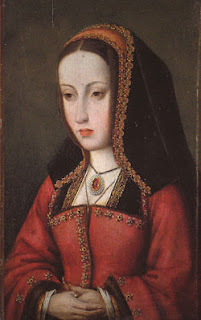
Kelly: I recently visited your website and read about your personal history. It almost seems as if you were destined to write a novel about Juana. Not did you grow up in Spain, but you lived near a castle that belonged to Isabella and Ferdinand, visited Juana's grave in Granada where the novel first begins, perhaps most interestingly, your grandmother, a well-known theatre actress named Pilar Gomez del Real, played Juana on stage! I was astounded at all of these connections. I have a bunch of questions about all of this.

First of all, how old were you when you first resolved to write a novel about Juana?

CW: I was in my mid-thirties, as I explained above— but I’ve known about Juana since childhood and it was always in the back of mind that one day I wanted to write about her. As a boy, I took a trip to Granada and visited the Alhambra and the cathedral where Juana and Philip are interred. I remember looking at her stone effigy and wondering if the lurid legend was true. Did she really go mad over love? Was she really so unstable she could never have ruled Spain? It became a secret obsession of mine: I always imagined her as this tragic, enigmatic figure no one understood. As it turned out, my research uncovered much more: I discovered an extraordinary woman of passion, conviction and courage, whose voice had been silenced by men determined to see her forgotten.

Kelly: Do you know that name of the Spanish play in which your grandmother portrayed Juana?

CW: It was called “Loca de Amor”: Mad over Love. A famous film with the same title was made in Spain the 1940s, based, I think, on the play. The film proved immensely popular and swept the Goya Awards, Spain’s equivalent of the Academy Awards. It essentially follows Juana’s legend—the myth, if you will. My grandmother got excellent reviews: Juana is an actress’s dream role!

Kelly: And lastly, when are you planning on taking me on a guided trip of Spain? Oh, my dear, anytime you’d like! I always like going to Spain. My partner and I hope one day to live six months out of the year there.

Kelly: Speaking of your website, it is beautiful. There is a feature on the main page titled Juana's World which features excerpts from the book as well as wonderful pictures and descriptions of each of the characters in the book, period paintings of the castles and cities where the novel takes place as well as information and portraits of all of Juana's children and photos of Juana's tomb. I could go on and on! Anyone interested in the royal history of Spain will marvel at the information and art work you have put together.

Readers of the book will find it immensely rewarding to actually see the characters and places depicted in the novel. As a reader and fan of historical fiction I have to thank you for this feature. How and why did it come about? Did you put it together yourself?

CW: The idea was suggested to me by my lovely and dedicated publicist, Lisa Barnes. I went to New York after the book sold to meet Jennifer in person and the Ballantine team who would be working with me. They took me out to a wonderful New York lunch, where their passion for books was truly heartwarming, especially for me. I had demonized the industry somewhat because of my past experiences and I now saw that people who work in publishing are by and large ardent bibliophiles like me. Lisa and I were talking about publicity for THE LAST QUEEN and she mentioned how much she liked my website and that she’d love to see pictures of Spain on it, as she’d never been there and I bring the country to life in my book. I went home and thought, wouldn’t it be interesting to combine pictures of Spain with Juana’s story, so readers can get a visual sense of the locales and characters. So, I gathered images and designed the pages that comprise Juana’s World. I built my website on my own, using PhotoShop and a web-building program. I learned to do a lot of things on my own when I was publishing independently, because I couldn’t afford it otherwise. I like working on my website, too: it’s relaxing and creative. I used to paint with oils in my spare time and I’ve discovered a similar affinity for Photoshop.

Kelly: Juana's husband was often referred to as Philip the Fair or Philip the Handsome. In your novel Juana seems to think that Philip lived up to his title. But I want to know what you think, is he all that?

CW: That’s funny! No, by our standards he looks quite petulant, doesn’t he? But the truth is that’s hard to get an accurate sense of how people looked based on these portraits. They were made to depict an ideal rather than reality; in some cases what we see are later copies of originals, which were either lost or altered beyond recognition. We don’t get truly realistic portraits until later in the Renaissance, when Holbein and others of his ilk come to the fore. In Italy, masters like Leonardo da Vinci were already at work, but in early sixteenth century northern Europe and Spain we mostly have stiff idealizations that don’t conform to our modern notions of beauty. Still, all the ambassadorial accounts and letters of the period that I read during my research describe him as a superlative example of masculine beauty, so maybe in real life he was gorgeous. He certainly was athletic and well-built, something the portraits don’t show. We also have to take into account that indefinable quality that is sex appeal, which is usually present only when we see someone in the flesh.

Kelly: This is a bit personal but what does the CW stand for in bestselling author CW Gortner?

CW: They’re my first and second name initials, for Christopher Willis. I didn’t deliberately choose C.W. as an authorial affectation. It came about because when the cover for THE SECRET LION was being designed, the designer couldn’t fit Christopher W. Gortner on it without intruding on the wonderful original illustration of the hand holding the scroll. After several attempts, I suggested we try my initials instead and it worked. So, I became C.W. I prefer being called Christopher by my friends, though J

Kelly: Let’s pretend for a moment that you are alive during the period in which Queen Juana lived. Fill in the blank there's Philip the Handsome, Juana the Mad, Ferdinand the Catholic and you would CW the …

CW: C.W. the Curious. Because I always think there’s more to a story and I always want to know more.

Kelly: While looking at the pictures of children, her two sons Charles and Fernando who grew to become King of Spain and the Holy Roman Emperor, daughter Eleanor who became Queen of France, Mary who ended up Queen of Hungary and Bohemia, Catherine the Queen of Portugal, and finally eldest daughter Isabella who was Queen of Denmark, Sweden and Norway to name a few of her titles. I can't help to think of her as a precursor to Queen Victoria of England, the first grandmother of Europe.

I promise there's a question lurking in my zealous history geekiness.

The birth and subsequent royal marriages and power of her children aside, what do you think Juana's biggest contributions to history is?

CW: Juana precedes the reigns of such sovereign queens as Elizabeth I and Mary Stuart. Like her mother before her, she inherited Castile as sole heir. She could have ruled independent of any spouse had she been given the chance. It is fascinating to conjecture what her reign might have been like, had she ruled as queen. As for her biggest contribution I think that sadly it is the legend she left behind, the personification of Iberian tragedy. She is mythical in Spain, famous for her wild passion. But I would like to think that eventually her contribution will be that she stood alone for Spain in a time when everyone around her save for a precious few were willing to sell the country wholesale to the Hapsburgs.

Kelly: Your first novel The Secret Lion, which follows the secret machinations of Brendan Prescott, was also well received. Some of the fans of that book and your central character have called for more novels based around Prescott. One cannot help but notice the subtitle, The Spymaster Chronicles, Book I, when can your readers expect another Spymaster Chronicle book and will Prescott still be the central character?

CW: Oh, I do hope soon! I actually get quite a bit of reader mail asking this question and I wish I could be more specific. I conceived the Spymaster Chronicles as a series: the idea was to explore the rise of a fictional spy in Elizabeth I’s service and entwine his personal life and trials with his attempts to keep Elizabeth safe. I see Brendan traveling throughout Europe at Master Walsingham’s behest, caught up in much derring-do. When I first published the book, I immediately started working on the second one, which takes place during Mary Tudor’s reign. I wrote the first few chapters and had the entire book outlined when my deal with Ballantine happened – not that I’m complaining! Between edits to THE LAST QUEEN and finishing my next novel for them, I simply haven’t had the time to return to the second Spymaster installment. I still hold a full-time job; I’m wary of being a full time writer until I know how I’ll do in the bigger commercial arena, so I write at night and on weekends. There’s also the added factor that my agent has expressed the possibility of submitting the series to a larger publisher, which would be terrific if it happened, because then I’d have the financial support I need to actually write full time. But there’s no time table for the moment, and so I’m hoping to find some time this coming winter to return to the Spymaster book. I have so many ideas for the series and I don’t want to disappoint my readers! I’m so appreciative and honored by the incredible reception THE SECRET LION has received and promise that I’m doing my utmost to get another book out as soon as I possibly can.

Kelly: I think I remember reading once that you already have some completed novels waiting to be published. Am I correct in remember that or have I simply done too many author interviews?

CW: You’re correct. I have one other completed novel, the one I wrote on Anne Boleyn. When I first wrote it, like I said, there was nothing recent about her and now of course she’s the poster girl for historical fiction. Still, I think I bring something unique to my interpretation and perhaps I’ll get it published some day. I also have several chapters of a projected novel set in 15th century Spain and a novel in the Italy of the Borgias, which I hope to focus on after my upcoming book on Catherine de Medici.

Kelly: Speaking of author interviews, you do quite a few of your own on your blog, Historical Boys which features interviews with historical fiction authors, now with both boys and girls. What author interview has been your favorite so far?

I honestly can’t say. I’ve enjoyed them all for different reasons. I must admit, it was thrilling to meet Robin Maxwell. We had this six degrees of separation thing with Anne Boleyn and I’d read and liked all her books. When I finally spoke with her via e-mail, I was delighted to discover that she’s so friendly and open. I also adore Judith Merkle Riley, whom I met at the first annual Historical Novel Society’s US conference, and have become friends with; I also like talking to new writers in the genre, like the very talented Sarah Bryant, the sublime Sarah Bower, and charismatic Russell Whitfield. And interviewing Steven Saylor was a true honor: he’s a marvelous writer and has been an idol of mine for years.

Kelly: If you could interview one living author who would it be?

CW: That’s easy: Sharon Kay Penman. I’m a devoted fan and very excited to read Devil’s Brood!

Thank you for taking this time with me, Kelly, and thank you for everything you do to help writers promote their work! I hope your readers enjoy THE LAST QUEEN as much as I have enjoyed writing it. I welcome visitors at http://www.cwgortner.com and answer all e-mails sent to me.

Wednesday, July 16, 2008

Hot August Book Releases: Part One


Here are four hot upcoming releases that we will be featuring in the months to come both with reviews and interviews with the authors.


The 19th Wife by David Ebershoff
Release: August 5, 2008
Random House
528pp

Buy at Amazon.com

In his latest novel Ebershoff tells his story through the narrative of Ann Eliza Young, the real-life 19th "rebel" wife of Mormon leader Brigham Young while exploring the dark side of polygamy occurring deep withing an unrecognized part of the Mormon church. Another important narrative is that of twenty year old Jordan, a contemporary member of the church whose mother finds herself charged with the murder of her polygamist practicing husband. Ebershoff goes behind the sensational headlines of the past few years to present the reader with an emotional, intense novel with rich characters.

Ebershoff is the author of previous novels Danish Girl and Pasadena.

I am happy to announce that I will be doing an interview with Ebershoff in conjunction with the release of the book. Stay tuned for more details!


What Happened to Anna K by Irina Reyn
Release: August 12, 2008
Simon and Schuster
256pp

Buy at Amazon.com

Irina's debut novel takes place in 21st New York City among a Russian Jewish population. Reyn's debut beautifully adapts Anna Karenina's social melodrama for a decidedly different set of Russians. Anna, 30-something with a string of bad relationships behind her and a restless, literarily inclined soul, is wooed into marriage by the financial stability and social appropriateness of Alex K., an older businessman with roots in her Rego Park, Queens, community. Anna, however, is unhappy in her unromantic relationship and soon stumbles across a way to escape.

As stated, this is Irina Reyn's debut novel and one that I am very excited to read.

I am also happy to announce that I will also be doing an interview with Irina for the release of her upcoming novel. Stay tuned for more details.


The White Mary by Kira Salak
Release: August 5, 2008
Henry Holt and Co.
368 pp

Buy at Amazon.com

The central character of The White Mary is Marika Vecera a dangerous and adventurous war reporter who battles dense jungle as well as emotional loss and trauma. Marika, devastated by the apparent suicide of good friend and Pulitzer-winning war correspondent Robert Lewis, our heroine receives a mysterious letter that leads her to Papua New Guinea to see if Robert Lewis is really dead after all. The author Salak is not all that unlike her heroine, a National Geographic reporter and was was the first woman to traverse Papua New Guinea.

While The White Mary is Kira Salak's first novel she is an accomplished travel author having written Four Corners: A Journey Into the Heart of Papua New Guinea and The Cruelest Jungle, a story of journey to Timbuktu.


One More Year: Stories by Sana Krasikov
August 12, 2008
Spiegel & Grau
208 pp

Buy at Amazon.com


This is one of the books that I am most excited about! Sana Krasikov has been hailed as an author much wiser than her years, garnering the sort of praise and acclimation that many authors strive to receive their entire careers. One More Year is a collection of short stories that both with agonizing despair and salvation at the same time. Most of the characters are of Russian or Georgian decent who have settled on the east coast. Krasikov tackles relationships of varying degrees from the subtleties of marriage to the bonds between a mother and her child.

I am looking forward to this and you should too! Sana and I will also be doing an interview in the coming weeks!

Sunday, July 6, 2008

Interview with Sharon Kay Penman


With the pending release of Sharon Kay Penmen's Devil's Brood, the third book in her trilogy (after When Christ and His Saints Slept and Time & Chance) about Henry II of England and his family, I thought that it would be interesting to share an interview that I did with Sharon Kay Penmen for another website two years ago.

I have been a fan of Penmen's, having originally discovered her trilogy of thirteenth-century England, France, and Wales that included Here Be Dragons, Falls the Shadow and The Reckoning which I finished the day before visiting the Tower of London which made the reading all that more enjoyable. "A Welsh prince died while trying to escape from that window in 1244!" I said to my unenthusiastic friend.

Stay tuned for the latest news about Penman's new book! And just as a note, the book covers featured here are part of a new release of Sharon's previous books with matching covers due this August.

Kelly Hewitt: You appear to have a very loyal fan base. A quick search of your name brings up numerous praises from your readers -- calling you a legend, a master storyteller, and mesmerizing. Was there are particular point when you realized that you had really struck a cord with those who read your books? Is there a particular aspect of your writing that you think encourages this support

Sharon Kay Penman: From the publication of my first book, I received the most amazing letters from readers, and in fact, I've formed several very close friendships with readers over the years. I honestly don't know why we seem to have established such a rapport, can only be grateful for it. My readers have been so supportive over the years, patiently waiting as Devil's Brood was delayed again and again by illness, my own and my dad's. I've made no secret of the fact that I've suffered from chronic mono for the past seven years, and readers have written to commiserate, sharing stories of their own health problems. I feel blessed in so many ways, but above all, in my readers!

KH: I read somewhere that your first book, which was about Richard III and later became The Sunne in Splendour, was stolen from your car in a parking lot. Did the manuscript ever reappear? And if not, do you ever check E-bay to see if it's being offered as some sort of ultimate Sharon Kay Penman collectors item?

SKP: No, the manuscript was never found, and its loss was so traumatic that I was unable to write again for almost six years. For six months after the theft, I would periodically ransack my apartment, unable to believe it wasn't there somewhere, tucked away in a forgotten corner or closet. This was in the days before computers,
much less E-Bay.

KH: Here Be Dragons and the two novels that follow are rich in their detail about the Welsh countryside. Did you spend time there in order to gain such an expansive knowledge of Wales? If so, what one place did you find the most inspiring?

SKP: I lived in North Wales for several months in order to research Here Be Dragons, and thus began my lifelong love affair with Wales, the most beautiful country this side of Eden. I subsequently spent part of each year in Wales, always leaving with great regret. My favorite place is Dolwyddelan Castle, the birthplace of Llewelyn Fawr. When I first visited it, I had to borrow the key from the farm house, then dodge the sheep as I made my way up the hill to the keep. Gradually changes began to occur, evidence that more and more tourists were finding it. In a few years, the farmer had put up an entrance booth. In time, a large parking lot--or car park, as they would say--was built below the castle, and now there is a cafe, as well. Dolwyddelan may have lost some of its solitary grandeur, but I find it heartening that so many more people are now able to visit it and look out over the river valley as Llewelyn and Joanna once did.

KH: Your books are centered on royal historical figures. How old were you when you first found that you were interested in Eleanor of Aquitaine, Richard III, and all of the other interesting people from the past you've written about? What do you think sparked that interest?

SKP: I cannot remember a time when I wasn't interested in Eleanor of Aquitaine. My interest in Richard III dates back to my sophomore year of college, when I stumbled upon a "revisionist" history of the Wars of the Roses. It stirred my curiosity and the more I discovered about Richard, the more I realized his was a story I wanted to write. I have always loved history, am sorry that some people have never fallen under its spell.

KH: What books, movies, or music might one find on the shelf of Sharon Kay Penman?

SKP: I have thousands of books on medieval history--quite literally. I also have a good selection of history books about the Revolutionary War and some on Ancient Rome. I read mysteries for pleasure, am a fan of Margaret Frazer, Sharan Newman, Priscilla Royal, Janet Evanovich, James Lee Burke, Stephen Saylor, John Maddox Roberts, Sue Henry, Dana Stabenow, Elizabeth Peters, and so many others. The last book that made a great impression upon me was the brillilant, haunting "The Kite Runner." As for DVDs, I have virtually every film ever made by Johnny Depp; same for George Clooney. My all-time favorite films are The Lion in Winter--no surprise, that--and All That Jazz.

Friday, May 23, 2008

33 Author Interviews: the Loaded Questions Archive


Pulitzer Prize winners, award beloved children's book scribes, Oprah Book Club picks, biographies, histories, best selling authors and first time novelists -- these are the thirty-three talented individuals whose interviews have played an integral part in the success of Loaded Questions. The good news? This is just the beginning. Dozen more important literary figures are just waiting to be interviewed, to tell their stories and share their thoughts. Stay tuned for more.


Chris Bohjalian Author of Skeletons at the Feast

Lauren Groff Author of The Monsters of Templeton

Sally Varlow Author of The Lady Penelope


Jennifer Cody Epstein Author of The Painter from Shanghai


Mary Roach Author of Bonk: The Science of Sex and the Laboratory


Ty Stoller Author of The Monkey Jungle


Geraldine Brooks Author of The People of the Book


Catherine Delors Author of The Mistress of the Revolution

Audrey Niffenegger Author of The Time Traveler's Wife


Mary Doria Russell Author of Dreamers of the Day


Robert Leleux Author of The Memoirs of a Beautiful Boy

Sandra Worth Author of Lady of the Roses

Margaret George Author of Helen of Troy


Ed Emberley Author of The Wing of a Flee

Kate Maloy Author of Every Last Cuckoo

Frank Delaney Author of Tipperary

Ellen Baker Author of Keeping the House


Yannick Murphy Author of Signed Mata Hari


Ken Follett Author of World Without End

Michael Jecks Author of Dispensation of Death


Kevin Kling Author of The Dog Says How

Ann Packer Author of Songs Without Words


Peg Kingman Author of Not Yet Drown'd


Charles Holdefer Author of The Contractor

Erika Mailman Author of The Witch's Trinity


Susan Higginbotham Author of The Traitor's Wife

Thomas Maltman Author of The Night Birds

John Elder Robison Author of Look Me in the Eye


Kate Furnivall Author of The Russian Concubine

Charlotte Mendelson Author of When We Were Bad

Nicholas Christopher Author of The Bestiary


David Blixt Author of The Master of Verona


Michelle Moran Author of Nefertiti

Sunday, February 3, 2008

Loaded Questions: Interview with Kate Maloy author of Every Last Cuckoo


Every Last Cuckoo
by KATE MALOY

In Kate Maloy's last book, A Stone Bridge North, she looked at the Quaker faith in the north. Both Quaker faith and the north play a part in Maloy's newest book, Every Last Cuckoo. The book begins during a particularly severe Vermont winter when 75-year-old Sarah Lucas' husband, Charles, dies. Sarah, grief-stricken, delves into her past, remembering the Great Depression, a time when her parents welcomed countless friends and relations into their home. Sarah also laments on some of the missteps she made as a parent. A chance to rectify and relive all of these situations appear when Sarah's own teenage granddaughter; an Israeli pacifist; a devastated young mother and child— arrive, all seek shelter and solace in Sarah's too-empty home. The remainder of the book delves into the experiences of Sarah and her new guests as they overcome, together, some of the darkest periods of their past.

Kelly: Every Last Cuckoo came out just a few days ago. What kind of feelings were you having in the days before the book's release?

Kate: I'm sure I felt what all authors do--excited, nervous, and a bit obsessed with Amazon numbers. I'd worked so closely and lovingly on this book, with my marvelous editor, Andra Olenik, and now it was about to go out among strangers. I wanted them to treat it kindly. I wanted even the most critical reviews and responses to teach me something, not just bring me down. So far, my wishes have been granted beyond my hopes.

Kelly: Have you received any feedback from your readers yet?

Kate: I have, and it's so gratifying! A few librarians have sent me email saying they loved the book and will recommend it to all their clients who read literary fiction. Several readers have written to say how moved they were by the events in the book and by the writing itself. One woman told me that certain passages were like poetry, and she was reading them aloud to anyone who would listen. I'm touched and amazed that people take the time to write, often in detail.

Kelly Hewitt: I have read quite a bit about A Stone Bridge North, a non fiction work in which you share a great deal about your life and the changes that you were undergoing at the time. What kind of reaction did you get from your friends and family when that book was published? Do you have any updates for readers who read and enjoyed A Stone Bridge North?

Kate Malloy: My friends and family were immensely supportive, with the exception of two women who appear in the book. I had been friends with them for twenty years or so, but they disapproved of my actions--falling in love with someone I'd met online, moving away with him--and they were upset that I wrote about the pain and bewilderment of our broken friendships. I'm no longer in touch with them, but I still feel occasional pangs of sadness and disappointment.

The major update on the Stone Bridge story is that my husband and I are no longer in Vermont. We spent five years there and loved it. We meant to stay forever, but serious health problems forced us to seek a milder climate. It was wrenching to leave, and I cried as we drove our giant U-Haul through Montpelier in the middle of the night, feeling like a fugitive. But now we live on the coast of Oregon, in a small village that's quiet for the dark, rainy half of the year and swells to many times its size in the warmer and brighter seasons. Here, between the mountains and the Pacific Ocean, we've found marvelous friends, work a communal vegetable garden with six others, and have become involved in efforts to make our community as self-sustaining as possible.

Kelly: MSNBC.com's “Can't Miss: This Week's Best Offerings" feature wrote that your new book, Every Last Cuckoo, is an "impressive step in a new literary direction." In what way do you believe this book is headed in a new literary direction?

Kate: That comment really startled me at first--until I realized that the reviewer was saying my novel represents a new direction for me, Kate Maloy, as a writer. It's my first book of fiction, and I'm glad that it's been well received so far. But I'm not paving any new literary ground in general, just hoping for my own spot in territory already laid out by others.

Kelly: I really like the setting of this book. The cabin where Mordechai is writing, the big house that is soon filled with people and life. It made me wonder where you were when writing this book. The reader in me assumes that you're in Vermont in a house that looks very much like the big house, looking out the window. Do I have an over active imagination?

Kate: There's no such thing as an overactive imagination, unless it leads to dangerous or dire thoughts. You are right that I was in a big house in Vermont, with windows that looked out over a broad clearing, nearby woods, and distant mountains. But the house in the book is different. It's an old farmhouse, set on level ground, whereas our house in Vermont was a one-time cottage that grew and grew over many years and was set on very uneven ground. Nearly every room was connected to other rooms by short stairways. The whole house followed the contours on which it was set.

Kelly: So you've moved to Oregon, leaving the state of Vermont, which you write about in A Stone Bridge North and set Every Last Cuckoo in. Are there particular aspects of living in Vermont that you miss?

Kate: I miss snow! I miss the smaller scale of things, the rounder contours of the land, the preponderance of hardwoods in the forests, the New England architecture, the brilliant colors of autumn, the layout of towns around a clear center. Here, on the Oregon coast, a single highway connects all the towns like beads on a string, so there are no real town centers, just long stretches of commercial enterprises lining Route 101. The side roads take you to the neighborhoods, the beaches, the mountain trails and farms or ranches. The larger side roads--most of them two-lane, numbered routes--run parallel to the many rivers that flow down from the mountains and into the sea. So everything looks and feels different, here. It took some getting used to, but now I love it. Moving here, and having moved often in my life, has taught me that I can miss former homes with all my heart and still find new places to love. It's the same with people. I'll always miss those who are far away, no matter how many others I may meet and love.

Kelly: Your last book was very personal and revealing. How did the experience of writing A Stone Bridge North differ from that of Every Last Cuckoo? Do you think that there are still revealing things about you yourself embedded in your fiction?

Kate: In many ways, it was much scarier releasing Stone Bridge to the world than sending Cuckoo out there. It did feel like exposing some nerves, since I began that book largely as a private journal, with no real self-censorship. But I addressed this in the introduction, saying--more or less--that we all have secrets and stories, we're all vulnerable, and the more we acknowledge that and take the risk of openness, the more we'll feel connected to others and the less we'll feel separated and fearful.

There is much about me in my fiction, too, but that's a different story (as it were). There, I draw on personal experience, observations about the world and people around me, and some deeply held values and beliefs. But these are (or should be) more or less invisible; they're like the warp threads in a tapestry, which are not seen themselves but support the threads that create the pattern.

Kelly: If you were to pick one character out of the great ensemble you have created to write another novel about, which one would you choose?

Kate: That's a hard question! I love them all and would find it difficult to choose. Lottie could be a good main character--a young woman just starting out, with the strong example of her grandmother helping her along. Mordechai would be another. I admire him, and he's the favorite character of many. Then there's Tess, who intrigues me. And the two young women, who have lost so much, Josie and Sandy. This is probably why I won't write a sequel. Every character in Cuckoo is compelling to me in one way or another.

Kelly: This is the question every author faces and every interview includes. Have you begun working on your next book?

Kate: I'm currently revising a second novel for what feels like the hundredth time. It's very, very different from Cuckoo, despite some shared themes, and it has presented me with a whole new set of challenges. I might decide to shelve it for a while and start a third one, which has begun clamoring for attention. What I've learned from writing Cuckoo, and from drafting this second novel, is how much more will always remain to be learned. I love the process, which is a good thing, because the frustrations usually come before the rewards.

Friday, November 16, 2007

Loaded Questions: "Dispensation of Death" author Michael Jecks

Dispensation of Death by Michael Jecks
September, 2007 - 416 pages - $24.95


Dispensation of Death takes place in 1325 England amidst turmoil caused in part by the troubled and uncontrollable King Edward II and his unpopular lover Hugh le Despenser. Life if court is already tumoltuous but gets even worse when one of the Queen's ladies-in-waiting is found dead along with the body of a mutilated man -- both found hidden behind the throne of the King. On the heals of Edward's demands to be avenged, Despenser hires investigator Sir Baldwin de Furnshill, Jecks' most prominent character. Can anyone find their way to the bottom of the intrigue and scandal?

Trained as an Actuary and then working as a computer salesman for thirteen years, Michael Jecks wrote his very first book in 1993. Since then he has been a prolific historical fiction mystery novelist, Dispensation of Death being is twenty-fourth novel.

Kelly Hewitt: Your website heralds you as "The Master of the Medieval Murder Mystery". I certainly think its true and that you deserve the title, but when did that happen? At what point did someone begin calling you 'the master'?

Michael Jecks: I couldn't honestly tell you when that started - it was such a long time ago now, and I'd have to go back and look through all my cuttings files. However I have been very lucky with the very kind comments that reviewers tend to give me. The only unkind ones I've received have been from people who tend to dispute my portrayal of medieval churchmen and woman. But that's hardly my fault!

The most complaints I've had for a single book came from Belladona Belladonna At Belstone, which was all about nuns. I showed them having sex with servants, keeping pets, ogling the local young priest, and being drunk. But all those came from the visitation records of Bishop Stapeldon and Bishop Grandisson. The cases I mention were all authentic at the time, in the two or three convents which lay in their diocese. Others have complained about my works, too, but generally they are about historical details, and I do spend an inordinate amount of time getting the details right. My books are all based upon actual events, generally, and I conduct much of my research by going through the court records, coroners' rolls, and local history books from the Devon & Cornwall Record Society.

I couldn't make up half the things I read about. In fact usually I have to tone things down.

Kelly: The story of how you became a writer is really interesting (and can be read about here on Michael's website -- link). When you began writing your first novel The Last Templar you were unemployed. You write that you had the support of your wife and family. What was that like? The moment when you told your wife that you were done with computers and were going to write?

Michael: My wife and I had not had a good time. When I began writing in 1994, I'd had a numb
er of jobs and all the firms (bar the last) had gone bust. My wife had enjoyed a stable career, which was good for us both. But then, just after we moved house to a huge mortgage, not only did I lose my own job, she lost hers too. That was a terrible time, and we were forced to take on anything we could for a while. We could not even afford a TV, because we didn't have the money for the annual TV licence.

However, while I was working, I kept sketching out initial chapters as ideas for books. None of them came to much, but my wife was fascinated by them, and it was her enthusiasm for my work th
at really forced me to consider the idea of taking on the challenge of writing. If it weren't for her, I doubt I'd be writing now. She was enormously supportive, and took on the responsibility of all the household income while I tried to write, and luckily my long-suffering parents backed us up with a guarantee for our mortgage. They too were keen to help me get started as a writer.

So there was no specific moment when I told her I was going to be done with computers. It was more a sort of gradual slide into it, with me trying to write, and then losing another job, and both of us agreeing that if I didn't do it now, I never would. It was much more interesting telling my parents, because they had been abroad on holiday, and every time when they went away, one of their sons would lose a job or something . . .

Kelly: Your books really appeal to me because I study English history and have a real adoration for the landmarks in London and all throughout the country. You have written books
that take place all over. Is there a particular region or landmark that you find inspiring or a pleasure to write about?

Michael: My main region is Devon and Dartmoor. All the earlier books - the first twenty one or so - are set in and around Dartmoor apart from a couple where I strayed on to a pilgrimage to Santiago de Compostela. Dartmoor is enormously inspiring. It's unspoilt, all rolling hills and craggy rocks with small streams chuckling in narrow beds. There are few places in England where you can go and get a feel for how the land would have looked, smelled and sounded in medieval times, but this fabulous park has it. You can walk over the moors, and almost hear the voices of your ancestors in the old tin workings. There is nothing from the twenty-first century which can intrude. No cars, no planes, nothing. It's wonderful and very evocative, and whenever I want to write, I go to the moors for inspiration.

Kelly: For readers that are new to your novels, what can you tell us about your chief character, Sir Baldwin Furnshill?

Michael: Sir Baldwin de Furnshill was born when I went to a house called
Fursdon. Fursdon has remained in the same family for some seven hundred years or more. A small manor house now, once the Fursdons owned vast tracts of Devon, with mining rights and involvement in the politics and law of the area. I went there with my wife in the year before I began writing, and saw a family tree, that showed the first of the Fursdons arriving in the 1200s. It made me wonder where on earth he'd come from. And then I read a book about the Templars, and was struck with the fact that many survived. Some were released into convents after their torture, where they lived out their days. Others were freed and lived as beggars in the streets of Paris, but a few were never arrested, and went to find new lives.

It was the two ideas that grabbed my imagination. I wanted to write about a man who was filled with rage at injustice. He had seen his friends captured for no reason, seen them tortured, some executed, and all because of a shallow and corrupt pair of men, the King of France and the Pope. He would be a man who would be forever looking over his shoulder, who would rail against injustice, and who would distrust politics and politicians, the Church and priests. And yet his own personal faith in God would be unshaken.

The other thing was, he would be an excellent investigator. Being educated, intelligent, well-travelled, he would have a good world-view and understanding of a variety of cultures. And he would be an excellent fighter.


While writing the first book, I knew I wanted to reuse the same character, and began to cast about for a role he could have which would allow him to use his skills. Almost immediately I hit on the idea of a Keeper of the King's Peace. This was a new position. The King had endured many problems with justice, and the old system of the Eyre had fallen into disuse. In its place a system of courts of "trailbaston" were implemented, but these were ineffective. So the Keepers were brought in. Unlike Coroners, who were there to record all the details of a crime for presentation at a later date in front of a court, the Keepers were there to hunt down felons "from vill to vill, hundred to hundred, shire to shire". They were the actual police of the time, and had authority to call out the posse of the county if necessary.

This seemed to me to be the ideal job for my man. And he must be good at it, because in book twenty four in the series, he's rewarded with being elected to the Parliament.

Kelly: Do you ever think that you might write a different genre or literature or a d
ifferent time period?

Michael: Oh yes. My very first book was a modern day thriller based on a sniper. It had all the things you could want: fast women, tight-trousered men, guns, bombs, sex, drugs . . . and it was snapped up by a major publisher almost immediately. Sadly a couple of days later it was rejected in writing. Why? It was all about the IRA and they'd just agreed their first cease-fire. The second book I wrote was the first of my medieval ones, and I've been involved in them ever since. However I am working on a modern thriller again now, as well as a children's book about the Norman conquest, which may be fun.

Kelly: You latest book, Dispensation of Death, has the infamous King Edward II and his lover Hugh le Despensar. Both of these individuals, real characters in English history, are quite interesting. What's the most shocking thing you've learned about Edward or Hugh?

Michael: Sadly I don't have space to list their full series of crimes.

For the King, probably his worst crime was the punishment meted out to all tho
se who took arms against his lover, Sir Hugh le Despenser. People loathed Despenser, because he was a murderous, brutal thug. When the Lords Marcher rose against Despenser, the King himself forced them to back down, and attacked them at Boroughbridge. And that led to his crime. His own cousin, Thomas of Lancaster, was there. He was led to his execution, shamefully, on a donkey. And from that moment the King went on a murderous spree, slaughtering knights, barons and even lords, up and down the country. It was said that not a town in the realm did not have two gibbets outside its gates with the rotting bodies of those who had incurred the King's wrath. Those bodies were tarred to cure them, so that they would remain dangling for longer. It was only the intervention of the Queen that caused them to be cut down about two years later.

But Despenser - ah, he was evil. One example: the King had a loyal Knight die while fighting for him. This man's widow, Madame Baret, possessed a little money and a small estate which Despenser coveted. He had her captured, and then held and tortured until she agreed to pass her lands over to him. All her limbs were systematically broken, and in
the end she was driven mad. He was not a pleasant character.

Kelly: Okay, you're a prolific writer. Looking down the list of books you've written since 1994 its easy to see that you've been quite busy. How is it that you write so m
any books?

Michael: I am lucky because my books follow from the history. I have a series of great events happening - Boroughbridge, the War of St Sardos, the escape of the Queen to France, the invasion of England - and my characters are
living through these momentous occasions. So I have the background to the books set out. Then I also tend to use actual murders. My stories are culled mostly from coroners' rolls and court records. That is what many readers find hard to accept, that I am less a fiction writer than a translator of actual history. Yes, I do fictionalise things, and I do invent characters and traits for characters, as well as subplots, but what I am doing is embellishing stories which are there already. Such as Sir Roger Mortimer bribing a wizard to make waxen figures of the King and Despenser and try to kill them with black magic (The Malice of Unnatural Death). I didn't invent that story, it's all in the records! Similarly, when I write about the murder of Exeter Cathedral's Precentor, Walter de Lecchelade, that was true. It's all in the court records. My skill as a writer is to pull together the history, take certain fabulously interesting little events, and weave them together into a story. Luckily it's worked so far!

Kelly: Speaking of your prolific writing, what can your readers expect next from Michael Jecks?

Michael: Well, I've just finished the twenty-fifth book in the series, which will go under the title of Prophecy of Death (snappy title, huh!) and will come out next summer. Then there's the latest Medieval Murderers collaboration, "The Lost Prophecies" which will come out at the same time. But generally I'm working on another three Templar series books and one more Medieval Murderers. And then I'll be struggling on with the modern book and the childrens'. Hopefully I'll be able to find time for them . . . won't be easy until I've finished working on a judging commitment. I used to be chairman of the Crime Writers' Association, and one hangover from that is that I have to help judge the CWA, Ian Fleming Steel Dagger for the best thriller of the year. My last year doing that is finishing in March, so after that I'll be able to concentrate a little more!
Related Posts with Thumbnails