Wednesday, April 16, 2008

Loaded Questions Interview: Ty Stoller and The Monkey Jungle by contributor Blake Watson

This interview with author and musician Ty Stoller is conducted by Loaded Questions contributor Blake Watson. Click here to visit Blake's blog, The Bit Maelstrom.

Ty Stoller is one of those people who makes the relatively mundane tasks of your day more interesting. He's the service person who's going to talk to you when you're in line--or he's the guy on the street with the jumper cables just when you need them. He's one of those people, in other words, who makes the big city seem a little more homey. When he told me he was putting together an album of songs for kids, I thought, "Well, that just sort of makes sense."

The Flower loved the album; this suggested to me that Ty was on to something. I've linked to the MP3 samples in the interview, but if you prefer WMV or WAVs you can go directly to the song page on the official website. As mentioned, The reggae-style "Clean-Up Song" is the most popular of the album, though I admit a certain fondness for the folk/country-style "Simple Eyes".

Blake: What is your background in the arts?

Ty Stoller: I was trained at the California Institute of the Arts, a school built by Walt Disney. It's like the Julliard of the West Coast. I've done lots of theatre in the Los Angeles area. Including lot's of children's theatre!

Blake: When did you get the idea to do a children's CD?

TS: The title track song The Monkey Jungle was the first song that I wrote. I would always sing it to guests when they would be over at my house late at night. I always knew that I wanted to put other children's songs with the title-track because of the feedback I was getting. Then eventually my son was born, and that help inspire momentum to complete the project.

Blake: The music and themes of The Monkey Jungle resonate strongly with the pre-school set, to where it made me wonder if you had spent a lot of time around kids that age. What's the story there?

TS: Well like I said, I've done a lot of children's theatre. Some of the plays that I was in would really interact with the kids. The kids would even get on stage with the actors, which was always funny and cool. Also, for years I've been emceeing corporate picnics where I would have to wrangle up 20 to 800 kids. I think doing those events every weekend for years has helped me develop intuitive skills with children. Come to think of it, after keeping 800 kids under control and entertained, I should probably open up my own pre-school, or after-school-program.

Blake: The picture book/sing-a-long acts as a pretty good read-a-long for young readers. Serendipity or was that part of the master plan?

TS: It was part of the master plan. I wanted to have a book that could stand on its own if the CD player wasn't readily available. So the goal was to have three different uses for the "Monkey Jungle". A child could read the book. Play the cd. Or do both.

Blake: Although you named the album after the song The Monkey Jungle, you draw from a broader palette of subjects: Stonehenge, piñatas, etc. Did these come from things you did with your own children or did you start from scratch?

TS: I started from scratch. Songs would just come to me, and if I liked the melodies, I would add them to the play list.

The song, Tic-Toc, I remember writing in my head while I was driving on the freeway to one of those corporate picnics that I was talking about. This clock, in my head, kept going 'tic-toc, tic-toc'. I don't even believe I was running late or anything.

Stonehenge (Rock Song) is kind of a tribute to this very cool rock that I found on a secluded California beach years ago. It was like finding an enormous diamond! For awhile, I wouldn't have sold that rock for a million dollars, literally without a doubt. Now days I doubt I would pass on a million dollars, even five thousand, but I would like to think that I would never sell it. It's shaped like a heart. Very special. Besides, who would buy it?

I usually pass the rock around for kids to see it at live shows, but as the venues get larger with these children festivals, and commotion whirlwinds around, I don't know if I will continue to do that. But maybe that would be the magical test of my rock, to see it comes back to me..

Other songs like The Piñata Song (Coronada Piñata) I've done a lot events with piñatas. And it's actually a pretty dangerous activity. That's why I threw in that line, "A dangerous game, piñata. Piñata, Piñata we're going to smash it up!" I guess if you only do piñata once a year at a birthday party, you're border-line okay on the danger factor.

But I don't know how the catering company that I work for does piñata Saturday and Sunday, week after week, year after year. You're just inviting yourself for a lawsuit. Thank the Universe, that no children have gotten seriously injured.

Blake: Yeah, we've whacked a few kids at our parties over the years. They love the piñata, but they dang things are constructed to withstand small explosives. Sure enough, one of the older kids will start swinging like a caveman and one of the younger ones will try to get close enough to be the first into the candy. But no serious injuries so far.

TS: There's been some pretty close calls though, with that swinging stick while kids run frantically for the candy; where your stomach drops, and the crowd goes, "Whoa!" One time an entire branch fell off of this enormous tree that we were using for the rope. Somehow, it grazed the top of this kid's head, instead of a direct hit. Luckily, his mother was a nurse, and knew exactly what to do. That was the only serious moment that I can think of over all the years, so maybe I'm just being a little paranoid on the dangers of the game, but I wonder if anyone like the CDC is actually keeping track of all of the piñata accidents. After the branch incident, I just walk away now, and let the clowns at the parties do the piñata with the parents helping out, and then I just hope that all the kids return for my next activity.

For the Z, Y, X song, I've always wanted to learn the alphabet backwards. Maybe a study will show that kids, who know the alphabet forward and backwards succeed further in life

I wanted to write a song about diversity, because even though we all look different were still pretty much physically the same inside. We're all human beings! Coloring in the People addresses that.

Being balanced I thought would be a good song to teach to kids with the song Balance.

For The Clean-Up Song, which is actually the biggest hit song of the album so far on iTunes, I was folding my laundry at the time when that melody came to me. I guess its popularity signals, that parents can always use some help getting their children to clean up those messy rooms.

The song Simple Eyes I think came along when my wife was pregnant; and how excited we were anticipating our first child to be born.

Blake: What's been the reaction among kids you've played the album for? Have you
done any of it live?

TS: The reaction has been great! I think the album is geared for 4 to 9 year olds, even though my son loved it at two. It's definitely an album that can grow with your child. I've done a few live shows now, and it's hard to gauge if the kids are into it because I'm just trying to get through the songs and not suck. But my feedback from parents, weeks after a show passed, has been great. Many parents have told me how my cd is not taken out of their cd players for days at a time. I need at least 500,000 more families to feel that way.

Blake: Here's hoping! Your production lists a fair number of people: Were these people you've
known for a while or did you have to seek some of them out?

TS: Every person that is related to this project, I had to seek them out. The biggest hassles were, finding an illustrator, and finding the children back-up singers. Also it was a hassle to find where to print-up the book portion of the cd, locally in Los Angeles. All of the printing companies for books, were either back-east, or overseas, like China.

Blake: Yeah, I wondered about the children backup singers: How was it recording with them?

TS: The kids were great. Only one kid was a real pain in the you know what. He kept wanting to touch all of this really expensive recording equipment. And it wasn't a sweet-curiosity kind-of-thing. It came from some kind of destructive center.

But I tried to just see him as an energetic seven year old that didn't understand the true value of the equipment he was surrounded by. I finally had to tell him to sit in a chair. Of course he had to be the one kid in which the mother didn't stay with us, so she could run and do errands while we recorded.

We got done recording the kids stuff an hour early, and all the other kids had left, and here was this bored kid sitting in this chair, and I felt bad that we couldn't play with him, but when you're in the recording studio, the meter is ticking and you have to keep moving on. I've seen that kid a bunch of times after the recordings, and he always runs up and gives me a hug. I really think he enjoyed being a part of the project, but you would have never guessed it on that day.

Two of the girls that I found through this performing arts center for kids, which that is where I'll go initially next time around, but I didn't find out about this center until the album was almost completed, these two girls were so professional and talented. Huge difference from the kids that weren't exposed to the entertainment biz.

Blake: How has it been working with iTunes? I would think it would tell you something about what was popular.

TS: iTunes is amazing! They truly level the playing field for independent artist. The most popular song for the album on iTunes is "The Clean-Up Song". Eventually, I think it will be the title-track song for "Monkey Jungle" because that is the song that parents have told me that their children like the most.

Blake: You conceived, composed, produced and distributed an album, took it from start to finish, leveraging a lot of modern technology on the way. Did the popularization of services like iTunes and Lulu encourage you to undertake this project, or was it something you discovered as part of the process?

TS: It was something that I discovered as part of the process. I'm truly grateful for sites like iTunes, CdBaby, and Amazon. Years ago "Monkey Jungle" would have never been made without going through a major record label. Now it has national exposure, and is side by side albums like the "Jungle Book", and other major children recording artist, thanks to sites like iTunes.

It's been a lot of work when I look back at it. And unfortunately the art-side has been long gone, as it becomes all about money with the distribution and marketing of the album. I'm trying to remind myself to enjoy every step of the way. Right now I have the financial hat on. That's the stage that I'm at right now. So, I can see how being with a record label is very appealing to artist, so you can just create and be concerned about the music. However, there is something very rewarding with doing everything on your own, and being able to control which way the project is going to be put together. I wasn't going to shop this around town through the agent channels to have everyone say 'NO' to me. So I just went and did it myself, because I had to get these songs out there. I've had a lot of great, experienced people help me out along the way, and we're still just in the beginning middle of it.

Blake: What's next for you?

TS: I want to do a second album, but right now I'm too engrossed in getting "Monkey Jungle" to take off. It may just be a gradual take-off, instead of a rocket-style-lift-off, actually it's more like climbing steps of a huge high-rise. I've been expanding my guitar skills by taking lessons, so that will probably inspire new songs. But for now "Monkey Jungle" has to just break even, or that's it for me folks! Hopefully, there's many more albums within me. I'm kind of itching to do an adult album of rock songs..I have some live children's shows coming up. So, we'll see what happens from here. People can get the latest up-date information at: www.TheMonkeyJungle.com.

Blake: Thanks, Ty! We wish you the best of luck!

Sunday, April 13, 2008

Loaded Questions Giveaway: Five Copies of Gods Behaving Badly


The original deadline for signing up for this contest was May 28th,
however, in order to make time for even more giveaways in the
very near future, the deadline has been changed to May 1st.

Stay tuned for details! Sign up today!


Marie Phillips' first novel finds a number of the famed Greek Gods and Goddesses living in modern day London, all packed in a dilapidated house that no one takes the time to upkeep. Far from the powerful beings they once were these gods find that their powers are wanning, the monotony of holding down mortal jobs taxing. In Gods Behaving Badly we find Apollo working as a television psychic, his aunt Aphrodite passes her days working as phone-sex worker and Artemis a dog walker all while Zeus ages slowly in the attic under the watchful eye of the dangerous Hera.

Gods Behaving Badly picks up steam as Aphrodite and her son Eros hatch a plan to make Apollo fall in love with a mousy cleaning lady who continually dodges his attempts at wooing her.

I read this book before it was released and really enjoyed it, Phillips does a great job of keeping the story moving while offering the reader a very new view of otherwise ancient Greek mythological characters.


Contest Details
: Getting yourself entered in the giveaway is easy! There are two ways:


Option 1. See the box in the left margin of the blog? It says "Subscribe to Loaded Questions with Kelly Hewitt". This is a great way to receive email updates whenever new posts are made to Loaded Questions. Enter your email address in order to sign yourself up for the service. You will receive an email verifying you request to be signed up. It's as easy as that. Once you have signed up, your email address will automatically entered in the contest! Already signed up this way for a previous contest? Read Option #2.OR

Option 2. Reply to this thread. This is an e
asy option, click the reply button and write a little something -- introduce yourself, share your favorite author or book with the rest of us, anything will do. Once you have written a reply and provided your email you are entered in the contest! This is also the best option to enter in the contest for those of you who have already signed up for the email list in the past.

Note: Those who are frequent readers are encouraged to continue to sign up for Loaded Questions giveaways! If you have entered one of our giveaways before you must do one of the above listed in order to be re-entered for the Gods Behaving Badly Giveaway.


Tuesday, April 8, 2008

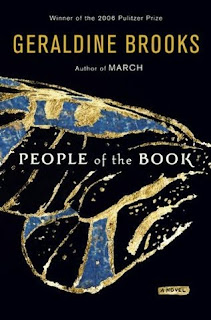
Loaded Questions: Interview with Geraldine Brooks, author of People of the Book


I was elated a few weeks ago when I recieved word that I would be able to ask the talented, best-selling, Pulitzer Prize winning Geraldine Brooks a few questions while she was on a book tour for her newest novel People of the Book while in Australia. Here is the result.

Kelly Hewitt: I have read that you first learned of the missing Sarajevo Haggadah, a manuscript that plays a major role in your new novel People of the Book, while sitting in Sarajevo Holiday Inn in 1992 amidst the Bosnian war. After the war, it has been written, you were able to do more research and learn a good deal more about the document. The idea for this novel, it seems, comes from such a real event in your life. Are there other instances from your career as a reporter in which you found inspiration for a fictional novel amidst such a tumultuous reality?

Geraldine Brooks: All of my novels, one way or another, relate to my years as a reporter. Sometimes it’s an idea that I came across while on assignment, as is the case with the Sarajevo Haggadah and People of the Book. But both People of the Book and March contain episodes that draw on my experiences covering the news. For instance, the scene where Isak and Ina fall through the ice is a fictional translation of a tragic event that happened to two refugees during the flight of the Kurds from Iraq when their uprising was crushed. More broadly, witnessing individuals who have to undergo real change during a time of catastrophe--particularly women who find themselves forced to assume huge burdens and responsibilities that their earlier life hadn’t prepared them for--has inspired the way I invent characters who change a great deal in the course of the narrative.

Kelly: You wrote two non fiction books, Nine Parts of Desire, a book based on the lives of Muslim women of the Middle East in 1994 and a memoir Foreign Correspondence in 1997 in which you detailed your childhood with pen pals from all over the world and your quest as an adult to find them. It was after the publication of these two books that you became an international bestselling novelist with Year of Wonders and Pulitzer Prize winner with March. Given the success you have experience as a author of fiction, do you think that you will ever write a non fiction book again?


Geraldine: Oh, I think I probably will. Right now, with a young child at home, I’m not crazy about going off on the long, open-ended kind of research journey that good non-fiction absolutely requires, where you follow a line of inquiry wherever it leads you, for as long as it takes. But later, I very well might...


Kelly: You have been quoted as saying that once you had left journalism you realized that you were carrying around a "ball of stress" and that you had developed migraines that disappeared the moment you quit journalism. Do you feel like your time as a journalist helped to prepare you to be the author you are today? Would you still suggest journalism as a career to budding writers?

Geraldine: I recommend journalism to those who have a burning desire to be journalists. That was me; from the time I was about eight years old I wanted to report the news. And I loved that career and it has absolutely fueled my fiction writing. But I didn’t set out in journalism heading towards being a novelist. That was an unexpected thing for me. My writing career is not that typical. I never took a creative writing course. I never wrote a short story—except for a one-off attempt at a sci-fi adventure for the school magazine when I was about 16. The road to fiction was rather convoluted. I was covering the Mideast during the first Gulf War when I was cold-called by a New York literary agent who thought a piece I had written for the newspaper on Jordan’s Queen Noor might make a book. I told him I thought it was too soon for such a project as Noor would be unlikely to speak candidly about her life at that stage. But the conversation planted a seed, I guess, and eventually I wrote Nine Parts of Desire, which was about the way all kinds of Muslim women in the mideast negotiated their lives, from refugee camps to palaces. It was a journalist’s book: thoroughly reported, entirely factual, but it taught me a lot about how to sustain a narrative and create connective tissue that keeps the reader turning the pages. My next book was very personal, part memoir, part travel adventure, called Foreign Correspondence, about the pen pals I’d had as a girl and my adult journeys to find them. It won a generous literary prize in Australia, meant to ‘encourage women’s writing” and I was very encouraged. So by then I had a child and really didn’t want to be traveling on long open ended assignments anymore, and I decided to try to see if I could write a novel. Year of Wonders was the result.


Kelly: I read in one interview that you stood up in front of your class at the age of twelve to denounce the Pope's view on birth control. Is that true? Have you and the Pope since reconciled?


Geraldine: Yes, that’s true. I was a very opinionated, probably insufferable, young woman. But I’m still at odds with the Pope, and with anybody else who tries to tell women what they should and should not do with their bodies.


Kelly: There are of course some parallels between your main character in People of the Book, Dr. Hanna Heath. You're both Australian, have traveled the world and are historians of a sort. You have been clear, however, that you do not have never had a bad relationship with your mother. How else do you and Hanna differ?


Geraldine: It’s a shorter answer if I tell you how we’re alike: we both like the intellectual hunt of research and bringing the past back to life. We both enjoy spicy food. We’re both Ausies who use a lot of colorful Oz idioms. And that’s about it. The fun of fiction is making up a character who is different, thinking yourself into a different life, mind, world view.


Kelly: What can you tell us about your next book?


Geraldine: I have a new project…another historical novel. But it’s too new to talk about just yet.

Monday, March 31, 2008

Author Interview: Loaded Quesetions with "Mistress of the Revolution" author, Catherine Delors

We've gotten a bit behind on announcing some of the winners of some of our great giveaways here at Loaded Questions. In honor of another upcoming giveaway (check often for details!) I wanted to take a chance to congratulate those who have won our last two giveaways...

And the winners are...

Winners of Sandra Worth's Lady of the Roses: Ladytink, Elizabeth Miller, lcbrower, Tara Robertson & Cindi! The emails are being sent out now! If you have questions or concerns please email me at KellyHewittLS@gmail.com. Congratulations!


Winners of the Catherine Delors' Mistress of the Revolution are: Katelyn,
gautami tripathy, Claire Alley, Tisa & Todd F. I am sending out your emails now!

--------------------------------------------------------------

I was up until five in the morning the other day finishing Mistress of the Revolution by Catherine Delors. I read a lot of historical fiction and I have to say that Mistress certainly has a place on my list of the best historical fiction novels of all time. Delors explains complicated events in French history with great ease and wonderful detail. The reader is transported to a time of chaos in which the world is changing, the King and Queen of France are regarded as citizens and powerful nobility find themselves powerless. I wholeheartedly recommend reading this book for its wonderful character, beautiful settings, and great historical content.

Catherine Delors has proven to be the kind of author that readers and interviewers love. She is happy to talk about her book, discuss history, and answer questions. We have emailed back and forth so much during the last few months that it will be strange not to have someone to chat with every day. I suspect, as a history nut, I'll find something to email her about and have no doubt she'll be happy to respond. I thought it only fair that I do an interview with Catherine so that you, the readers of this blog and her book, will get a chance to learn a bit more about this wonderful woman and great author in the making.

Kelly Hewitt: So, how did you choose your main character, Gabrielle?

Catherine Delors: Actually, I could almost say that she chose me. She is an entirely fictional character, but she could have been my ancestor. I wanted to imagine what it would have been for a woman of my family to live just before and during the Revolution.

Kelly: One of the opening scenes is of Gabrielle arriving at her family's chateau (please correct my terminology when necessary). You have written this amazing description of the kind of mortar used, the mismatched stones, and the spiral staircases. I don't know that I have ever been so struck by such a detailed, elegant, knowledgeable description of a building! Have you been to the Montserrat chateau?

Catherine: There is no such place as the Chateau de Fontfreyde, Gabrielle’s home in the novel. I made up the name! I chose it because it means “cold fountain” in Occitan, the Roman language. I think it sounds beautiful, and also it evokes the coldness of Gabrielle’s mother.

But the place I describe in Mistress of the Revolution is a real chateau, and I have been there many times. I enclose a picture of it, where you can distinguish the monumental staircase, partly hidden behind the greenery.

I am delighted to hear that the chateau felt so real to you. Whenever possible, I tried to use locales I know well for the settings of my novel. There is simply no substitute for the author’s first-hand, emotional connection to a place.

Kelly: You have been commended for the fact that you do such a great job at addressing French historical events in the book. In that sense Mistress of the Revolution is both a really great fiction and a wonderful historical lesson. How do you come by your historical knowledge, have you studied quite a bit? How much history about the French Revolution do you learn in grade school?

Catherine: Thank you! I attended high school in France, where the French Revolution is part of the curriculum. Later, when I went to law school at the Sorbonne, we had classes about legal history. I learned then that the current French legal system has its roots in the innovations of the Revolution (such as jury trials in criminal cases and what we call civil rights.)

This, however, was no preparation for the research I did to write Mistress of the Revolution. I read many memoirs of the time, and also relied on primary sources, such as trial transcripts, minutes of the debates of political clubs, the Municipality of Paris and the legislative assemblies.

Kelly: Once again, the imagery in the book is great. In one scene a character, discussing the French opinion of Marie Antoinette, discussed having seen the Queen decorate her hair with a full display of radishes, explaining that it was Marie's attempt at proving that she could inspire any trend. Do we have historic evidence that Queen of France actually used radishes?

Catherine: Ah, Marie-Antoinette’s radishes! I did not make this up. This detail comes from the Memoirs of Madame Tussaud. To the Queen’s discharge, she was not the only one to wear towers of flowers, vegetables, feathers and assorted knickknacks on top of her head. Madame Tussaud relates that the Queen was trying to make a point about her ability to be a trendsetter. Yet the radishes were apparently a failure in this regard.

As for Madame Tussaud, yes, she is indeed the lady who left us Tussaud’s wax museum in London and elsewhere. Madame Tussaud, née Marie Grosholtz, had been informally adopted by a man by the name of Monsieur Curtius, who was drawing master to Madame Elisabeth, the King’s sister. Thus Marie came of age at the Court of Versailles, in the entourage of the royal family.

Curtius and his niece had a very successful Salon de Cire, a Wax Museum, in Paris before and during the Revolution. What is still more amazing is that Curtius became a fervent Jacobin and introduced Marie to the most famous revolutionaries, such as Robespierre and the Duke d’Orléans. There is so much more to say about Marie Tussaud, her Memoirs, her museum and the story of her life, but I digress…

To go back to Marie-Antoinette’s radish headdress, this is a tiny detail, one I had not found anywhere else. Yet I felt that it was emblematic of the Queen’s passion for fashion, and the negative reactions it elicited. This is why memoirs, like those of Madame Tussaud, were irreplaceable.

Kelly: In Mistress of the Revolution you write a great deal about The Terror and the hysteria, panic, and bloodshed that were very much part of the French Revolution. There is a quote by Villers towards the end of the book in which he is talking about ideas of Robespierre in which he says. "...spreading military force is a notion that could only have taken root in the head of a fool. No one abroad will welcome armed missionaries." I wrote that down because, without getting too political, it seemed like something might say about modern politics! Did you see connections between the French Revolution and some modern day politics?

Catherine: Very much so! In fact, I recently wrote a blog post about this specific topic: whether spreading the ideals of democracy by military force is a good idea, or one that is likely to succeed. (Interviewer's Note: Click here to read Catherine's blog.)

What happened in France during the Revolution was that an “idealistic” war led to the collapse of the monarchy, the erosion of civil rights at home and eventually the loss of superpower status. Of course, the similarities go only so far. For instance, the Jacobins, though they had initially opposed the war, prosecuted it with competence once they took power and they met with great military success… I like to quote Mark Twain: history does not repeat itself, it stutters.

Kelly: There is one question that I ask all authors and it's because that's what readers want to know most. What will you be writing next? Have you already started?

Catherine: In fact, Kelly, I have already completed my second novel, For The King. It is set in 1800 Paris, and its theme will be a “terrorist” attack and the investigation that follows. It will be more of a historical thriller. As for the topic of the war, any similarities with current events… It will be released, also by Dutton/Penguin, in March 2009.

Then of course, I am already working on Book 3, still untitled. It takes place in Paris and Versailles during the reign of Louis XIV, the Sun King. Interweaving stories of murder, witchcraft, love, political conspiracy… I would also describe it as a historical thriller.

Friday, March 28, 2008

Books Turned Into Movies: Scott Smith's book The Ruins


The Book: The Ruins by Scott Smith
Release July, 2008

The novel follows a group of tourists on vacation in Cancún who find themselves prey to a deadly presence while looking for some Mayan ruins.

Four Americans (Jeff, Eric, Stacy, and Amy), along with their German friend Mathias and a Greek traveler known as Pablo, go looking for Mathias' brother Henrich, who has joined an archaeological dig at some unknown mineshaft. The trip does not begin well, as Jeff decides that they will search for Mathias's brother despite his friends' reservations. Once they get to their destination 11 miles outside of Coba, they dismiss the taxi, leaving them no way to get home. The taxi driver tells them their destination is a "bad place" and tries to convince them to leave, but he fails at the attempt and the six friends head into the jungle.


The Movie: The Ruins
, Director: Carter Smith
Starring: Jonathan Tucker, Jena Malone
Release: April 8th, 2008
Tagline: Terror has evolved.

Six friends on vacation in Cancun go on an excursion to visit an archaeological dig near Coba. The friends include Jeff, a type A guy who is set to begin medical school in the fall; Amy, Jeff's girlfriend, who is also set to begin medical school, and who is smart and emotional; Stacy, Amy's best friend, an aspiring social worker whose nickname is "Spacy" and who is irresponsible and promiscuous; Eric, Stacy's boyfriend, who is immature, and set to become a high school teacher; a fun-loving Greek guy who everyone calls "Pablo," but who lacks a common language with any of the others; and Mathias, an intense, thoughtful German tourist. Mathias' brother, Henrich, vanished shortly before the Americans and Greeks met Mathias--he met a beautiful Dutch archaeologist and decided to meet her at her dig, leaving a hastily drawn map for Mathias to follow in case he wanted to join him. The five others decide to accompany Mathias in his search for his brother, and take a bus to Coba for the day. Things immediately start to go wrong, as the group isn't well prepared for the heat and insects, and the journey becomes creepy. The poorly drawn map leads them to a Mayan village, where the grievously poor inhabitants appear hostile to the foreigners. Further searching leads them to an almost-hidden trail that they follow to the ruins.

Wednesday, March 26, 2008

Blast from the Past: Loaded Questions with Audrey Niffenegger author of The Time Traveler's Wife


My interview with Audrey Niffenegger was one of the very first I had ever done. We spoke in August of 2006, just before the official release of The Adventuress a novel in pictures. I was, and remain, a big fan of Niffenegger's The Time Traveler's Wife. Because this interview originally ran on the website where I initially began posting, I decided that I wanted to share it with my readers here.

So here goes...

Kelly Hewitt
: It has been reported that your novel, The Time Traveler's Wife, received the largest advance that publisher Macadam/Cage had ever paid. Where were you when you found this out? What was your reaction?

Audrey Niffenegger: I'm sure I was standing in my dining room, which is where I conduct most of my telephone conversations. I was afraid they were making a big mistake, and hoping that my book would do okay so they would not regret it. As far as I know, they don't regret it.

Kelly: You are a visual artist and from what I gather, very dedicated to both your work and to teaching the craft. In what way did your experience as an artist help you with your writing? Did you ever find that your artist's instincts hindered you in any way?

Audrey: Being a visual artist helps me to imagine the things I write about. It's easy for me to look at people, places, objects in my head. I don't think there is a down side to the artist/writer dual identity, except that you have twice as much work to do.

Kelly: One of the things many readers say about The Time Traveler's Wife was that it so delicately straddles the fantasy genre. You are able to have characters with the ability to travel through time and yet you are careful with the extent to which this premise is used. Was there ever a time when you thought of increasing the level of fantasy in the novel?

Audrey: No, I was very enamoured of the realist aspects of TTW. I felt that it was essential to buttress the fantastic elements with enough reality that people would be convinced, at least as long as they were in the world of the book.

Kelly: You have called yourself the "person who people date before they get married". With that in mind, does it surprise you that people find such an amazing romantic context to your novel? And in a slightly trashier light, has being a best-selling author improved your personal life?

Audrey: Well, the novel is about a fairly ideal relationship that is formed and tested by a situation outside the control of the couple. So I am not surprised that people would find that attractive. Being a bestselling author is not particularly good for one's love life, I'm afraid. I travel too much and work too hard; there's not much time left over.

Kelly: While doing research for this review I came across The Three Incestuous Sisters I had forgotten that you were the author of that book! I loved it but was confused -- it was a confused love. How have your readers responded to it?

Audrey: I don't think that the audience for the Sisters is the same as the audience for TTW. Some people will like both, some neither, some one but not the other. That's okay. I make things for my own odd reasons. If other people like them too, that's great. If not, I'll live. I am very excited to have the Sisters out in the world where people can see it and form their own opinions.

Kelly: Your new book comes out soon, would you like to give us a quick rundown of what we're in for?

Audrey: The "new" book is The Adventuress, which is the picture novel I made before The Three Incestuous Sisters. So this is actually my first book. I made it between 1983 - 85. It's about a young woman who is the result of a cloning experiment in Napoleonic France, who gets loose and has a number of odd adventures.

Kelly: What kinds of books do you load your shelves with?

Audrey: Among many other things, I collect books about the English illustrator Aubrey Beardsley, who is one of my main influences. My favorite is the book "Aubrey Beardsley" by Brian Reade.

Tuesday, March 25, 2008

Upcoming Movies Based on Books: Miss Pettigrew Lives for a Day


The Book: Miss Pettigrew Lives for a Day
By Winifred Watson, Published in 1938

First published in 1938, it was reissued in the United Kingdom in 2000, complete with thirty-five original illustrations, and has sold over 22,000 copies. Miss Pettigrew, an approaching-middle-age governess, was accustomed to a household of unruly English children. When her employment agency sends her to the wrong address, her life takes an unexpected turn. The alluring nightclub singer, Delysia LaFosse, becomes her new employer, and Miss Pettigrew encounters a kind of glamour that she had only met before at the movies. Over the course of a single day, both women are changed forever.

Winifred Watson (1907-2002) lived in Newcastle and wrote six novels in all; she chose to stop writing after the birth of her son in 1941. The Times interviewed her at age 94 when Persephone Books reissued the book in 2000. The headline was "Bodice-Ripping Fame at 94".


The Movie: Miss Pettigrew Lives for a Day

Director: Bharat Nalluri
Starring: Amy Adams as Delysia Lafosse
Frances McDormand as Guinevere Pettigrew


Release Date: March 27, 2008

Tagline: Every Woman Will Have Her Day

Guinevere Pettigrew, a middle-aged London governess, finds herself unfairly dismissed from her job. An attempt to gain new employment catapults her into the glamorous world and dizzying social whirl of an American actress and singer, Delysia Lafosse.

This Week's New Books: Week of Mar 23 - Mar 29, 2008


Week of Mar 23 - Mar 29, 2008


Genghis: Lord of the Bows
By Conn Iggulden


Conn Iggulden’s novels are grand historical tales of conquest and vengeance, cruelty and greatness. Now the acclaimed author of Genghis: Birth of an Empire delivers a masterful new novel of the mighty Mongol conqueror—as Genghis Khan sets out to unify an entire continent under his rule.…


Buckingham Palace Gardens
By Anne Perry

The detecting and diplomatic skills of Thomas Pitt, now assigned to the Special Branch, are tested as never before in bestseller Perry's solid 25th novel to feature the Victorian sleuth (after 2005's Long Spoon Lane). In 1893, the discovery of a prostitute's mutilated corpse in a Buckingham Palace cupboard after a stag party presided over by the prince of Wales could spell political disaster for the monarchy. Pitt soon eliminates the members of the sizable household staff as suspects, narrowing his focus to the prince himself and his close friends, who, it turns out, have been planning a major construction project in Africa—a railway that would run from South Africa to Egypt. Though the sensitive nature of Pitt's assignment precludes any active involvement by Charlotte, his wife and partner in earlier cases, he's able to place her maid, Gracie Phipps, on the palace staff to assist him. Perry does a nice job with some plot twists, even if most readers will quickly discount the heir to the throne of England as a viable suspect.

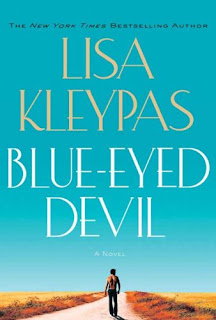
Blue-Eyed Devil
By Lisa Kleypas

A Wellesley grad and daughter of a Houston energy baron, Haven Travis is an unlikely romantic heroine until her brief but ardent encounter with a man who turns out to be Hardy Cates, the East Texas roughneck from Sugar Daddy who worked his way up from poverty and then outmaneuvered the Travis clan in a business deal. Haven's engaged to Nick Tanner—a man her dad thinks is unfit for her—and though she and Hardy have a charged interaction, she elopes with Nick, and her father cuts her off. Nick turns out to be a bad guy, and a beaten and bruised Haven returns to Houston, where Hardy's still at odds with her family. Their passion proves as fervent as ever, but demons from Haven's recent past—as well as strife with her family and troubles at work and in bed—stand in the way.


Hollywood Crows
By Joseph Wambaugh

When LAPD cops Hollywood Nate and Bix Rumstead find themselves caught up with bombshell Margot Aziz, they think they're just having some fun. But in Hollywood, nothing is ever what it seems. To them, Margot is a harmless socialite, stuck in the middle of an ugly divorce from the nefarious nightclub-owner Ali Aziz. What Nate and Bix don't know is that Margot's no helpless victim: the femme fatale is setting them both up. But Ms. Aziz isn't the only one with a deadly plan. In HOLLYWOOD CROWS, Wambaugh returns once again to the beat he knows best, taking readers on a tightly plotted and darkly funny ride-along through Los Angeles with a cast of flawed cops and eccentric lowlifes they won't soon forget.

Our Story Begins
By Tobias Wolff

This work contains 10 new stories and 21 from previous works In The Marine of A Mature Student, a 41-year-old female compares her female professor's experiences in Communist-era Prague and her own son's service in Iraq. Deep Kiss movingly chronicles the fractious results when a teenaged boy, infatuated with a promiscuous classmate, neglects to bond with his dying father. A hilarious description of a brash, ignorant thug in Her Dog shows Wolff's gift for demotic speech. In an author's note, Wolff says that since he has never considered any of his stories sacred texts, he has edited some clumsy or superfluous passages in earlier works.


In the Frame: My Life in Words and Pictures
By Helen Mirren


Helen Mirren has been an internationally acclaimed actress -- and the recipient of many awards, transferring between stage, cinema and television -- for over 40 years.

Known in her youth for a forthright style, a liberated attitude and a bohemian outlook, she has never ceased to be out of the public eye, with legions of admiring fans all over the world. This illustrated memoir is an account of an extraordinary talent, and a life well lived.

Monday, March 24, 2008

Loaded Questions: Interview with Mary Doria Russell, Author of "Dreamers of the Day"

Loaded Questions with MARY DORIA RUSSELL

I like to interviewing Mary Doria Russell and so I make a habit of doing it often. We were able to chat the other day for a few minutes. Mary was packing, preparing to go out on tour for her brand new release, Dreamers of the Day.

Dreamers of the Day
MARY DORIA RUSSELL


Kelly
: I have noticed that a couple of websites have been quoting a comment that I made about interviewing you a few months ago. I said. "Mary is a kind, boisterous, funny, and an honest woman who once told me that, in order to make sure she wasn't writing a 'feel-good Holocaust novel', she had quite literally flipped a coin to find out which characters would live and which would die. Mary Doria Russel likes to cuss and I like not stopping her."

Mary: Isn't it funny that got picked up!? It was quoted in an introduction for my talk last Thursday night at the Granville Library grand reopening!

Kelly: First of all, do you think this is a fair assessment of you?

Mary: It's not bad at all...

Kelly: Dreamers of the Day will be coming out in the next few days. Do you have any sort of ritual that you undertake before the release of a new book?

Mary: Usually, I am frantically trying to work out a wardrobe that will pack well, look good on TV and at bookstores, and span the weather from Long Beach CA (70 degrees and sunny) to Anchorage AL (-4 and volcanic ash). This time, I'm going to emulate male writers on tour: two pairs of fitted blue jeans, five identical black Three Dots 3/4 sleeve teeshirts, and cool jewelry.

Kelly: It is probably way too soon to be thinking about what comes after Dreamers of the Day but have you already started thinking about the next book?

Mary: I'm almost 100 pages into Our Chiefest Pleasure, a murder mystery set in Dodge City in the summer of 1878, when Wyatt Earp and Doc Holliday became the men who would become American icons three years later after the gunfight at the OK corral. I am TOTALLY in love with this book, and it's killing me to leave it and go on tour...
--------------------------------------------------------------------------
And for those of you who want a bit more ... Mary and I talked back in September when word about Dreamers of the Day had just gotten out. I wanted to get the scoop directly from the source. The result of that very candid conversation can be read below...
---------------------------------------------------------------------------

Kelly Hewit: When I heard that you had a new book coming out I knew I had to get in touch. Can you give my readers a teaser?

Mary Doria Russell
: Sure. I'm really curious to get into the questions for this book, because it's so different from the other three.

Are you old enough to remember Chatty Cathy dolls? Kids would pull a string in her back, and the doll would recite a random selection from a limited list of recorded remarks. That's what it feels like when you've been on a book tour for a while. I'm looking forward to developing a new list of recorded remarks!

Kelly: I think I already like your new heroine, Agnes Shanklin, who finds herself in the Egypt and the Holy Lands rubbing shoulders with a German spy, involved in dangerous geopolitical happenings and finally, perhaps most importantly, finding romance as a 40 year old who has wandered pretty far from her native Ohio. Where did you get your inspiration for Agnes? Or to be more bold ... are you Agnes?

Mary: The real Agnes Shanklin taught freshman English in 1964 at Glenbard East High School, in Lombard, Illinois. She was a tiny little "maiden lady" with 1920s bob that had remained the same for forty years, if you don't count the gray. She taught precision grammar by diagramming sentences,and there is a generation of Glenbard girls who remember her with great affection. I expect to hear from a lot of them when the book comes out. Miss Shanklin lived with her older sister, who was also unmarried and reportedly a pain in the ass. She was quiet and refined and gentle, butevery now and then, there would be a flare of her true personality: a moment of political passion, a ferocious opinion revealed.

Those moments were so startling, she remained in my memory as the years went on. As I aged, I began to put her life in context, and realized that she must have been a teenager during the Roaring Twenties. She wasn't always the retiring and sweet old lady we kids assumed she was! So that's the kernel for Agnes.

That said, I have to admit that there is a great deal more autobiographical content in this book than in my first three. The one great failure in my life was my relationship with my mother. She was a silent and opaque person who worked very hard to be above reproach. She relentlessly said and did all the correct things, but it seemed forced and, ultimately, counterfeit. Every moment with her vibrated with cognitive dissonance. What I saw and heard never matched up with the emotion I sensed.

I was never able to break through the glassy, reflective surface Mom kept polished, not even at the end of her life when I was at her side constantly while she slowly died of ovarian cancer. All of the passages about Agnes going through her dead mother's estate were directly from my life, by the way, which helped me process the experience. That sort of thing doesn't change.

Because Mom was so closed off, I spent a lifetime trying to understand what made her the person she was and made myself an expert on her family history. In writing Agnes, I took the opportunity to imagine a sort ofthree-generation amalgam: what would I be like if I had been raised by my mother's mother?

Agnes is not a portrait of Louise, or me, but her family dynamic does draw on some of my own. The idea was, Maybe if I could get a sense of how Loella raised Louise, I would understand Louise better.

I don't know that writing this novel helped me with my mother's memory much. Nevertheless, I got at some real issues in 20th century childrearing and parent-child conflicts that I think will resonate for a lot of readers.

Kelly: The last time we talked we discussed your great depth of knowledge about WW II as is evident in A Thread of Grace. Some of that knowledge, you said, had come from your father's influence and knowledge of militariana -- the rest you noted was a result of your scholarship of the time period. Did you spend as much time studying the Cairo Peace Conference and the major political figures there?

Mary: No, not as much. A Thread of Grace drew on a massive historical record and on my original research done overseas. Dreamers of the Day was written in the aftermath of that effort, during which my mother got her diagnosis. My original intent was to take a year off after A Thread of Grace, but I started writing Dreamers of the Day during the hardcover book tour for A Thread of Grace, which coincided with the last six months of my mother's long death. Amazingly dumb, but there you go. Can't seem to help myself.

I did have the brains, at least, to take on something easier, smaller scale, less sweeping and epic. For one thing, everybody in Dreamers of the Day speaks English. And it takes place partly in Ohio, so not every fucking paragraph required research. The Cairo Conference barely gets a mention in most histories, so I didn't have to read mountains of texts. And nobody who attended it is alive today, so I don't have to worry about one of them showing up at a book signing to embarrass the shit out of me.

All I had to know is what Agnes would have known or learned while she was in Cairo for ten days. She meets T.E. Lawrence, Winston Churchill and Lady Gertrude Bell, but she's not a participant in the conference, and only hears about it second hand. It's a backstage look at the events and personalities. I do suggest the larger issues behind the dialog, so that anyone who's very knowledgeable about the historical background will see what's implied.

Then I had a highly respected Lawrence scholar vet the book for me. Steve Tabachnick said the book is dead on historically and thinks I did a good job of portraying the personalities. That was a huge relief.

Kelly: You are still on my shortlist of authors I have had the funnest time interviewing. I loved that you cussed several times during the interview.

Mary: My dad was a Marine Corps drill sergeant and my mom was a Navy nurse. Try to imagine what I sounded like in kindergarten...

Kelly: Is that something I can continue to look forward to in future interviews?

Mary: Shit, yes. See "every fucking paragraph," above.

--------------------------------------------------------

Update: Here is good an article/review of Dreamers of the Day entitled "Awakening on the Nile" with Mary Doria Russell from the Washington Post Book Section.

Saturday, March 22, 2008

Books Turned Into Movies: Snow Angels by Stewart O'Nan starring Kate Beckinsale

Snow Angels


The Book: Snow Angels was Stewart O'Nan's first novel, released in 2004. It was released to great reviews. The NY Times wrote: "Stunning . . . A truthful and deeply sad picture of the American hinterland, which has lost religion and maybe also lost its capacity for sustained love. . . . Wonderfully effective . . . O'Nan sees with a vengeance."


The Movie: Snow Angels is a 2008 film starring Sam Rockwell and Kate Beckinsale. It was directed by David Gordon Green, who also wrote the screenplay adapted from Stewart O'Nan's novel of the same title. The film premiered in the dramatic competition at the 2007 Sundance Film Festival. It is a character driven film centered around several characters dealing with loss of innocence in a small town.


For an interview with a favorite of mine, Amy Sedaris, who talks about the novel, the movie, and her experience playing Barb in the movie,
CLICK HERE.

Thursday, March 13, 2008

Loaded Questions: Interview with Robert Leleux author of The Memoir of Beautiful Boy


The Memoirs of a Beautiful Boy
St. Martin's Press, $23.95

Robert Leleux is a fun guy to email back and forth with. He is entirely nice, polite to a fault, and happy to tell a story. I have been interested in The Memoirs of a Beautiful Boy for several months now because of the uniqueness of his story and the positive way Robert tells it. If reading the book is as much fun as interviewing Robert, then you and I both are in for a good deal of laughter.

Kelly Hewitt
: I have read some of the short pieces that you've written over at Amazon
.com, they're hilarious. Do you have a blog or a site where readers can go to read about your daily escapades?

Robert Leleux: Well, it's so funny you should ask, Kelly, because I do happen to have a website: www.robertleleux.com. It's a charming little spot, with oodles of lovely pictures of moi, and my mother, and all my family. And all my blogs are posted there. Or at least, all the blogs my partner Michael will let me post. I'm a highly censored author, you see. I keep firing off these fiery political pieces--and Michael keeps preventing them from ever seeing the light of day. Which, since he's the computer saavy half, isn't difficult. I'm telling you, he should have worked for Nixon! But he's probably right--the thing to do is to caste a wide net. And besides, it isn't the Christian thing to keep telling public figures how much you hate them. At least in print. But at this rate, I'll never be Molly Ivins.

Kelly: So when introducing you one should say that you are a best selling author and muted political activist? That's kind of catchy. I take it that you don't subscribe to politics as usual in Texas. Speaking of growing up in Texas (see how smooth that was?) was it all bad? Is there
any part of your writing that you attribute to a life growing up in the Lone Star State?

Robert: Oh, that's adorable of you--but I'm not sure I count as an activist, I'm just a loudmouth. The Mouth Of The South, my grandmother used to call me. And as for Texas, I dearly love it. Houston is home for me in a way that no other place ever will be. I might be alone in this, but I actually think it's a beautiful city, and every time I go back, something in me just sings. And I believe that East Texas is just about THE best place in America for a writer to come from--because it hasn't yet succumbed to that horrible homogenization of language that's stripped so much of America of its regional sounds. It seems to me that there's only a handful of places left that sound like themselves, and I think that maintaining that is so precious. Grace Paley said something like, "a writer has to listen to the world with two ears: one turned to the language of literature, and the other turned to the language of the street you grew up on." And it's so terrific to have been born to a place where the language is so charged and funny and off-kilter gorgeous.

"
the magical, miraculous thing about books is that you write them alone, in an empty room--a really private experience-- and then, they venture out alone in the world. They enter rooms you'll never see, they meet people who'll forever be strangers to you." -- Robert Leleux


Kelly: How do you feel about the fact that, while all of the reviews of your book have been pretty stellar, a few reviewers have warned readers that the book is "not for the faint of heart"? Do you think that's a fair label?

Robert: What's the expression? "Faint heart never won fair maiden." Something like that. Well, I don't know--practically everyone in Michael's family has a heart condition, and they all loved my book. And there have been a couple of completely lovely ladies who've written to say that they read my book in the hospital, and that they laughed so hard, their nurses thought they were having some sort of attack, and what do you know, laughter really is the best medicine. Which absolutely makes my life worthwhile--the opportunity to actually cheer up a person who really needs of a good laugh. Who could ask for anything more? I mean, the magical, miraculous thing about books is that you write them alone, in an empty room--a really private experience-- and then, they venture out alone in the world. They enter rooms you'll never see, they meet people who'll forever be strangers to you. It's very moving to me--especially since my book's a memoir, and there are people out there I'll never know, with whom I'm having this very sort of intimate experience. VERY strange, and wonderful. But to answer your question--if you want Barbara Pym (AND I love Barbara Pym), I'm not Barbara Pym. Or as Joan Crawford said, "If you want the girl next door, go next door."

Kelly: The stress of going on a book tour is enough to make any sane person go a little crazy. You go one step further though. I read that you're actually do the book tour for Memoir of a Beautiful Boy with your mother. Whose idea was that? How is it working out?

Robert: Well, I maintain that it's a real marker of virile masculinity, travelling with your mother. How many brawny He-Men would even attempt it? And it's been a total blast. If anyone out there ever contemplates a tour of any sort, I recommend taking someone with you. Because your job, out on the road, is to meet lovely strangers who've been kind enough to care enough to come out and say hello to you, and to be very, very present--and it's enormously helpful to have a person, like your mother, guiding your arm, and keeping an eye on the task at hand. ALSO, I would recommend taking MY mother with you. Because she's very funny, and it never hurts to have a gorgeous, glamorous woman with you, even if she does happen to be your mother. The whole thing started off as a joke--in a marketing meeting with my publisher, I said, "Maybe I should bring my mother with me!" And no one laughed. Which taught me a real lesson. Namely, don't make jokes in marketing meetings, because they have a tendency to become PR strategies. So then, I called Mother, and said, "What do you think of the notion of heading off on the road with me?" And she said, "I'll call you later, I'm going shopping." Which is my mother's means of preparation. So she got some gorgeous new suits, and adventure ensued. It was very much like that Eric Preminger book about being on the road with his mother, Gypsy Rose Lee. I kept looking around, and there Mother was, sitting cross-legged on the Vuitton suitcases, smoking, and looking very glamorous and world-weary.

Kelly: You've convinced me, I'll take a trip with your mother. I am going to Maui soon -- can she swim?

Robert: She's an ace. And when she was a little girl, she used to fake swim with plastic flowers in her hair, like Esther Williams.

Kelly: On a more serious note, when do you think you mother will write a book about you?

Robert: I only wish my mother would write a book about ANYTHING! I'd be first in line to buy it--I feel like my job in life is just to follow the genius, brassy women in my family around with a pen, and write down everything they say. My grandfather and I look at each other all the time, and say, "How lucky are we to be in the same room with these ladies!"

Kelly:
This might be a really dumb question but I'm willing to stick my neck out. Is the picture on the front of the book really you and your mother?

Robert: That's not stupid at all--you never know about these things. But YES, that's US! My mother was so adorable. She told me, "I really feel strongly that you and I should be on the cover." And I said, "Well, yes, I appreciate that, but it's not really my decision, Mother." And she said, "Then whose decision is it?" And I said, "I guess it's my editor's." And she said, "Well, I think you should call him up, and you should tell him that your mother feels very strongly that you and I should be on the cover." And I just sort of nodded, and said uh-huh. But it actually worked out! And I love the fact that when I look at my book on the shelf, I see my mama's face!

Kelly: I know you're a fan of public radio, as am I. I, too, have spent a good hour in my car after getting home listing to All Things Considered or This American Life. I am always amazed by the inane little facts that I learn from listening to NPR and often times don't realize that I knew them until I find myself telling someone about the migrating patterns of the yellow breasted pygmy sparrow. What's the favorite story or random fact you've learned from public radio?

Robert: That's very funny about the pygmy sparrow. Well, I don't know, I just love how smart it makes me feel to listen to NPR. It's like being invited to MENSA, you know? I love being able to say--"Today on NPR, I heard blah blah blah." Or, "Isn't that a coincidence, why just this afternoon, they were saying on NPR, blah blah blah...." On the other hand, I don't get to say this a great deal, because Michael is so INSUFFERABLY bored by talk radio. Or, as he refers to it, "A bunch of old people sitting around a table, talking." Michael's father, God love him, was a Rush Limbaugh listener, and I'm afraid it was a searing experience that forever spoiled his love of the format. But one of my fondest memories--one of those instances when you really feel like you've found yourself as an adult--was one bright sunny summer aftenoon in 2004, just after I'd sent off my five dollars to the Howard Dean campaign, when I was tootling around in my friend's Volvo, listening to NPR, and some political strategist said, "Howard Dean's constituency is solely comprised of people who drive around in Volvos listening to NPR." I almost spun into a ditch! It was thrilling! I thought to myself, "Robert Leleux, you have arrived!

Kelly:
The book is doing really well! So here's the question that you as a best-selling author will be asked repeatedly for the rest of your life. When will your next book come out and what is it about?

Robert:
That's enormously sweet. Well, I've got several pots on the stove. It looks like a little picture book I did might be coming to fruition--so keep your fingers crossed. And then, I'm working on a sequel to my book. And I have what I think is the most adorable idea for a young adult series. But you know, there's that great great line about somebody saying to Baudelaire, "Mr. Baudelaire, I have the most TERRIFIC idea for a sonnet," and Baudelaire says, "Sonnets, sir, are not made of ideas." And brother, you can say that again. Sonnets, and anything like them, are made of hard, slaving work. And as you know, hard work never gets any easier. It's that awful, awful Zen thing about writing--how every time you sit down with blank paper, you're beginning again. VERY humbling. Because blank paper is no respecter of wordly success. And you just have to keep returning to that desk every day, and sometimes it's like going in for A Day of Beauty at Elizabeth Arden, and sometimes, it's like going to the salt mines.

Kelly: You and your partner meet while working on a stage production of West Side Story. What parts did the two of your play or was it a star/stage hand sort of thing? And, tell the truth, do you find yourself tearing up whenever your hear "There's A Place for Us?" And lastly, did I just out myself as a recovering theatre geek?

Robert:
Well, I played Tony (THE worst Tony in the history of the American theatre), and Michael was my choreographer. So we were practically Cybill Shepherd and Peter Bogdonavich, Michael and me. It was love at first sight. Maria was devastated. But it was really thematically perfect, you know? This great romance set to music about a great romance set to music. It suited my sense of drama. Fortunately, I fell in love with a person with no sense of drama. Michael is extraordinarily level-headed, and he remains, eleven years later, the single greatest thing that could ever have happened to me. My mother feels the same way--she also thinks Michael is the greatest thing that's ever happened to her. Somebody asked me, "What's the secret to a happy marriage?" And I said, "Marry Michael." I feel entirely incidental to my own domestic happiness. Anyone who married Michael would be entirely thrilled with life. He's a person with no dark side. Only dark chocolate. Terrific. And as for "West Side Story," I do find it ENDLESSLY moving, so don't be embarrassed with me, Kelly. You know, my mother always had those showtune albums playing in our house growing up, and she was wonderful enough to treat them with real importance--like real art. And so I sort of grew up with idea that musicals were a real part of a classical education. So when I went to college, I remember flipping through the course bulletin, and thinking, "Dickinson, Tolstoy, Turgenev....Where's Molly Brown?" TRAGICALLY disappointing. But you know, I think musicals have had an enormous impact on me as a writer--I persist in believing Cole Porter to be one of the only truly great American writers. And I think that in order to be even a decent writer you have to have a sense of musical rhythm. And also, I remember PG Wodehouse writing something like, "There are two ways to write a novel. To soar gloriously above the dim reality of life--to write musicals without the music. Or to burrow deep within it." Wodehouse obviously identified with the first method, and so do I.

Kelly:
How tired are you of being compared to Augusten Burroughs or David Sedaris?

Robert:
Well, how lovely to be compared to anybody as devastatingly funny as either of those two gentlemen! On the other hand, I've never read them. And not because I haven't heard wonderful things--it's just, given that people tend to make that comparison, I don't think it's the best possible thing to risk absorbing contemporaries working in a similar vein. I would never want to risk anything spilling over--it's the one sense in which I'm concerned about maintaining my purity! It's so interesting that because I'm gay, and some people, at least, think I'm funny, that the sort of knee-jerk response is to compare me to those two great writers. But personally, I've always wanted to be PG Wodehouse or Nora Ephron or Wendy Wasserstein or Molly Ivins. Those are the people who've kept me rolling in the aisles--the writers I go back to again and again whenever I'm stuck, which tends to happen about once every twelve-and-a-half minutes. But it is so fascinating that your very private, personal work ends up getting you publicly grouped with people you don't know, and don't really know much about. But again, who's complaining?

Kelly:
Robert, I would like to thank you so much for taking the time to talk with me. I have heavily recommended this book to Loaded Questions readers and now that they've had a chance to see how much funnier you are than myself I am sure they'll be rushing out to get it.

Robert: Yes, but you're SO much prettier than I am. So, together, we're an unbeatable team!
THANK YOU so much, Kelly. This really has been fun! And my whole life I've been trying to tell people about my favorite books, and they've always ducked behind corners, so it would be a thrill for somebody to actually ask for my opinion! And thanks for doing this great blog--I'm sure it's so much work, but it's also VERY special. XX,R


Related Posts with Thumbnails