Wednesday, March 12, 2008

This Week's New Book Releases


Dreamers of the Day by Mary Doria Russell


Russell's enjoyable latest historical is told in the exuberant, posthumous voice (yes, it's narrated from the afterlife) of Agnes Shanklin, a 38-year-old schoolteacher from Cedar Glen, a town near Cleveland, Ohio. After the influenza epidemic of 1919 strikes down Agnes's family, a childless and unmarried Agnes settles the family estate, acquires financial independence and adopts an affable dachshund named Rosie. Accompanied by Rosie, Agnes travels to Cairo during the Cairo Peace Conference, where she befriends Winston Churchill and Lawrence of Arabia among other historical heavy hitters. She also falls in love with the charismatic Karl Weilbacher, a German spy whose interest in Agnes may have less to do with romance than Agnes will allow herself to believe. Agnes's travelogues, while marvelously detailed, distract from the increasingly tense romantic play between Agnes and Karl. When a more worldly-wise Agnes returns home, her life—first as an investor wrecked by the Depression and then a librarian until her death in 1957—remains low-keyed.


Flag of Truce by David Donachie


John Pearce comes back from Corsica demanding that Captain Barclay of HMS Brilliant, the man who originally pressed him and his fellow Pelicans into the Navy, be tried at home by a civilian court. Against the background of the ongoing siege of Toulon and with the Revolutionary Army massing to attack, no one in authority sees this as a good time to accede to his requests. Barclayâs patron Admiral Hotham contrives a way out of the dilemma. He staffs the ship Pearce captured in Corsica with members of the Revolutionary Navy refusing to serve under the Bourbon flag and gives it to Henry Digby, with Pearce and his Pelicans under him, so that they may transport the renegade French sailors to an Atlantic port and set them free. Whilst Pearce is gone Hotham fixes a court martial where Barclay is found innocent for lack of evidence, a ruse that leads to an open breach with his wife Emily.


A Prisoner of Birth by Jeffrey Archer


Bestseller Archer (Kane and Abel) pays homage to Dumas's The Count of Monte Cristo in this delicious updating of the adventure classic. Four upper-crust friends from Cambridge University known as the Musketeers conspire to frame Danny Cartwright, an illiterate London East Ender, for the murder of Danny's oldest friend and brother-in-law to be, Bernie Wilson. The outcome of the intriguing trial, which pits a relatively novice defense lawyer against a skilled prosecutor, is a 22-year sentence for Danny. In maximum-security Belmarsh prison, Danny is lucky enough to share a cell with Sir Nicholas Moncrieff, the book's Abbé Faria figure, who teaches him to read and write. In a trick familiar to those who know their Dumas, Danny escapes by impersonating Moncrieff and hatches an intricate scheme to punish the Musketeers and clear his name. While Archer doesn't explore the cost to Danny's soul his revenge exacts, the author's firsthand knowledge of prison life and legal maneuvers helps make this a thoroughly enjoyable entertainment.


Another Thing to Fall by Laura Lippman


Hollywood comes to Baltimore in bestseller Lippman's assured 10th PI Tess Monaghan caper (after 2006's No Good Deeds). When Tess literally stumbles onto the set of Mann of Steel, a big-budget TV miniseries shooting in her neighborhood, she finds herself hired as a bodyguard for Selene Waites, the show's 20-year-old hard-partying star. Flip Tumulty—the show's writer and son of a Baltimore-born Hollywood mogul—tells Tess the set has been plagued by vandalism and he fears for Selene's safety. Tess soon uncovers unsettling photos of Selene and learns they were taken by Wilbur Grace, a stalker who later hanged himself. When one of the crew members is murdered, Tess suspects someone may be trying to shut down more than the TV production. While the excitement level may not match that of other recent entries in the series, fans will appreciate the author's usual authentic local color and intricate plotting.


The Girl Who Stopped Swimming by Joshilyn Jackson


Jackson matches effortless Southern storytelling with a keen eye for character and heart-stopping circumstances. Laurel, a high-end quilt maker, sees the ghost of a little girl in her bedroom one night. When it leads her to the backyard and a dead girl in the swimming pool, the life Laurel had hoped to build in her gated Florida neighborhood with her video-game designer husband, David, and their tween daughter, Shelby, starts to fall apart. Though the police clear the drowning as accidental, it soon appears that Shelby and her friend Bet may have been involved. Bet, who lives in DeLop, Laurel's impoverished hometown, was staying over the night of the drowning and plays an increasingly important role as the truth behind the drowning comes to light. Meanwhile, Laurel's sister, Thalia, whose unconventional ways are anathema to Laurel's staid existence, comes to stay with the family and helps sort things out. Subplots abound: Laurel thinks David is having an affair, and Thalia reveals some ugly family secrets involving the death of their uncle. What makes this novel shine are its revelations about the dark side of Southern society and Thalia and Laurel's finely honed relationship, which shows just how much thicker blood is than water.


Blind Fall
by Christopher Rice


From three-time New York Times bestselling author Christopher Rice comes this startling psychological thriller about an Iraq War vet who seeks redemption and revenge when a fellow Marine he failed to protect during the war is brutally murdered. John Houck became a Marine to become a hero. But his life changed when he failed to notice an explosive device that ended up maiming the captain of his Force Recon Company, a respected Marine who nearly sacrificed himself to save John's life. Home from Iraq, John pays a visit to his former captain, only to discover the captain has been gruesomely murdered. John pursues a strange man he sees running from the scene, but he discovers that Alex Martin is not the murderer. Alex is, in fact, the former captain's secret male lover and the killer's intended next victim. When it becomes clear that local law enforcement has direct connections to the murder itself, John realizes that to repay his debt of honor, he must teach Alex Martin how to protect himself, even if that means teaching Alex to kill. In the process, John confronts the painful truth about the younger brother he was unable to protect and the older sister he always felt he failed. Blind Fall is a story of honor and integrity, of turning failure into victory. It is a stunning departure for Christopher Rice: the story of two men, one a Marine, one gay, who must unite to avenge the death of the man they both loved--one as a brother-in-arms, one as a lover--and to survive.




Lush Life
by Richard Price


Starred Review. Master of the Bronx and Jersey projects, Price (Clockers) turns his unrelenting eye on Manhattan's Lower East Side in this manic crescendo of a novel that explores the repercussions of a seemingly random shooting. When bartender Ike Marcus is shot to death after barhopping with friends, NYPD Det. Matty Clark and his team first focus on restaurant manager and struggling writer Eric Cash, who claims the group was accosted by would-be muggers, despite eyewitnesses saying otherwise. As Matty grills Eric on the still-hazy details of the shooting, Price steps back and follows the lives of the alleged shooters—teenagers Tristan Acevedo and Little Dap Williams, who live in a nearby housing project—as well as Ike's grieving father, Billy, who hounds the police even as leads dwindle. As the intersecting narratives hurtle toward a climax that's both expected and shocking, Price peels back the layers of his characters and the neighborhood until all is laid bare. With its perfect dialogue and attention to the smallest detail, Price's latest reminds readers why he's one of the masters of American urban crime fiction.


The Silver Swan
by Benjamin Black


In this stunning follow-up to 2007's Christine Falls, Black (pseudonym of Booker Prize–winner John Banville) spins a complex tale of murder and deception in 1950s Ireland. Pathologist Garret Quirke, surprised by a visit from a college acquaintance, Billy Hunt, is even more surprised when Billy begs Quirke not to perform an autopsy on his wife, Deirdre, whose naked body was recently retrieved from Dublin Bay. Though everything points to suicide, Quirke knows something's amiss and begins to retrace Deirdre's steps. Black expertly balances Quirke's investigation with chapters detailing Deidre's past, from her marriage to Billy to her shady business deal with Leslie White, an enigmatic Englishman who knew Deidre as Laura Swan, the proprietress of their joint venture, a beauty salon called the Silver Swan. As Quirke digs deeper, he discovers a web of lies and blackmail that threatens to envelop even his own estranged daughter, Phoebe. Laconic, stubborn Quirke makes an appealing hero as the pieces of this unsettling crime come together in a shocking conclusion.

March Is National Small Press Month


March is National Small Press Month

Small Press Month, now in its 12th year, is a nationwide promotion highlighting the valuable work produced by independent publishers. An annual celebration of the independent spirit of small publishers, Small Press Month is an effort to showcase the diverse, unique, and often most significant voices being published today. This year's slogan is Celebrate Great Writing.

You can visit the official NSPM website by clicking here. There are a number of interesting resources including a check list of ways that we as avid readers and book buyers can support small presses. I also found a very interesting page on the website that lists some of the most prominent books of the last few decades that have been printed by small presses that inevitably allowed very important voices to be heard for the first time. I encourage you to look at the whole list of books but a few that I recognized immediately were A Confederacy of Dunces by John Kennedy Toole, The Inheritance of Loss by Kiran Desai, and Charlie Wilson's War by George Crile which has been in the spot light recently because of the movie staring Tom Hanks.

The small presses that printed these books and many others deserve to be celebrated for the voices they have helped to bring to light and the people who have been affected by these texts.

"The life’s blood of contemporary and modern literature is in the custodianship of so-called small publishers. Without them, there is no future for literature."
-- Walter Mosley,
author of This Year You Write Your Novel and the recently published Blonde Faith


Saturday, March 8, 2008

A Poem I Liked: Vex Me by Barbara Hamby

I am not much for poetry. That being said, I heard this poem on NPR the other day and it has really stuck with me. I thought I would share it with you all and take a look at the author and her books.

Barbara Hamby was born in New Orleans and raised in Hawaii. Her poems have been printed in numerous publications and her first book of poetry, Delirium (1995), received literary recognition. She lives with her husband and fellow poet David Kirby in Tallahassee, Florida, where she is a writer-in-residence in the Creative Writing Program, and he a professor, both with the English Department at Florida State University.

This particular poem, Vex Me, is from her book Babel published by the University of
Pittsburgh Press in 2004

Vex Me

Vex me, O Night, your stars stuttering like a stuck jukebox,
put a spell on me, my bones atremble at your tabernacle


of rhythm and blues. Call out your archers, chain me
to a wall, let the stone fortress of my body fall

like a rabid fox before an army of dogs.
Rebuke me,
rip out my larynx like a lazy snake and feed it to the voiceless

throng. For I am midnight's girl, scouring unlit streets
like Persephone stalking her swarthy lord. Anoint me

with oil, make me greasy as a fast-food fry. Deliver me
like a pizza to the snapping crack-house hours between

one and four. Build me an ark, fill it with prairie moths,
split-winged fritillaries, blue-bottle flies. Stitch

me a gown of taffeta and quinine, starlight and nightsoil,
and when the clock tocks two, I'll be the belle of the malaria ball.

Tuesday, March 4, 2008

Loaded Questions: Free Giveway, Mistress of the Revolution by Catherine Delors


Dear Readers,

I have to start off by thanking all of you who entered the Lady of the Roses Giveaway. Between the email sign up, message responses, and the personal emails I received a huge response. The winners of that contest will be announced tomorrow. On to more exciting news...

As I stated a few weeks ago with much excitement, Loaded Questions friend Catherine Delors has been nice enough to give us five copies of her highly anticipated debut novel, Mistress of the Revolution. Those of you who have been stopping bye for the last few months know that I have been looking forward to this book since November when I first mentioned it. Part of what makes this so exciting is the fact that this book has not yet been released! The deadline, listed below, is March 13th.

Contest Details: Getting yourself entered in the giveaway is easy! There are two ways:

1. See the box in the left margin of the blog? It says "Subscribe to Loaded Questions with Kelly Hewitt". This is a great way to receive email updates whenever new posts are made to Loaded Questions. Enter your email address in order to sign yourself up for the service. You will receive an email verifying you request to be signed up. It's as easy as that. Once you have signed up, your email address will automatically entered in the contest! Already signed up this way for a previous contest? Read Option #2.
OR
2. Reply to this thread. This is an easy option, click the reply button and write a little something -- introduce yourself, share your favorite author or book with the rest of us, anything will do. Once you have written a reply and provided your email you are entered in the contest! This is also the best option to enter in the contest for those of you who have already signed up for the email list in the past.

Note: Those who are frequent readers are encouraged to continue to sign up for Loaded Questions giveaways! If you have entered one of our giveaways before you must do one of the above listed in order to be re-entered for the Mistress of the Revolution Giveaway.


The Deadline for this Giveaway is March 13th.


Sunday, February 24, 2008

Random Notes: David Sedaris, Mistress of the Revolution and the Oscars

I am at home elbow high in exciting new books, waiting for the Oscars to start and thought that I would post a note about some of the exciting new things coming to Loaded Questions in the days to come.

The New David Sedaris Book

-- Here's some really exciting news: I have seen the cover of the new David Sedaris book! A contact at Little, Brown sent along a preview of upcoming titles, I nearly fell off of the couch with excitement when I spotted it. The title, despite what some websites are currently reporting is
All the Beauty You Will Ever Need. The book, due out in June, is to include stories about buying drugs in a North Carolina mobile home, having a lozenge fall into the lap of a fellow plane passenger, and fighting neurotic songbirds.

Another Great Giveaway
-- I am really excited to announce that Loaded Questions will be doing a free 5 book giveaway of Catherine Delors' Mistress of the Revolution. Stay tuned for ways to sign up for a free copy of this fantastic book.

Oscar Predictions and a Bit More
-- Here's a link to my Oscar Predictions 2008. You can also read my horrifying reaction to Gary Busey's molestation of Jennifer Garner on the red carpet.

Thursday, February 21, 2008

Loaded Questions Free Book Giveaway: Lady of the Roses by Sandra Worth

An Interview and an Exciting Free Giveaway

Lady of the Roses by Sandra Worth

Anyone who knows me knows that I have always been interested in English monarchical history. So when I got an email from Sandra Worth about her new release,
Lady of the Roses I knew I wanted to get a hold of this book.

Lady of the Roses is about a young lady, Isobel, who has been serving in the court of the Lancastrian Marguerite, Queen of England. Things are complicated by the fact that Isobel, despite being approached by many suitors, finds her self in love with John Neville, a Yorkist. The two lovers must find a way to survive the dangerous civil war taking place in England, the bloody march on London by the Duke of Lancaster, and the violent madness of Queen Marguerite.

Sandra Worth is well known for her dedication to research and her knowledge of the time period she writes in. Her previous novels include the Rose of York trilogy made up of: The Rose of York: Fall From Grace, The Rose of York: Love and War, and The Rose of York: Crown of Destiny.


with Author Sandra Worth


I am very happy to have had the chance to sit down Sandra for an interview a few days ago. I can say this for certain, Worth is great to talk to and really quite nice. I have been impressed by Sandra's command for the British royal line especially during the reigns of the Plantagenets and Yorks. Worth is a sharp author with a keen historical eye and a talent for writing quality historical fiction. I think this interview gives you a chance to see how and why...


Kelly Hewitt: Lady of the Roses is your first new novel since finishing your award-winning Rose of York trilogy which began with the reign of Edward IV, continued through fall of Richard III, and ended with the rise of Henry VII who came to the throne after the Battle of Bosworth. This new novel takes place during the reign of the Lancastrian King Henry VI amidst the rumblings of the War of Roses. Was it hard to change gears, moving from the beginning of the Tudor dynasty to the final years of the Lancastrian royal line?


Sandra Worth: No, not really. This earlier period that gives the Neville viewpoint in the run-up to the Battle of Towton is rich in drama and history. I was glad to do it, since no one had yet attempted it, either in fiction or in biography. My hope is that Isobel's st
ory might shed light on how the various well-known incidents of that chaotic era can be linked, and perhaps explain what seems to be a dark blur on the horizon of the Wars of the Roses.


Kelly: In some ways Lady of the Roses is a prequel to your earlier trilogy. What characters, if any, can readers of your previous books expect to see play a prominent role in Lady of the Roses?


Sandra: The major historical figures in Lady of the Roses are Sir John Neville, Lord Montagu, w

ho played a secondary role in The Rose of York: Love & War, and his beloved Isobel, who made only a cameo appearance in that first book. But she drives the story in this novel, and we see the Wars of the Roses through her eyes.


Kelly: Do you have a master plan? That is -- did you know that when you finished the War of Roses trilogy that you would write a novel centered at the court of Henry VI?

Sandra: No, I didn’t. It was pure accident. I was approached to do another novel, and this seemed a logical tie-in, especially since I’d received many letters from readers inquiring about John Neville, and asking if there would be a book on him.


Kelly: If you could write about any other period of English history to write a novel about when would it be?


Sandra: Goodness, that is a hard one! There’s so much in English history to seize the imagination, from Boudicca forward, but I adore the Plantagenets. They were a valiant lot. In contrast to the Tudors, there’s much to admire in them, so I suppose, that’s where I’d look.

Kelly: Conversely, what period of English history would you feel like you'd least like to write a novel about?


Sandra: I really don’t much care for James I forward to modern times. The Hanoverian period does the least for me. I dislike those wigs and all that pompous strutting around.


Kelly: I am always fascinated about the process by which authors develop their characters. I found myself asking that question a lot while reading Lady of the Roses. Your heroine Isobel Ingoldesthorpe is such a pivotal character in this novel. How did you go about developing her? What came first, the storyline or the character?


Sandra: The story-line. For me, it’s like a blank canvas with faint shadows across it. Once I begin to study the shadows, they start forming shapes that draw into sharper focus. My research gives me the framework. As the story starts to unfold, it opens up all kinds of detail to me. For example, John paid a jaw-dropping bride-price for Isobel’s hand. They came from enemy sides in a civil war, and Isobel was an orphan, a ward of Queen Margaret of Anjou who hated the Nevilles. To me, this meant that John had fallen deeply in love, probably at first sight. It also suggested to me that Isobel was a great beauty to inspire love at first sight. Now, she was at court with Queen Margaret, and the Duke of Somerset was also at court with Queen Margaret. He was around the same age as John Neville. Interestingly, Somerset and John were known to have argued violently on several occasions. What were these fights about? For arguments to be so bitter, it had to be over a woman. John was in love with Isobel, so Somerset had to be in love with Isobel as well… You see where this is going? As far as the ambushes are concerned, they're well-documented. Each time the Nevilles were warned in advance about Somerset. But who warned them? History doesn’t record that. Could it have been Isobel, who was at court with Queen Margaret and Somerset? Isobel, who was in love with John… And so it goes, like a giant jig-saw puzzle, until the story is all written.


Kelly: I know that you love Katherine by Anya Seton. How much influence does that work of historical fiction (which I love dearly) influence the kind of novels that you write?


Sandra: Very, very much! Katherine is always at the back of my mind when I write. I don’t play with history because Anya Seton didn’t. She faithfully recorded every date, and every event, but the story is so powerful, you don’t even notice how much history you’re taking in. That’s what I aspire to: Putting the “story” back into “history” so my readers don’t even realize that's what they're reading.


Kelly: You obviously know your history. Reviews of your books are always quick to point out your ability to navigate a rather tumultuous period of English history. Are there any particular authors or historical resources that you would recommend to readers of your books who want to know even more of the history behind your novels?


Sandra: Absolutely. I list a rather comprehensive bibliography in Lady of the Roses, and in The Rose of York: Fall from Grace, but I can tell you off the top of my head some of the academic works that casual readers are sure to enjoy. One is Paul Murray Kendall‘s Richard The Third, the definitive biography of Richard III, and Williamson’s The Mystery of the Princes which is a Golden Dagger Award Winner that reads more like a thriller than an academic work. Mary Clive’s This Sun of York is another good one, as is The Princes in the Tower by Elizabeth Jenkins. There are two biographies of the wicked queen, Elizabeth Woodville and her antics that brought about the destruction of the Plantagenet dynasty and finale to the Wars of the Roses, and both are good, though I prefer the more accurate MacGibbon’s Elizabeth Woodville as opposed to the more recent Elizabeth Woodville by Baldwin. Richard III’s brother, George, Duke of Clarence, also has a very interesting biography entitled False, Perjured, Fleeting Clarence by Michael Hicks. On Margaret of Anjoy there’s Helen Maurer’s Margaret of Anjou, but that’s heavier reading than the others, since this earlier period (presented in Lady of the Roses) is so chaotic.

Interviewer's note: I own a few of those books and have just finished ordering a great many others. Sandra has laid out a top notch list of sources here that I would recommend any history lover go out and find.


Author Sandra Worth has been kind enough to send some copies of her new book which we'll be giving away for free to Loaded Question readers!

Contest Details: Getting yourself entered in the giveaway is easy! There are two ways:

1. See the box in the left margin of the blog? It says "Subscribe to Loaded Questions with Kelly Hewitt". This is a great way to receive email updates whenever new posts are made to Loaded Questions. Enter your email address in order to sign yourself up for the service. You will receive an email verifying you request to be signed up. It's as easy as that. Once you have signed up, your email address will automatically entered in the contest! Already signed up this way for a previous contest? Read Option #2.

OR

2. Reply to this thread. This is an easy option, click the reply button and write a little something -- introduce yourself, share your favorite author or book with the rest of us, anything will do. Once you have written a reply and provided your email you are entered in the contest! This is also the best option to enter in the contest for those of you who have already signed up for the email list in the past.

Note: Those who are frequent readers are encouraged to continue to sign up for Loaded Questions giveaways! If you have entered one of our giveaways before you must do one of the above listed in order to be re-entered for the Lady of the Roses Giveaway.

The final day to enter the contest is March 3rd.

Thursday, February 14, 2008

Blast from the Past: Loaded Questions with author Margaret George


I have been doing
this interview thing for quite awhile now. I realized the other day that some of my earliest interviews aren't even linked on this blog as they were posted at LoadedShelf.com where I began doing author interviews. I want to share these interviews with you! And so I have created this new feature, Blast From the Past in which I will repost previous interviews for your reading pleasure.

This first interview is especially important to m
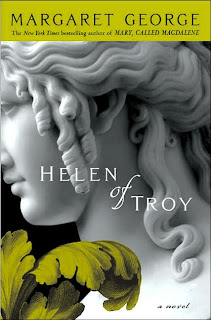
e. I discovered my love of fiction in my early teens and knew right away that I loved history and historical fiction. Margaret George, author of a number of books about the lives of famous monarchs around the world, was my role model. A lot of the history that I soaked up in these books remain with me and are helpful as I finish up work on my Masters in English History. When I first emailed Margaret George I was just sure that she wouldn't have time to respond. She did and perhaps even more astonishingly, her publicist sent me a copy of her newest novel Helen of Troy. I was amazed and delighted to have the chance to chat with someone who influenced who I am as a reader and as a historian as well.


With MARGARET GEORGE
author of: The Autobiography of Henry VIII; The Memoirs of Cleopatra; Mary Queen of Scotland and the Isles; Mary, Called Magdalene; and Helen of Troy

Kelly Hewitt: So, how does a girl born in Nashville, Tennessee end up being a world-traveling best-selling author of novels about fascinating European monarchs and historical women of great significance?

Margaret George
: I think the question is better asked how m
y father, who was born in a small town in Mississippi, got a PhD in English literature at the age of 22 and became a diplomat in the U.S. foreign service? He was the greatest influence on me and made it seem natural to be able to write about royalty and such. He is the greatest argument in favor of Shakespeare from Stratford actually being the author of Shakespeare, when people say how could a guy from Stratford know all that stuff...? Well, how could a boy from Mantee, Mississippi, know all the stuff my father did? Answer: he read a lot. Obviously Shakespeare did, too.

I went to a British school from ages 7-9 and everything was king, queen, empire, farthings, shillings and pounds, so I think I was steeped in it very thoroughly when very young. I also lived in the Middle east and visited Egypt when I was 9 (see the photo on the jacket of the hardcover Cleopatra) so all that history seemed very 'normal' and real to me, too.

Kelly: Speaking of travels, I am fascinated with European monarchical history and will be spending some time there this summer -- are there particular locations you find the most inspiring or historically significant?

Margaret
: Inspiring locations: the ones away fr
om a lot of people give you the best feeling for the past, because there are no modern people in the picture to distract you. Places in Sweden and Norway are very evocative. I spent some time in Voss, Norway, and could almost see the Vikings walking around. Also, Orkney islands in the north of Scotland, with their rings of standing stones. The vast open landscape of Scotland. The Great Hall of Eltham Palace in London, where the young Henry VIII spent time. Hatfield Palace outside London, home to the young Elizabeth I (although it can get crowded)---they have a Tudor dinner there that is fun to go to in the winter (when not too crowded). Kelly: On your website you write a bit about the research that you did for Helen of Troy. Where you actually writing the book at that time or just soaking in everything?

Margaret
: I went to Greece several times while writing Helen of Troy. Usually I prefer to go to a place last, after I have already done all the reading, but I had an opportunity to go fairly early in the process this time. It did give me a good feel for the landscape and mood of the places where Helen lived, which helped illuminate the reading.


Kelly
: Helen of Troy is 600 pages plus. Looking at my shelf I can easily see that none of your other books could ever be categorized as dainty. I personally enjoy the length of your novels but I have noticed that some reviewers make special note of their length.
What gives? Is it that you're a wordy and detailed writer or does it have more to do with the fact that you deal with historical figures that are complicated and warrant a hefty book in order to cover everything?

Margaret
: My long books---both things are true. I tend to take a long time to say something ---I don't think I pad things but my natural way of expression tends to be long. I've had good editors but they cannot change the basic structure of the way I express myself. Then, compounding the tendency, is, as you say, the fact that these are historical figures that a lot happened to, and I choose, so that the reader can really understand the psychology, to treat the person's whole life. That makes for a mighty long tale. Most of these characters have suffered from superficial portrayals in movies and books---often because of time constraints. (The new PBS "Six Wives of Henry VIII" was only half the length of the 1970 BBC production, and it was choppy and rushed and simplistic.) You can only cut/compress the material so much.


Having said that, I am trying a new thing with my next book, the one on Elizabeth I. It is NOT to be her entire life, only the latter part of it. Her long life and reign were too much for one book, even for me!


Kelly: I just read that your next book will have to do with Queen Elizabeth, Shakespeare, and the New World! I am already ready to run out and buy it. I know these things take time and research but when can we expect to go out and buy it? Is there anything else that you can tell us about the next novel?

Margaret
: I expect you can look for it at the bookstore sometime in 2010. (That sounds so far away, but really, it isn't.) I want to concentrate on her mind and her fight against time and aging. (A contemporary described her as "a lady whom time surprised." Early in her reign she had said that time had brought her there, but later, time becomes her enemy.) Elizabeth is an elusive character and does not reveal much and to write about her requires becoming a detective and looking for little clues about her motives. She was a supreme strategist and no one ever put anything over on her---except her cousin Lettice Knollys, who made off with her soul mate Leicester. I think in some ways Lettice is a mirror of Elizabeth; they even looked very much alike.


Kelly
: You said in an interview during your book tour for "Memoirs of Cleopatra" that you were thinking about writing a book about Nero. You've since published historical novels about Mary Magdelene and now Helen of Troy. Is Nero still someone you're considering?


Margaret
: Oh, yes, Nero is still very much on my mind. I just bought 2 books about him, including "The Madness of Nero." (Although I'm not sure he was really 'mad'). I hope to be able to do a book on him after Elizabeth I.


Kelly
: You've become one of my most favorite historical fiction authors of all time. Are there any historical fiction authors of late that you enjoy?


Margaret
: Historical writers 'of late' that I enjoy...I wish I had the time to explore all the new writers. Reading is still my favorite activity, but now I have to spend so much time on non-fiction research type books I can't indulge myself as much as I'd like. I still think Gore Vidal's "Julian", (1964) about the Roman emperor who tried to turn back Christianity in the 4th century, is my favorite historical novel. More recently, I enjoy Susan Vreeland's novels about artists, especially "The Passion of Artemisia," about a 16th century Italian woman painter. She has a new book coming out in May about Renoir, and earlier had one on Emily Carr, the Canadian nature painter, called "The Forest Lover."

Tuesday, February 12, 2008

Loaded Questions: Interview with Prolific Children's author Ed Emberley

Here's a something a little different. A few months ago my dear friend Blake from The Bit Malestrom (click the link, visit the site) mentioned wanting to interview one of his favorite childhood authors Ed Emberley. I sent out a few email and, much to our surprise, was able to set up an interview. The result is the first ever guest post on this site -- a nostalgic conversation between a wonderful children's author and one of his biggest fans.

------------------------------------------------------------


with Ed Emberley
author of: Ed Emberley's Drawing Book of Animals, Ed Emberley's Drawing Book, Ed Emberley's Complete Funprint Drawing Book, Ed Emberley's Drawing Book of Weirdos, Ed Emberley's Drawing Book of Faces,Go Away Big Green Monster!, The Wing on a Flee, and many more!

Caldecott Medal winner Ed Emberley has written or contributed to dozens of children's books, text books and instruction books over the past four-and-a-half decades. If you search him out on the Internet, you'll find that there are many (former) children whose consciousnesses have been imprinted with his how-to-draw books, which break drawings down in the simplest terms possible, and provide an inroad for the youngest and most intimidated child to the world of drawing. As one of those children, I was thrilled to have a chance offer to interview Mr. Emberley through e-mail, and thrilled to put the results here for your enjoyment.

Blake: You
r "Drawing Book of Animals" contains the dedication "For the boy I was, the book I could not find," which made me (as a seven-year-old) appreciative for having your book. What was available to you back then?

Ed Emberley: I had an orange crate containing 20 or so "Funny Books" which I "read" over and over again. No TV, very few if any books.

Blake: Obviously, your drawing books were effective with your own children, as your son Michael is also an illustrator and author.

EE: Neither Michael nor Rebecca remembers using my drawing books. They both are illustrators and authors of books for children. Michael went to art school for one semester. Rebecca did not go to art school. They received no instruction from me in drawing. They both worked for me on the BIG DRAWING BOOK series doing the technical work. They basically taught themselves. I went to art school for 6 years!

Blake: When you're preparing a picture for a how-to-draw book, do you start with the final product and work your way backwards, or do you actually build it step-by-step as ultimately described in the book?

EE: Build is a very good choice of words. I decide what I would like to draw, then I build each drawing using the basic building blocks, the graphic alphabet introduced in the Drawing Book of Animals; that is, rectangles, triangles, circle, half circles and a few squiggles dots and lines.

Blake: Have you ever used this approach for a very complex drawing? I ask because I noticed that in the Big Red Book some of Michael's drawings are quite elaborate (and fun!) and geared toward older kids.

EE: Occasionally. See the Pirate ship in the Big Purple Drawing Book.


Blake: You've written or contributed to some eighty books or more: Do you have a favorite among the fiction books? Do you have a favorite instructional book?

EE: No favorites, they are all my children and I would not favor one over the othe
r.

Blake
: How did you come to illustrate text books? (I can't remember ever having a school book with anything creatively illustrated.

EE: It's too bad that you did not run across some interesting art in your text books. I have had the opposite experience. I was given great freedom and had a lot of fun illustrating text books.

Blake
: An Internet search of you turns up lots of former kids (now my age) who are fans, and who refer to you using terms like "inspiration" and "hero". Did you think, 35 odd years ago, that these books would make such a lasting impression?

EE: No. The DRAWING BOOK OF ANIMALS was created as "filler" that came between my "more serious picture books". It was meant to be a one of a kind novelty with a short life. It has grown into a series of 15 books that have continued to sell well for more than 20 years.

Blake
: Do you have any other stories of young readers who grew up to become professional artists?

EE: No specific stories but I have been running into more and more as the years go by.

Blake: Has technology changed your way of working at all?

EE: Yes. Felt tip pens (markers) were introduced to the art world during my senior year in art school. It was exotic new technology. $100.00 a pen if you could get one. Etc. etc.


Blake
: On that same topic, your website features Flash "movies" of how to do certain drawings: Have you ever been approached to make an interactive book? Or to provide illustrations for a computer program?

EE: No, but it would be fun. I purchased an Apple computer for my 60th birthday. The love affair was instantaneous. I now use my Apple computer in one way or another to
create all my books.

Blake
: Do you still jog three times a week?

EE: Yes, but more slowly.


Blake
: I wanted to close with questions from children, but they almost all amounted to requests for more books. One suggested a holiday book, for example, while another wanted to know how to give his drawings more depth.

EE: Yes, I plan to create at least two new drawing books: one for beginning artists and one for more advanced artist that will, among other things, explore ways to "give drawings
more depth".

Blake
: Let me close by asking: What books do you have planned for the future?

EE: Picture books for the future, I am very busy working on a series of books with my daughter Rebecca. as well as 4 new books for myself...and my computer.


Blake
: Thank you so much for your time!

EE:
You are entirely welcome, any time. Ed

Saturday, February 9, 2008

Books Turned Into Movies: Upton Sinclair's Oil becomes There Will Be Blood


Books Turned Into Movies:

Upton Sinclair's 1927 novel Oil becomes the 2008 Oscar nominated film There Will Be Blood starring Daniel Day Lewis.

How do they stack up?


The Leading Man
: The protagonist of Sinclair's Oil is Joe Ross while the new movie adaptation's leading man is Daniel Plainview. In the book Joe Ross is a slightly more mysterious figure as the reader is never really informed of his background and how exactly he's become involved in the oil business. Movie goers see a much more detailed history of Daniel Plainview, his life before oil, and his rise to oil magnate status. Both characters are hungry for profit and success but Plainview is by far the more ruthless in his quest for riches.

The Boy: One of the most touching aspects of There Will Be Blood is the early relationship between Daniel Day Lewis' Plainview and the orphan child H.W. whom Plainview raises as his own son. Oil's Joe Ross has a son as well, Bunny but the child is his actual son. The relationship between both men and their prospective sons is an important part of both the movie and the book. In the interest of not ruining either, I'll stop there. Another interesting thing to note is that Bunny Ross is the main character in Sinclair's Oil. The book is told through the eyes of Bunny as both he and the reader are taught important lessons about the oil business. There Will Be Blood focuses much more heavily on Daniel Plainview but there remains very much an element of Plainview's need to teach his son the tricks and trades of the business.

The Town: Both the book and the film use California as a setting, focusing on fictional towns very similar to Signal Hill, a prolific oil field in the 1920's which Sinclair is known to have visited.

The Preacher: Perhaps the most similar character in the book and the movie is that of the zealous preacher of the California oil town where Ross and Plainview set up business. The book's preacher, named Eli Watkins,
is a famous preacher . The movie's preacher, Eli Sunday, is a well-known faith healer who starts his own church. Both Eli's become successful religious figures, both have a twin brother Paul who also plays a part in the over all story. Perhaps even more importantly both preachers face situations in which it becomes increasingly difficult to practice what they preach.

A lover of books, I am always the first one to say read the book first. Upton Sinclair has written a captivating and truthful novel that remains as relevant today as it was eighty years ago. On the other hand, Daniel Day Lewis has delivered an amazing performance as Daniel Plainview -- one that will more than likely be rewarded when Oscar night rolls around. For that reason I would suggest seeing the movie soon so that you will have witnessed the work of an accomplished actor when he stands up to receive the award.

Sunday, February 3, 2008

Loaded Questions: Interview with Kate Maloy author of Every Last Cuckoo


Every Last Cuckoo
by KATE MALOY

In Kate Maloy's last book, A Stone Bridge North, she looked at the Quaker faith in the north. Both Quaker faith and the north play a part in Maloy's newest book, Every Last Cuckoo. The book begins during a particularly severe Vermont winter when 75-year-old Sarah Lucas' husband, Charles, dies. Sarah, grief-stricken, delves into her past, remembering the Great Depression, a time when her parents welcomed countless friends and relations into their home. Sarah also laments on some of the missteps she made as a parent. A chance to rectify and relive all of these situations appear when Sarah's own teenage granddaughter; an Israeli pacifist; a devastated young mother and child— arrive, all seek shelter and solace in Sarah's too-empty home. The remainder of the book delves into the experiences of Sarah and her new guests as they overcome, together, some of the darkest periods of their past.

Kelly: Every Last Cuckoo came out just a few days ago. What kind of feelings were you having in the days before the book's release?

Kate: I'm sure I felt what all authors do--excited, nervous, and a bit obsessed with Amazon numbers. I'd worked so closely and lovingly on this book, with my marvelous editor, Andra Olenik, and now it was about to go out among strangers. I wanted them to treat it kindly. I wanted even the most critical reviews and responses to teach me something, not just bring me down. So far, my wishes have been granted beyond my hopes.

Kelly: Have you received any feedback from your readers yet?

Kate: I have, and it's so gratifying! A few librarians have sent me email saying they loved the book and will recommend it to all their clients who read literary fiction. Several readers have written to say how moved they were by the events in the book and by the writing itself. One woman told me that certain passages were like poetry, and she was reading them aloud to anyone who would listen. I'm touched and amazed that people take the time to write, often in detail.

Kelly Hewitt: I have read quite a bit about A Stone Bridge North, a non fiction work in which you share a great deal about your life and the changes that you were undergoing at the time. What kind of reaction did you get from your friends and family when that book was published? Do you have any updates for readers who read and enjoyed A Stone Bridge North?

Kate Malloy: My friends and family were immensely supportive, with the exception of two women who appear in the book. I had been friends with them for twenty years or so, but they disapproved of my actions--falling in love with someone I'd met online, moving away with him--and they were upset that I wrote about the pain and bewilderment of our broken friendships. I'm no longer in touch with them, but I still feel occasional pangs of sadness and disappointment.

The major update on the Stone Bridge story is that my husband and I are no longer in Vermont. We spent five years there and loved it. We meant to stay forever, but serious health problems forced us to seek a milder climate. It was wrenching to leave, and I cried as we drove our giant U-Haul through Montpelier in the middle of the night, feeling like a fugitive. But now we live on the coast of Oregon, in a small village that's quiet for the dark, rainy half of the year and swells to many times its size in the warmer and brighter seasons. Here, between the mountains and the Pacific Ocean, we've found marvelous friends, work a communal vegetable garden with six others, and have become involved in efforts to make our community as self-sustaining as possible.

Kelly: MSNBC.com's “Can't Miss: This Week's Best Offerings" feature wrote that your new book, Every Last Cuckoo, is an "impressive step in a new literary direction." In what way do you believe this book is headed in a new literary direction?

Kate: That comment really startled me at first--until I realized that the reviewer was saying my novel represents a new direction for me, Kate Maloy, as a writer. It's my first book of fiction, and I'm glad that it's been well received so far. But I'm not paving any new literary ground in general, just hoping for my own spot in territory already laid out by others.

Kelly: I really like the setting of this book. The cabin where Mordechai is writing, the big house that is soon filled with people and life. It made me wonder where you were when writing this book. The reader in me assumes that you're in Vermont in a house that looks very much like the big house, looking out the window. Do I have an over active imagination?

Kate: There's no such thing as an overactive imagination, unless it leads to dangerous or dire thoughts. You are right that I was in a big house in Vermont, with windows that looked out over a broad clearing, nearby woods, and distant mountains. But the house in the book is different. It's an old farmhouse, set on level ground, whereas our house in Vermont was a one-time cottage that grew and grew over many years and was set on very uneven ground. Nearly every room was connected to other rooms by short stairways. The whole house followed the contours on which it was set.

Kelly: So you've moved to Oregon, leaving the state of Vermont, which you write about in A Stone Bridge North and set Every Last Cuckoo in. Are there particular aspects of living in Vermont that you miss?

Kate: I miss snow! I miss the smaller scale of things, the rounder contours of the land, the preponderance of hardwoods in the forests, the New England architecture, the brilliant colors of autumn, the layout of towns around a clear center. Here, on the Oregon coast, a single highway connects all the towns like beads on a string, so there are no real town centers, just long stretches of commercial enterprises lining Route 101. The side roads take you to the neighborhoods, the beaches, the mountain trails and farms or ranches. The larger side roads--most of them two-lane, numbered routes--run parallel to the many rivers that flow down from the mountains and into the sea. So everything looks and feels different, here. It took some getting used to, but now I love it. Moving here, and having moved often in my life, has taught me that I can miss former homes with all my heart and still find new places to love. It's the same with people. I'll always miss those who are far away, no matter how many others I may meet and love.

Kelly: Your last book was very personal and revealing. How did the experience of writing A Stone Bridge North differ from that of Every Last Cuckoo? Do you think that there are still revealing things about you yourself embedded in your fiction?

Kate: In many ways, it was much scarier releasing Stone Bridge to the world than sending Cuckoo out there. It did feel like exposing some nerves, since I began that book largely as a private journal, with no real self-censorship. But I addressed this in the introduction, saying--more or less--that we all have secrets and stories, we're all vulnerable, and the more we acknowledge that and take the risk of openness, the more we'll feel connected to others and the less we'll feel separated and fearful.

There is much about me in my fiction, too, but that's a different story (as it were). There, I draw on personal experience, observations about the world and people around me, and some deeply held values and beliefs. But these are (or should be) more or less invisible; they're like the warp threads in a tapestry, which are not seen themselves but support the threads that create the pattern.

Kelly: If you were to pick one character out of the great ensemble you have created to write another novel about, which one would you choose?

Kate: That's a hard question! I love them all and would find it difficult to choose. Lottie could be a good main character--a young woman just starting out, with the strong example of her grandmother helping her along. Mordechai would be another. I admire him, and he's the favorite character of many. Then there's Tess, who intrigues me. And the two young women, who have lost so much, Josie and Sandy. This is probably why I won't write a sequel. Every character in Cuckoo is compelling to me in one way or another.

Kelly: This is the question every author faces and every interview includes. Have you begun working on your next book?

Kate: I'm currently revising a second novel for what feels like the hundredth time. It's very, very different from Cuckoo, despite some shared themes, and it has presented me with a whole new set of challenges. I might decide to shelve it for a while and start a third one, which has begun clamoring for attention. What I've learned from writing Cuckoo, and from drafting this second novel, is how much more will always remain to be learned. I love the process, which is a good thing, because the frustrations usually come before the rewards.

Related Posts with Thumbnails